Wheels & Tires
Iron Remover vs Acid Wheel Cleaner
Iron remover for wheels vs acid wheel cleaner: what each product does, when to use it, and which is safe for your specific wheel finish.
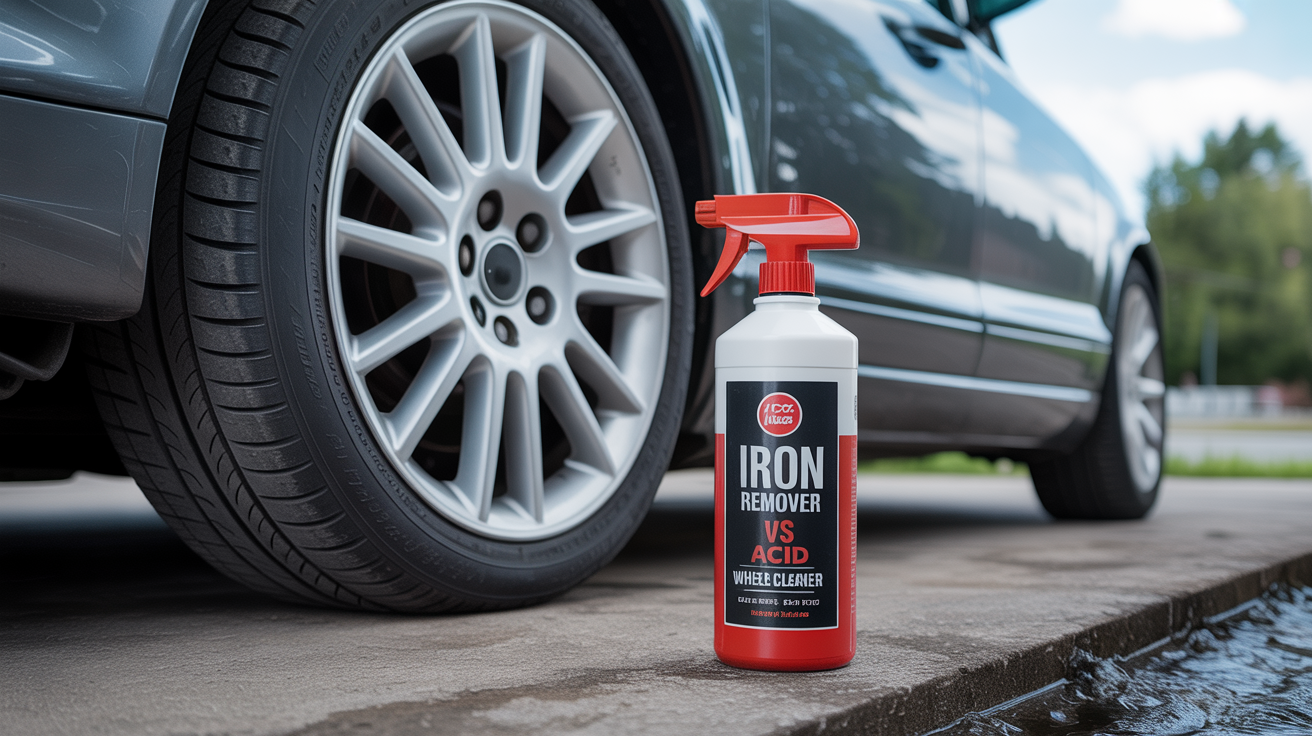
The short answer: these are two different tools that tackle two different problems on your wheels. Iron remover (also called fallout remover) reacts chemically with embedded iron particles and turns purple as it works. Acid wheel cleaner dissolves mineral deposits and heavy brake dust through acidic chemistry. You might need one, the other, or both, depending on what your wheels are actually dealing with.
What Iron Remover Does
Iron removers target ferrous contamination: the tiny particles of iron and steel that embed themselves into wheel surfaces over time. Most of this is brake dust. As your rotors and pads grind against each other, they shed microscopic metal particles that fly outward and hit your wheels at high temperature. The heat fuses them into the surface rather than leaving them sitting loosely on top.
These embedded particles are what cause that brownish, pitted look that refuses to wash off with soap. Rail dust follows the same pattern: metallic particles from rail lines or industrial areas that settle on cars parked nearby and fuse to the surface.
How the reaction works
Iron removers contain a compound (often ammonium thioglycolate or a similar sulfur-based reagent) that reacts specifically with ferrous oxide. When the product contacts iron contamination, it produces a visible purple or red bleed. You can watch it happen in real time.
The color change is also useful diagnostic information. If purple concentrates heavily behind one spoke or at the wheel's outer lip, that tells you where brake dust accumulates on your specific car. Areas that stay clean indicate lighter contamination.
What iron removers are safe on
Most iron removers sit near neutral to mildly acidic on the pH scale, roughly 4 to 7 depending on the formula. That range is gentle enough for a wide variety of finishes:
- Clear-coated aluminum wheels (the most common type on modern cars)
- Painted wheels
- Chrome-plated wheels
- Anodized aluminum
- Polished aluminum (rinse quickly; don't let it dwell)
- Body paint panels (iron removers double as paint fallout removers before polishing)
The main rule is to apply to a cool wheel. Heat accelerates the reaction unevenly and causes streaking that's hard to rinse out uniformly.
What Acid Wheel Cleaner Does
Acid wheel cleaners work through a fundamentally different mechanism. Rather than reacting with iron specifically, they use acidic chemistry to dissolve calcium deposits, mineral buildup, and brake dust that has hardened and bonded to the surface over months or years.
Phosphoric acid is the most common active ingredient in mid-strength formulas sold for home use. Older or more aggressive products have used hydrofluoric acid (HF), which is effective but genuinely dangerous. HF can penetrate skin and react with calcium in bone and tissue, causing serious injury. Many reputable products marketed for driveway use avoid HF or use heavily diluted trace amounts. If you see it listed, follow every protective-equipment instruction on the label and treat the product accordingly.
When acid cleaner is the right call
Acid wheel cleaners make sense when you have:
- Wheels with thick, caked-on brake dust that normal soap won't budge
- Mineral deposits or calcium streaks from hard water that have dried on the surface repeatedly
- Older, neglected wheels with months of buildup layered on them
- Wheels that have never been properly decontaminated
A standard iron remover may not be enough in these cases because iron isn't the only contaminant. Calcium scale and mineral residue sit on top of and around the iron particles. Acid chemistry cuts through all of it at once instead of only the iron fraction.
What acid wheel cleaner is NOT safe on
This is where the two products diverge sharply. Acid formulas can damage:
- Chrome plating (acid etches and pits chrome; even brief contact can cause permanent dullness or white spots)
- Clear-coated wheels if left on too long or applied at too high a concentration
- Anodized finishes (acid strips anodizing quickly)
- Bare polished aluminum
The safe window for acid cleaners on clear-coated aluminum is typically 30 to 60 seconds. Spray, agitate gently, and rinse before the product dries on the surface. Working on a hot wheel, or in direct summer sun, shortens that window considerably.
Always check the wheel manufacturer's guidance before using an acid cleaner. Some aftermarket wheel brands specifically prohibit acid cleaners in their warranty terms.
Side-by-Side Comparison
| Feature | Iron Remover | Acid Wheel Cleaner |
|---|---|---|
| Targets | Ferrous iron (brake dust, rail dust) | Mineral scale, calcium, heavy bonded contamination |
| Visual indicator | Turns purple on contact with iron | No color change |
| Safe on chrome | Yes | No |
| Safe on clear-coat | Yes | Yes, if rinsed within 60 seconds |
| Safe on anodized | Yes | No |
| Safe on bare polished aluminum | With caution; rinse quickly | No |
| Also usable on car paint | Yes (fallout removal) | No |
| Approximate pH | 4 to 7 | 1 to 3 depending on strength |
| Typical dwell time | 3 to 5 minutes | 30 to 60 seconds maximum |
How to Use Each Product
Using iron remover
- Rinse the wheel with water to knock off loose dirt.
- Confirm the wheel is cool to the touch. After driving, 20 minutes of cooling time is a safe baseline.
- Spray iron remover evenly across the wheel face, spokes, and into the barrel if you can reach it.
- Wait 3 to 5 minutes. Watch for purple bleeding from contaminated spots.
- Agitate with a soft wheel brush, working into the crevices between spokes.
- Rinse thoroughly with water before the product dries.
- Follow with a normal soapy wash to clean off any residue.
For routine brake dust removal from wheels, iron remover works best after a plain water rinse rather than after scrubbing, so the product can reach embedded particles rather than just reacting with loose surface grime.
Using acid wheel cleaner
- Rinse to remove loose dirt.
- Verify the wheel is fully cool, not just warm. Hot metal and acid cleaners do not mix well.
- Confirm your wheel type is compatible. No chrome, no anodized, no bare polished aluminum.
- Spray onto one wheel at a time. On large wheels, work one section at a time so nothing dries before you rinse.
- Agitate immediately with a wheel brush. Do not spray and walk away.
- Rinse completely within 30 to 60 seconds of spraying.
- Wash with car shampoo and water after rinsing to neutralize any remaining acid residue.
Never let acid wheel cleaner dry on the wheel surface. If conditions are hot or windy, rinse sooner.
Using Both Products Together
For heavily contaminated wheels, using both products in sequence produces the best results. The typical order:
- Acid cleaner first: removes the mineral scale and bulk surface buildup.
- Rinse and let dry slightly, then apply iron remover: with the calcium scale gone, the iron remover can now reach embedded iron particles that were previously buried underneath.
Using iron remover before acid cleaner also works, but you lose the visual benefit of the purple reaction on a surface that already has contamination sitting on top. The acid-first sequence also lets each product do its specific job on a cleaner surface.
After thorough decontamination, reviewing a full car wheels and rims cleaning routine is a good next step so ongoing maintenance stays straightforward and buildup doesn't accumulate again.
Frequently Asked Questions
Can I use iron remover on my car's paint?
Yes. Iron removers are routinely applied to painted body panels during paint decontamination, which is a standard step before polishing or applying a ceramic coating. The same chemistry that pulls brake dust from wheels also pulls rail dust and airborne fallout from paint. Apply it to a cool, clean panel, let it dwell for a few minutes, and rinse. One product that does double duty.
Is iron remover the same as fallout remover?
Essentially yes. The terms are used interchangeably in practice. "Fallout remover" is the broader label, referring to all metallic contamination that settles from the air (industrial particles, rail dust, brake dust), while "iron remover" refers specifically to ferrous iron. Most products sold under either name use the same chemistry and do the same thing.
How often should I use iron remover on my wheels?
For most daily drivers in normal conditions, once every 3 to 4 months is a reasonable schedule. If you drive a lot of highway miles, brake heavily in stop-and-go traffic, or park near rail lines, monthly treatments may suit the contamination level better. A useful gauge: if the product turns deep purple almost immediately after contact, buildup has accumulated and the schedule should probably be shortened.
Will acid wheel cleaner strip wheel sealant or wax?
Almost certainly yes. Acid chemistry breaks down most wax and polymer sealant layers, which is one more reason to use acid cleaners only when heavy contamination genuinely calls for it, not as a regular wash step. After any acid cleaning session, reapply your wheel sealant or wax once the surface is clean and dry. And if you plan to apply tire shine, do that after the wheels are fully clean and dry so the dressing bonds to a properly prepared surface.
My wheels turned purple all over but still look dirty. What do I do?
The purple color only confirms iron is present; it doesn't mean all the visible dirt is gone. Iron remover handles ferrous contamination only. Road grime, oil film, and surface brake dust that hasn't embedded won't be affected. After the iron remover dwell time, rinse well, then wash the wheels with car shampoo and a wheel brush. Chemical decontamination plus mechanical agitation together handle both problems. Using iron remover without a follow-up wash tends to leave a gray-brown haze because the chemistry released the iron but the rinse didn't carry all of it away.