Wheels & Tires
How to Apply Tire Shine the Right Way
Learn how to apply tire shine without sling, streaks, or buildup. Covers prep, dressing types, applicator technique, and layering.
Most tire dressing failures come down to one mistake: too much product, applied to a dirty tire. The result is that familiar brown spray pattern on your fender after the first drive. Getting a clean, lasting finish is less about the product you pick and more about the method you use.
Clean the tire before you touch the dressing
Tire shine applied over road grime and old dressing buildup will look uneven, peel in patches, and accelerate the browning that makes tires look neglected. Start with a thorough wash.
Scrub the sidewall with a dedicated tire brush and an all-purpose cleaner diluted to 1:4 or 1:6. Work in sections and rinse completely. If you're already doing the wheels, check out how to clean car wheels and rims for the full sequence, including the order of operations that keeps your clean tire from getting re-contaminated by wheel spray.
For wheels with heavy brake dust baked into the spokes, removing brake dust from wheels before you get to the tire is worth the extra step. Brake dust migration onto a fresh tire dressing is a common source of streaking. And if you're doing a full wheel detail, cleaning wheel wells and barrels rounds out the job.
After washing, let the tire dry completely or dry it with a dedicated towel. Applying dressing to a wet sidewall traps water under the product and dilutes it unevenly. Five minutes of dry time saves a redo.
Water-based vs. solvent-based dressings
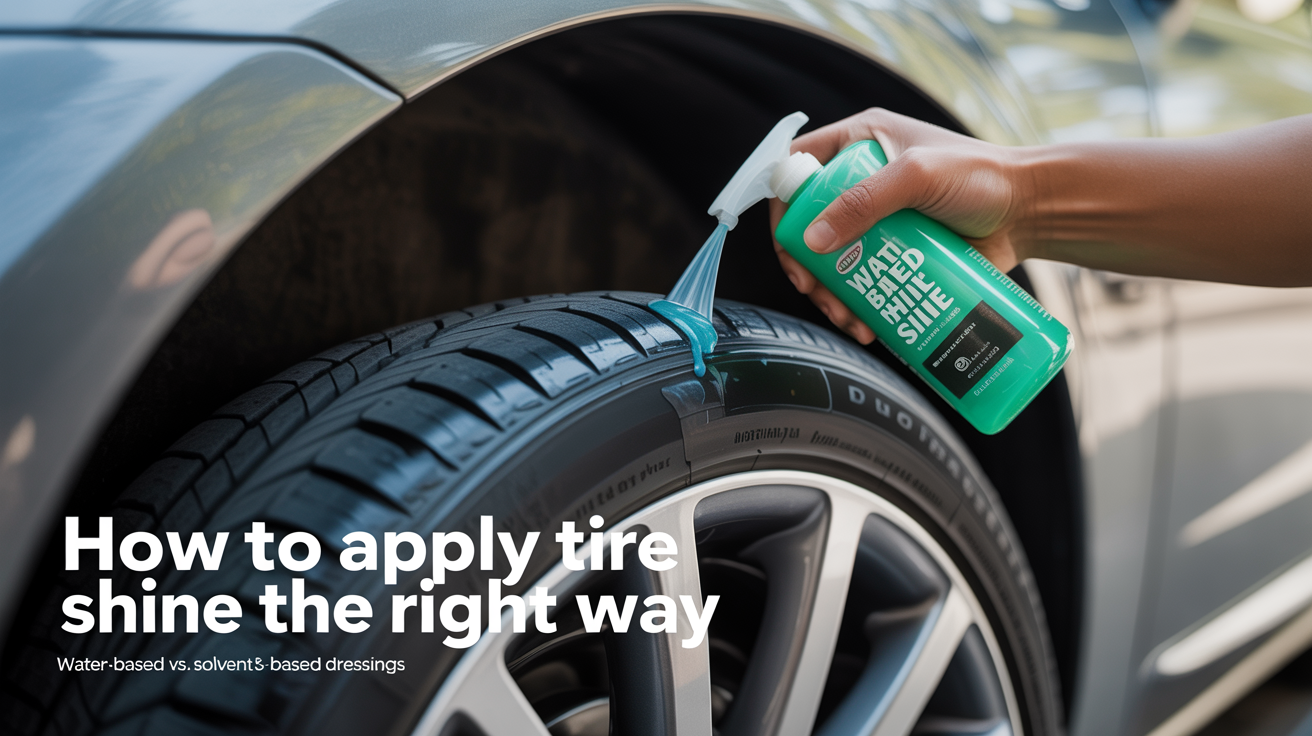
The type of dressing you use changes the finish, the durability, and how the product behaves on the tire. Here's how the main categories compare:
| Dressing type | Finish | Durability | Sling risk |
|---|---|---|---|
| Water-based (light) | Matte to satin | 1-2 weeks | Low |
| Water-based (heavy) | Satin to gloss | 2-4 weeks | Low to moderate |
| Solvent-based | High gloss (wet look) | 3-6 weeks | High if over-applied |
| Gel/cream | Matte to satin | 2-3 weeks | Very low |
Water-based dressings are generally safer and easier to work with. They absorb into the rubber rather than sitting purely on top, which reduces sling significantly. Solvent-based products tend to produce that ultra-glossy, wet look but require more precise application. Gels and creams are the most beginner-friendly because the thicker consistency stays where you put it.
The finish you're after matters here. A show car look calls for a solvent-based high-gloss. For a daily driver where you want clean tires without worrying about the product flinging onto your paint, a matte or satin water-based dressing is a better fit. Neither is wrong. They're different tools.
How to apply tire shine without causing sling
Tire shine sling happens when excess product flings off the rotating tire at speed and lands on painted panels. The fix is not switching products. It's controlling how much you apply and where.
Never spray dressing directly onto the tire. Spraying directly almost guarantees overapplication on the raised lettering and inner sidewall edges where product pools. Always apply to your applicator first.
A foam tire applicator is the right tool. They're inexpensive, available anywhere, and give you control over coverage that a rag or paper towel doesn't. Keep a dedicated applicator for tires so you don't cross-contaminate with wax or interior dressings.
Here's the step-by-step process:
- Make sure the tire is clean and fully dry before you start.
- Dispense a small amount of dressing onto your foam applicator, roughly the size of a quarter for a standard tire. You can always add more.
- Apply in overlapping circular strokes around the sidewall, starting from the outer edge and working inward. Keep the product on the rubber, not on the rim lip.
- Use a thin, even coat. The goal is coverage, not saturation.
- Let the dressing flash for 5 to 10 minutes before moving the vehicle. This gives the product time to begin absorbing or tacking up.
- After flashing, take a clean microfiber cloth and lightly wipe the surface to remove any excess sitting on top.
- Do not drive at speed immediately after application. A short low-speed pull into the garage is fine. A highway run straight from the driveway is not.
Matte vs. glossy look: how to dial it in
The finish is partly about the product category, but you have more control than most people realize.
For a matte or natural look, use a thin coat of a water-based dressing and buff it in well after flashing. The mechanical action of wiping pulls some product off the surface and leaves a flat, factory-like finish that looks clean without screaming "dressed."
For a glossier result, apply a slightly heavier coat and skip the buff-off wipe, or apply two thin coats with 10 to 15 minutes between them. The second coat sits on top of the first and increases the sheen without adding much sling risk if both coats were applied lightly.
Gloss-maximizers like solvent-based gels can be worked in with your applicator using firm, circular pressure. The friction spreads the product thinly and evenly without needing much volume.
Layering and maintaining the finish
A single coat of tire dressing fades within a week or two on a daily driver, sooner in wet climates. Layering extends the durability.
After the first coat cures for 24 hours, a second light coat bonds to the residue left in the rubber and builds depth. Two thin coats always outlast one thick one. Some gel dressings are designed specifically to be layered: each coat cures, the next bonds to it, and you end up with protection that holds through several washes.
Maintenance is straightforward, and mirrors general tire-care guidance: wash the tire normally with soap and water. Reapply when the sidewall starts to look dry or gray. Avoid tire cleaners with harsh solvents when the dressing is fresh, as they strip it down to bare rubber faster than regular washing.
FAQ
How long should I wait after washing before applying tire shine? Wait until the sidewall is fully dry to the touch, usually 5 to 15 minutes depending on temperature. If you're working in a garage or shade, a light wipe with a dry towel speeds this up.
Why does my tire dressing turn brown? Browning is usually old dressing oxidizing, not the new product. It happens when layers of dressing build up over time without a proper degreaser strip between applications. If your tires regularly go brown within a few days of dressing, clean them with an APC or dedicated tire degreaser first, let them dry completely, then start fresh.
Can I apply tire dressing to wet tires? Technically you can, but the results are worse. Water dilutes the dressing before it bonds, causes uneven coverage, and accelerates sling once driving starts. Dry tires give you a cleaner, longer-lasting finish.
What's the difference between tire shine spray and tire dressing gel? Spray formulas are typically thinner and faster to apply, but the ease of spraying encourages overapplication. Gel formulas are thicker, stay on the applicator, and let you control exactly how much goes on the tire. Both work when used correctly; gels are more forgiving for beginners.
How do I get tire shine off my paint if it slings? A quick detailer or waterless wash on a microfiber usually removes fresh sling cleanly. If it has dried for a day or two, a paint-safe APC diluted to 1:10 on a damp cloth works well. Avoid aggressive rubbing on the first pass; let the cleaner dwell for 30 seconds and wipe gently.