Wheels & Tires
How to Protect Wheels With a Sealant
A step-by-step guide to applying wheel sealant so brake dust, road grime, and heat stop bonding to your rims. Covers prep, product types, and durability.
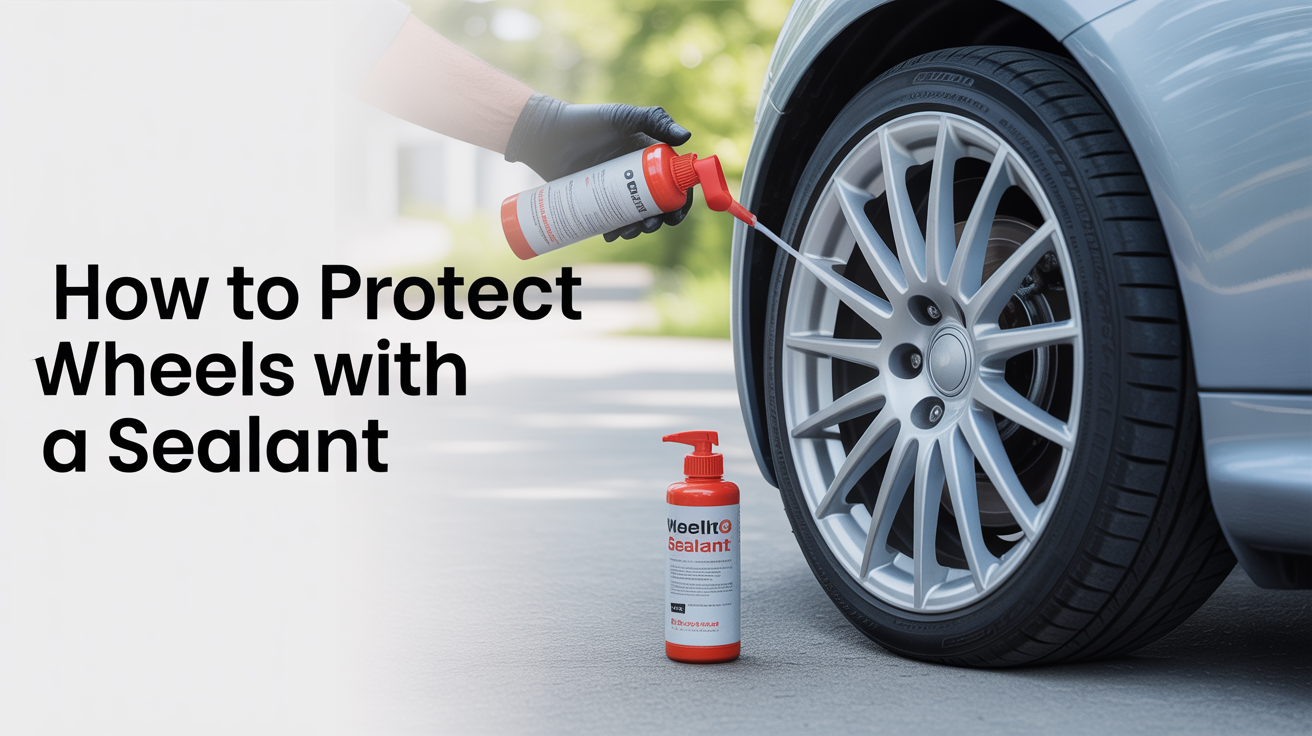
Wheels collect brake dust, tar, and road grime faster than any other surface on your car, and without a protection layer, that contamination bonds directly to the metal or clear coat within minutes of contact. Applying a wheel sealant creates a barrier between the rim and all of that, which makes weekly cleaning faster and prevents the kind of etching that shows up after a few seasons of neglect. The process takes less than an hour per car once you know what you're doing.
Why Wheels Take More Abuse Than Your Paint
Every time you brake, your pads and rotors release hot iron particles that land directly on the wheel face and barrel. Those particles are slightly acidic and sticky, and on warm metal they start to embed within minutes. By the time you wash the car a week later, some of that dust has already bonded below the surface level.
Add road tar, rubber kicked up from surrounding tires, and winter road salt, and you have a wheel environment that's hostile to bare metal and bare clear coat alike. Wheel temperatures during normal driving can exceed 300°F (150°C) after a run on the highway, which is hot enough to accelerate that bonding process. A sealant doesn't eliminate the contamination, but it gives you a layer to clean off instead of having to attack the rim itself.
Types of Wheel Sealant
Knowing which format to use saves you from reapplying every six weeks when you didn't need to, or under-protecting a wheel you spent good money on.
Paste and Liquid Polymer Sealants
These are the most common starting point. You apply them by hand with an applicator pad, let the product haze, and buff off. The resulting polymer layer bonds to the wheel surface and sheds brake dust and water for roughly 3 to 6 months under normal use. They're affordable, straightforward, and suitable for painted or clear-coated alloy wheels.
One honest limitation: sustained high heat (from track driving or aggressive braking) degrades polymer sealants faster than the label suggests. If your brake temperatures regularly climb well above 400°F (200°C), you'll be on the shorter end of that durability range.
Spray Sealants
Spray wheel coatings are the maintenance option. Most are designed to be sprayed onto a wet, freshly washed wheel and rinsed off after 30 to 60 seconds. They're not as durable as paste sealants, typically 4 to 8 weeks, but they're fast enough that you can apply one at every wash without adding much time. They work well as a top-up layer over an existing sealant that's starting to thin out.
Ceramic Wheel Coatings
Ceramic wheel coatings bond chemically to the wheel surface rather than sitting on top of it. Most are heat-rated to 1,400°F (760°C) or higher, which means they hold up to real braking loads. Durability is 1 to 3 years, and the hydrophobic effect stays stronger for longer than with polymer sealants.
The tradeoff is prep requirements. Ceramic coatings lock in whatever is on the surface when you apply them. Scratches, brake dust staining, and water spot etching all get sealed in until you strip the coating. The prep work isn't optional.
Prepping the Wheels Before You Apply Anything
This is where most home detailers cut corners. Sealants don't bond well over contamination, and they bond even worse over old wax or degraded sealant layers. Rushing this step is why protection lifespans disappoint people.
Step 1: Wash the Wheels Thoroughly
Wash each wheel properly before you start. Use a pH-neutral or wheel-specific cleaner, a barrel brush for the inside, and a soft flat brush for the spokes and face. Rinse completely.
Step 2: Run an Iron Remover
Spray a ferrous decontamination product (iron remover) onto the wheel face and barrel. It will turn purple as it reacts with embedded iron particles. Give it 3 to 5 minutes to work, agitate with a soft brush, and rinse thoroughly. If you're dealing with heavy baked-on brake dust buildup, address that specifically before this step, since thick deposits block the iron remover from reaching the surface beneath.
Step 3: Dry Completely
Sealants don't apply evenly to damp surfaces. Use a clean microfiber to dry each wheel, and use compressed air or a detail blower to push water out of the lug nut holes and the barrel. Give the wheels 10 to 15 minutes to air dry before applying anything.
Step 4: IPA Wipe (for Ceramic Coatings Only)
If you're using a ceramic wheel coating, wipe down each wheel with 70% isopropyl alcohol on a clean microfiber right before application. This removes residual oils and gives the coating a clean surface to bond to.
How to Apply Wheel Sealant Step by Step
Once prep is done, application is straightforward.
Paste or liquid polymer sealants:
Apply a thin layer to an applicator pad, not a saturated one. Work across the wheel face in small sections using back-and-forth strokes on flat surfaces. Let the product haze, usually 5 to 15 minutes depending on temperature and humidity. Avoid applying in direct midday sun on a hot wheel surface because the product will dry too fast and get difficult to remove. Buff off with a clean, soft microfiber. One coat is sufficient; a second coat 24 hours later adds marginal durability but isn't necessary.
Ceramic wheel coatings:
Apply a few drops to the applicator block and work in small sections, roughly 10 to 12 inches (25 to 30 cm) at a time. Ceramic coatings flash (turn slightly tacky and go clear) within 1 to 2 minutes, so don't cover more surface area than you can level in that window. Wipe each section with a clean microfiber immediately after applying. Avoid the temptation to coat the entire wheel face, then buff, because high-spots will form.
Initial cure is typically 1 to 4 hours. Most products reach full cure in 24 to 48 hours. Don't wash the wheels for at least 24 hours after applying a ceramic coating.
How Long Wheel Protection Actually Lasts
Marketing durations are optimistic. Here's a more practical breakdown:
| Type | Realistic Durability | Reapplication Frequency |
|---|---|---|
| Spray sealant (maintenance coat) | 4 to 8 weeks | Every 1 to 2 wash cycles |
| Paste/liquid polymer sealant | 3 to 6 months | 2 to 4 times per year |
| Ceramic wheel coating | 1 to 3 years | Once every 1 to 3 years |
Driving style, climate, and wash habits all shorten these figures. Salt exposure and frequent aggressive wheel cleaners are particularly hard on polymer sealants.
A quick way to test protection level: when the wheels are dry, splash a small amount of water on the face. If the water beads into tight, high droplets, you're still covered. If it sheets flat with little movement, it's time to reapply.
Maintaining Sealant-Protected Wheels
Protection doesn't mean less washing. Brake dust still lands on the wheel after every drive, and the goal is to rinse it off before it has time to bond. A rinse with wheel cleaner every 7 to 14 days is the right habit.
Avoid high-pH alkaline wheel cleaners on sealant-protected surfaces. They strip the protection layer in a few washes. Stick with pH-neutral or dedicated wheel cleaning products. If you use a spray sealant, add it at the end of each wash on the final rinse, before you move on to tire shine for the sidewalls.
Frequently Asked Questions
Can I apply a new sealant over an old one?
You can, but it's better to strip the old layer first. An IPA wipe or a light pass with a clay bar removes degraded sealant so the fresh coat bonds to the wheel surface directly. Stacking sealant on degraded sealant reduces durability.
Do I need a different product for chrome versus alloy wheels?
Most polymer sealants and ceramic wheel coatings are safe on both. The exception is products that include mild abrasives, sometimes marketed as "clean and protect" combos. Avoid those on chrome, as they'll dull the finish over time. Check the label for any mention of polishing agents.
Can I just use a paint sealant on my wheels?
Yes, though the durability will be noticeably shorter than what the label promises. Paint sealants aren't formulated for the temperature swings wheels see. They'll provide some protection, but purpose-built wheel sealants and ceramic wheel coatings will hold up longer in the same conditions.
How do I know when my sealant needs reapplying?
Use the water bead test: splash a little water on a dry wheel face. Tight beads that roll off quickly mean the protection is still active. Flat sheets of water with no beading indicate the sealant is spent. You don't need to wait until water stops beading entirely before reapplying.
Is a ceramic wheel coating worth the price difference over a standard sealant?
For wheels you plan to keep long-term, generally yes. A ceramic coating costs more upfront but eliminates 3 to 4 reapplication cycles per year. Over two years, the time savings and reduced product consumption typically offset the initial price difference, and the protection performs better under heat stress.