Washing & Drying
How to Dry a Car Without Water Spots
Learn the best way to dry a car and avoid water spots. Covers drying aids, microfiber towels, forced air, and how to fix spots that are already there.
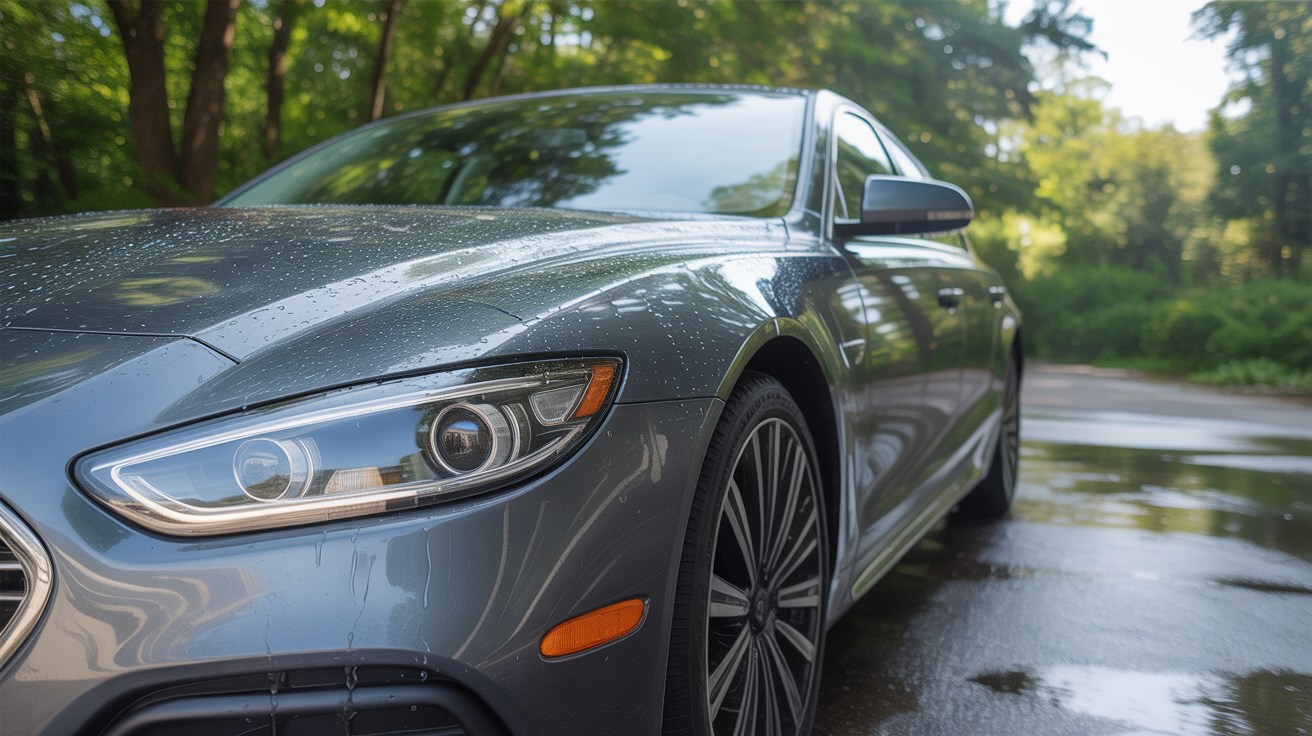
Water spots are not a mystery. They form when water evaporates and leaves behind dissolved minerals, calcium, magnesium, silica, bonded to the paint surface. Every drop of tap water carries some load of these minerals, and the hotter the panel, the faster they etch. Sun-baked paint can lock in a spot in under a minute. That is why drying technique matters as much as anything else in a wash routine.
This guide covers every practical method for drying a car without leaving marks, from towel work to forced air, plus what to do when spots have already appeared.
Why water spots form (and why shade matters)
The mineral content of municipal tap water sits anywhere from 50 to 300+ parts per million depending on your area. A single door panel holds enough water to deposit a visible haze of calcium if you let it bake dry. The equation is simple: the longer water sits on a hot surface, the worse the result.
Working in shade is the single most effective thing you can do before you dry a single panel. An overcast day or a shaded driveway cuts your risk dramatically. If you are stuck in full sun, work panel by panel and move fast. Start on the roof (largest flat surface, most exposure), then move to the hood, trunk, and sides. Never let a wet panel sit while you dry another.
The type of water matters too. Some detailers run a final rinse through a filter that strips minerals at the point of delivery. It is a worthwhile investment if you wash frequently, but not required for good results.
Prep the surface before you grab a towel
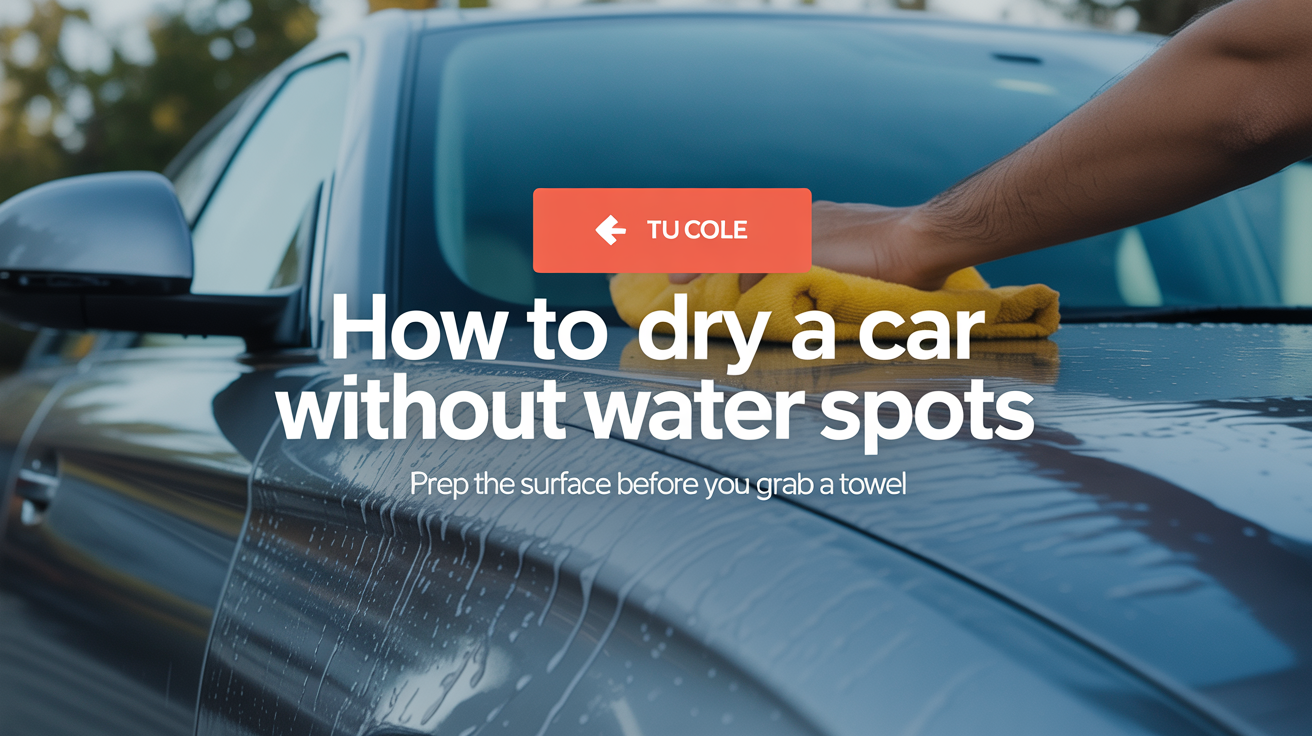
A clean car dries cleaner. If the wash left any dirt on the surface, the towel drags it. Start with a thorough rinse that sheets water off the paint rather than beading it in tight droplets. A slow-running hose without a nozzle, held close to the panel, produces a thin sheet of water that carries a lot of surface contamination off with it. This trick alone removes a significant portion of remaining water before you even reach for a towel.
Related: The Two-Bucket Wash Method Explained, if your wash process is producing a lot of leftover contamination, that article covers why isolation of dirty water matters.
Drying method comparison
| Method | Pros | Cons |
|---|---|---|
| Large microfiber drying towel | Fast, effective, gentle on paint | Requires clean, properly maintained towel |
| Chamois (natural or synthetic) | Absorbs a lot of water | Can drag on dry spots, harder to rinse |
| Leaf blower / forced air | No contact, great for gaps and trim | Does not remove minerals, just pushes water off |
| Air compressor | High pressure, clears mirrors and door jambs fast | Requires oil-free unit; moisture in the line is a risk |
| Waffle-weave towel | Better absorption than flat-weave | Less surface coverage per pass |
| Quick detailer as drying aid | Lubricates the surface, improves glide | Adds a step; must be compatible with existing sealant |
The right towel makes the difference
A thick, high-GSM microfiber drying towel is the standard for a reason. GSM (grams per square meter) is the weight of the fabric; a drying towel in the 700-1000 GSM range holds more water before it saturates and moves it off the paint without dragging. Smaller detailing cloths are fine for trim and glass but will tire you out on a full car.
One rule: never use a drying towel that has been washed with fabric softener or that has any grit in it. Fabric softener coats the fibers and kills absorbency. Any embedded grit turns the towel into sandpaper. Keep drying towels separate from other laundry, wash them in a detergent free of additives, and inspect them before each use.
How to dry a car: step-by-step
- Park in shade. If none is available, work fast and panel by panel.
- Do a final sheeting rinse with a pressure-off hose, holding it close to each panel so water flows off in a thin film rather than pooling.
- Apply a spray of quick detailer or drying aid to the first panel. This lubricates the surface so the towel glides instead of dragging, and it deposits a light layer of protection.
- Open the drying towel fully and lay it flat on the panel. Do not scrub. Use a blot-and-drag motion: set the towel down, apply light pressure, and pull toward you in a straight line. Lift, reposition, repeat.
- Flip or refold the towel when one side is saturated. You have four usable sides on a folded towel before it needs to be wrung out.
- Move from panel to panel in sequence: roof, hood, trunk, doors, lower sills.
- Use a dedicated smaller towel for glass. Microfiber on glass can leave lint if the towel is too heavy.
- Hit door jambs, fuel door, mirrors, and trim with compressed air or a leaf blower. Trapped water in these recesses drips out minutes later and leaves streaks down the paint.
- Open each door briefly and wipe the jamb sill dry.
Using forced air
A leaf blower is not glamorous, but it works. Use it before the towel, not instead of it. Forced air clears standing water from body panels quickly and pushes pooled water out of recesses that a towel cannot reach, mirror housings, windshield wiper cowls, grille gaps, lug nut pockets. Once the bulk of the water is moved, the towel step goes faster and the towel stays cleaner.
A dedicated car dryer (essentially a filtered, heated blower designed for automotive use) does the same job with less noise. If you detail frequently, it is worth it. For occasional washes, the leaf blower you already own does the job.
Forced air moves water but does not remove minerals. Whatever water is left on the paint when you run the blower will still spot as it dries. This is why forced air works best as a pre-step, not a substitute for contact drying.
Using a drying aid or quick detailer
A drying aid is a dilute spray detailer applied to a wet panel before toweling. It cuts the friction between the towel and the paint, which reduces micro-scratching and prevents the towel from sticking on dry patches. Most spray detailers double as drying aids; check the label for compatibility with wax, ceramic, or whatever protection you have on the paint.
Apply two or three sprays to a panel, spread with the drying towel, then do the blot-and-drag pass. You will notice the towel glides more easily, and the finish looks sharper after. This step pairs well with any car that has a ceramic coating, because the hydrophobic surface already beads water aggressively and the towel needs a little help getting across it cleanly.
For a clean wash foundation, see How to Wash a Car Without Scratching It, the same principles that protect paint during washing apply during drying.
Fixing water spots that are already there
Light water spots (mineral deposits sitting on top of a wax or sealant layer) often come off with a dedicated water spot remover or a dilute solution of distilled white vinegar on a damp cloth. Work in a small area, agitate gently, and rinse. Do not let acidic solutions dwell on the paint.
Moderate spots that have etched into a wax layer need light polish to remove the contamination and the compromised protection, followed by reapplication of wax or sealant.
Severe spots that have etched into clear coat itself require wet sanding or machine polishing with a cutting compound. This is paint correction territory. If you are unsure of the depth of the damage, try a chemical spot remover first before reaching for an abrasive.
Prevention is much easier than correction. One consistent drying routine eliminates the problem before it starts. If you are spending time on a foam cannon pre-wash or a two-stage wash, it does not make sense to undercut that work at the drying stage. Foam Cannon vs Foam Gun, What Actually Works is worth reading if you want to maximize what comes off the car before contact washing begins.
FAQ
What is the best way to dry a car without water spots? Dry in the shade immediately after washing, use a quality microfiber drying towel with a drying aid, and clear recesses with a leaf blower before toweling. Speed and shade are more important than any particular product.
Can I let my car air dry? Only if you have softened or filtered water. Tap water left to air dry almost always leaves mineral deposits, especially on dark paint in warm weather.
Do microfiber towels scratch paint? A clean, properly maintained microfiber towel does not scratch clear coat under normal drying pressure. The risk comes from dirty or dry towels used with too much force on a dry panel.
Will a quick detailer prevent water spots? A drying aid reduces the time water sits on the surface and lubricates the removal process, which lowers the chance of spotting. It is not a guaranteed shield, but it helps, especially in difficult drying conditions.
How do I get water spots off glass? Diluted white vinegar on a damp cloth works for light mineral deposits on glass. For stubborn haze, a dedicated glass polish applied by hand removes the mineral buildup without scratching. Avoid abrasive compounds designed for paint, they can leave fine scratches on glass that are harder to fix.