Washing & Drying
How Often Should You Wash Your Car
How often to wash your car depends on where you drive and park. Here's a practical guide to washing frequency by season and condition.
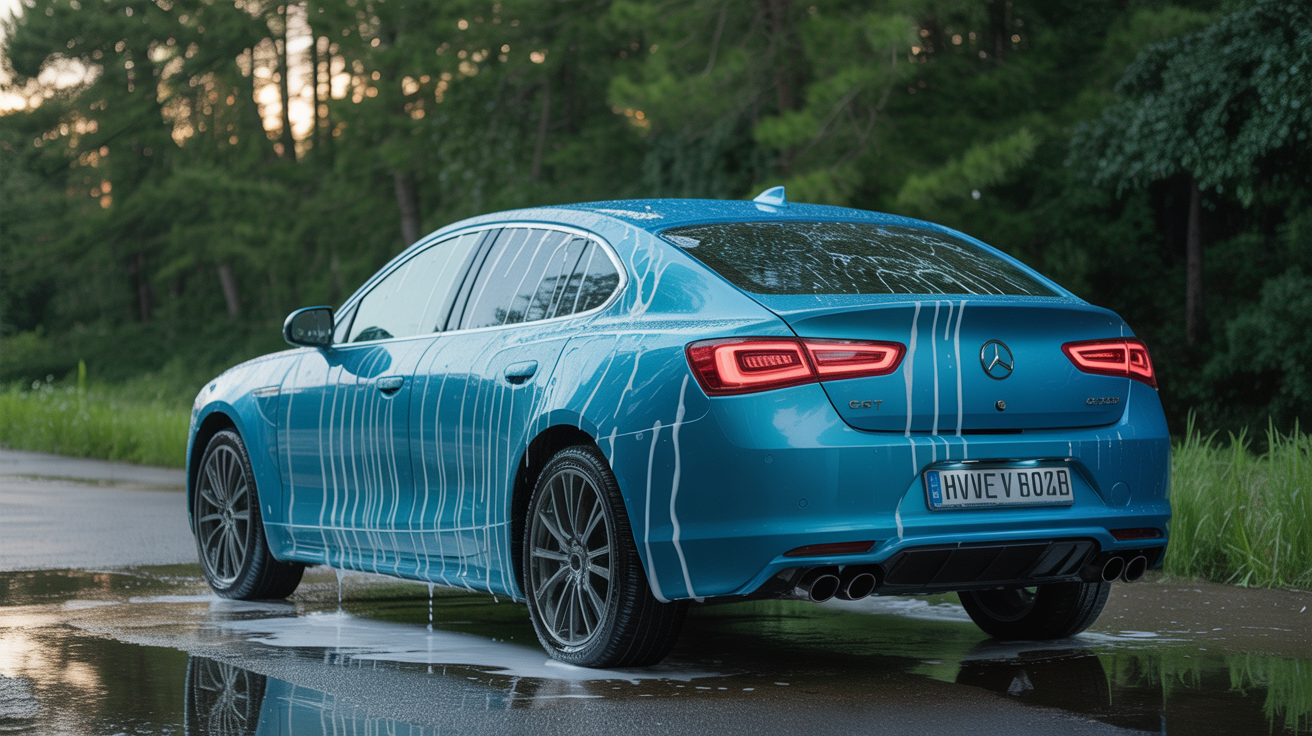
Most car owners either wash too rarely or on a rigid schedule that ignores what's actually happening to the paint. The honest answer to how often you should wash your car is: it depends. Your driving environment, the season, and how your car is stored all matter more than any fixed calendar rule.
That said, there's a useful starting point. For most daily drivers in moderate climates, every one to two weeks is a reasonable baseline. Miss that window and contaminants start doing real damage.
Why washing frequency matters
Paint looks solid, but it's porous at a microscopic level. Road grime, bird droppings, tree sap, industrial fallout, and road salt all sit on the surface and work into the clear coat over time. Some of them are acidic. Bird droppings, in particular, can etch clear coat within hours on a hot day. Bug splatter on the front bumper and hood is similarly corrosive.
The point of regular washing isn't cosmetic. It's protective. A clean car holds wax and sealant better, shows scratches before they deepen, and prevents the kind of surface oxidation that costs real money to correct at a body shop.
If you want to go deeper on technique, how to wash a car without scratching it covers contact wash best practices, and the two bucket wash method is the standard approach for safe paint contact.
Adjusting for your actual conditions
The one-to-two week baseline shifts considerably based on where you live and how you use the car.
| Condition | Suggested washing frequency |
|---|---|
| Moderate climate, daily driver | Every 1-2 weeks |
| Winter with road salt | After every salted road exposure, or every 3-5 days |
| Coastal/salt air environment | Every 7-10 days minimum |
| High pollen season | Every 5-7 days |
| Garaged, light use, dry climate | Every 2-3 weeks |
| Outdoor parking, urban environment | Every 7-10 days |
| Weekend/show car with ceramic coating | Every 2-4 weeks depending on exposure |
Road salt and winter car washing
Winter is when most people under-wash their cars and the damage compounds quietly. Salt is sprayed onto roads to lower the freezing point of ice, and it works. What it also does is accelerate rust and corrosion on metal surfaces, brake components, and the undercarriage.
If you live somewhere roads get salted, you need to wash more often in winter than in summer. After any drive on salted roads, a rinse at minimum makes a real difference. A full wash every 3 to 5 days during heavy winter conditions is not overkill. Pay attention to the wheel wells and undercarriage. Many coin-op car washes have an undercarriage rinse setting. Use it.
One thing that trips people up: it's fine to wash your car when temperatures are near freezing, provided you dry it thoroughly before water can ice over on seals and locks. Touchless washes or a hand wash followed by immediate drying works. What you shouldn't do is skip washing because it's cold.
Coastal and salt-air environments
Salt doesn't only come from roads. If you live within a few miles of the ocean, airborne salt settles on your car's surface continuously. Salt air is particularly rough on chrome trim and exposed metal. In coastal areas, washing every 7 to 10 days is reasonable, and rinsing more frequently in between is a good habit if you can manage it.
Pollen season
In spring, a single night outside can leave your car coated in a thick yellow layer. Pollen is mildly acidic and, when wet, can stain paint if left long enough. During peak pollen weeks, washing every 5 to 7 days keeps the accumulation in check. If you're in a heavy pollen zone near pine trees, the sticky residue they leave is even harder to remove once it bakes on.
Bird droppings and bug splatter
These two deserve special mention because they don't follow a schedule. A single bird dropping left on dark paint on a sunny afternoon can etch the clear coat within a few hours. The moment you notice it, remove it. Carry a detailing spray and a clean microfiber in the car for spot removal. The same applies to bug splatter accumulated on a highway drive. Rinse it off the same day if you can.
Garaged vs. outdoor parking
A garaged car stays cleaner for longer. Shielded from UV, pollen, bird activity, and rain, a car that lives inside can go two to three weeks between washes in dry, mild weather with no real consequence. An outdoor car in a tree-lined parking lot or urban environment accumulates contaminants faster and needs more frequent attention.
Maintenance washes vs. full details
There's a difference between a maintenance wash and a full detail, and conflating them leads to skipping the former because the latter feels like too much work.
A maintenance wash is a basic contact wash to remove surface contamination. Done correctly with proper technique, it takes 20 to 40 minutes and keeps paint clean between deeper sessions. You should be doing these on the schedule above.
A full detail, including paint decontamination, clay bar treatment, polishing if needed, and applying a fresh layer of protection, is a separate process. For most cars, twice a year is sufficient. Do it in spring to address winter damage and apply a fresh layer of wax or sealant before summer heat, and again in fall before winter sets in.
Protection extends how long paint stays clean and makes each maintenance wash easier. Wax, sealant, or ceramic coatings create a hydrophobic surface that sheds water and contaminants. A car with a fresh layer of protection can often go slightly longer between washes than one with bare, oxidized clear coat.
After every wash, how to dry a car without water spots covers the drying step, which is where a lot of otherwise good washes go wrong.
A practical washing routine
Here's how to think about it over the course of a year:
- Set a baseline of every 1-2 weeks as a default reminder
- Increase to weekly or more during winter (salted roads), pollen season, or after beach trips
- Spot-clean bird droppings and bug splatter immediately, regardless of schedule
- Do a full decontamination detail twice a year
- Apply wax, sealant, or coating after each detail to protect between washes
The cars that develop paint problems over time are usually the ones sitting outdoors, getting washed infrequently, and never protected. A consistent, light-touch schedule beats occasional marathon cleaning sessions.
FAQ
How often should I wash my car in winter? In winter with road salt, every 3 to 5 days is a reasonable target if you're driving on treated roads regularly. At minimum, rinse the undercarriage after each salted road exposure. Don't skip washing just because it's cold.
Is washing your car every week too much? No. For a car that's parked outside, driven daily, or exposed to pollen, salt air, or bird activity, weekly washing is appropriate. Frequent, gentle washes with good technique are easier on paint than letting contamination accumulate and having to scrub harder.
Can I wash my car in cold weather? Yes, as long as temperatures are above freezing. Wash during the warmest part of the day and dry thoroughly so water doesn't freeze in door seals and rubber trim. Avoid washing if temperatures are dropping and you won't have time to dry the car properly.
Does waxing mean I can wash less often? Wax and sealants make contaminants easier to remove and provide some protection, but they don't eliminate the need to wash. Bird droppings and road salt still need to come off promptly. Protection extends intervals slightly and makes each wash easier, but doesn't replace them.
What happens if I don't wash my car often enough? Surface contamination builds up and works into the clear coat. Road salt accelerates rust on metal surfaces and brake components. Bird droppings and bug splatter etch paint if left long enough. Over time, neglected paint oxidizes and dulls, and correction requires polishing or wet sanding rather than a simple wash.