Washing & Drying
Choosing a Car Wash Soap and What to Avoid
How to choose the best car wash soap for your finish, what pH neutral means, and the common soaps that strip wax and damage paint over time.
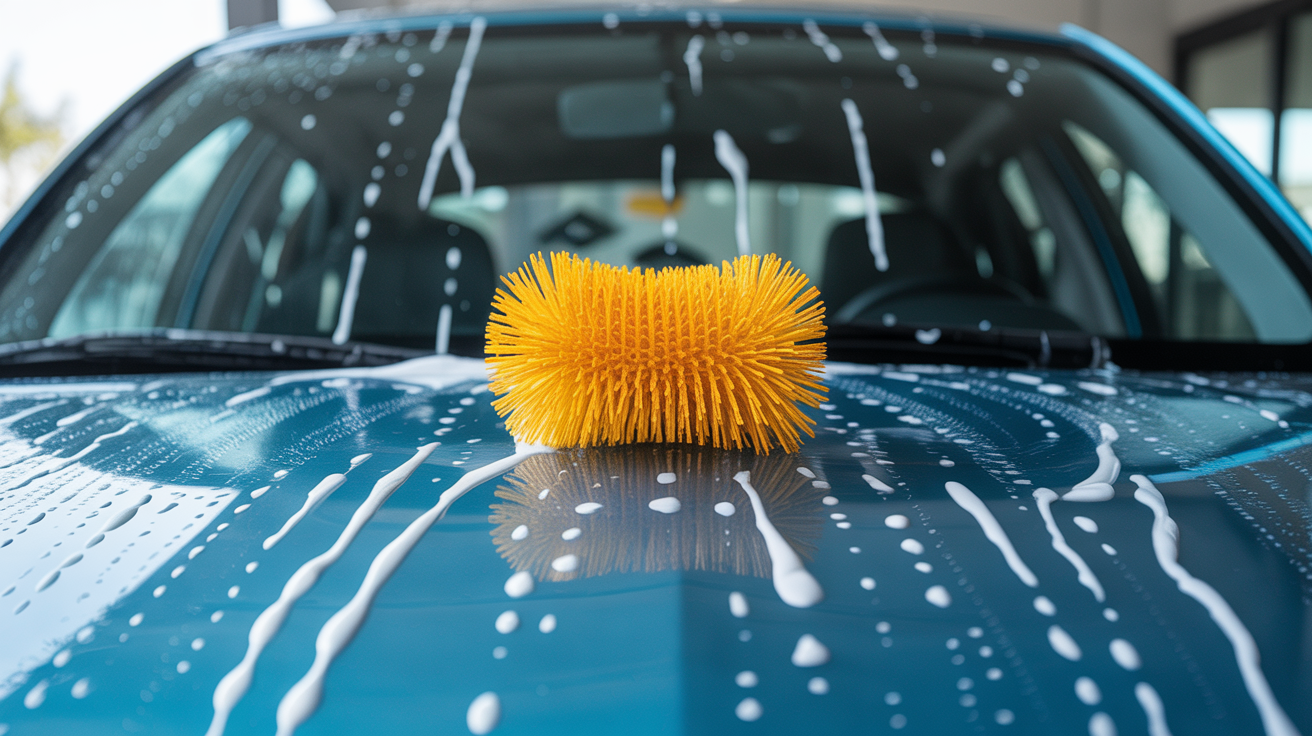
Not all suds are equal. A soap that strips grease off pans will also strip the wax and sealant off your paint, leaving it dull and unprotected after every wash. The good news: purpose-made car wash soap is inexpensive, rinses cleanly, and keeps your protection layers intact wash after wash.
Here is what to look for, what to skip, and how to read the label so you pick something that actually works.
Why Car Wash Soap Matters for Your Finish
A car's exterior finish has several layers: clear coat, any wax or sealant on top of it, and sometimes a ceramic coating. Each wash is a chance to either maintain those layers or erode them.
Car wash soap (also sold as car shampoo) is formulated to be mild enough to preserve your protection layer while still emulsifying road grime, traffic film, and brake dust. The chemistry is intentionally gentle. General-purpose household cleaners are not designed with any of that in mind.
Lubrication Is As Important As Cleaning Power
One thing a lot of people overlook is that wash soap also needs to provide lubrication. When a wash mitt or sponge glides across paint, it has to float over the surface on a slick layer of soapy water, not drag grit against the clear coat. Soaps with good lubrication reduce the chance of fine scratches appearing during the wash. This is especially relevant if you are using the two-bucket method, where you rinse the mitt between passes. A soapy mix that lubricates well gives you some insurance even when a bit of dirt stays in the mitt.
You can find more on the full wash process in our guide to the two-bucket wash method.
What pH Neutral Means (and Why It Comes Up So Often)
You will see "pH neutral" on almost every bottle of car shampoo. pH runs on a scale from 0 to 14. Pure water is 7, which is neutral. Anything below 7 is acidic; anything above is alkaline (basic).
Car paint and clear coat hold up fine to neutral pH. They do not hold up to sustained exposure to strongly acidic or alkaline products. More relevantly, wax and polymer sealants break down when they come in regular contact with high-alkaline soaps. Ceramic coatings are more resistant, but repeated use of caustic products will eventually degrade the hydrophobic layer.
pH neutral car shampoos sit in roughly the 6.5 to 8 range. That is gentle enough to use every week without degrading whatever protection you have applied.
When pH Neutral Is NOT What You Want
There are times you deliberately want a stronger wash. A pre-wash degreaser or a dedicated traffic-film remover (TFR) is intentionally alkaline so it can cut through built-up road film and engine grease. These are used occasionally before the main wash, not as the soap you use every time. If your car has not been decontaminated in months and the paint feels rough, a more aggressive pre-soak makes sense. Just rinse it off before moving to your regular pH neutral car shampoo.
Soaps to Avoid
This is where most mistakes happen. A few common alternatives to real car wash soap seem logical but cause real problems over time.
Dish Soap
Dish soap is the most frequently recommended substitute by people who mean well. It does remove dirt effectively. The problem is that dish soap is formulated to cut grease and residue from plates, which means it is highly alkaline and contains degreasing surfactants that strip wax from paint efficiently. One wash with dish soap will not ruin your finish, but it will remove whatever wax or sealant you applied. Do it repeatedly and you will accelerate clear coat degradation.
Some detailers use diluted dish soap deliberately when they want to strip old wax before applying a new coat or a ceramic coating. That is a valid use case. It is not a valid substitute for your regular wash routine.
Hand Soap and Body Wash
These are closer to neutral but they foam badly, leave residue, and the fragrances and moisturizers in them can leave streaks on paint and glass. They are not designed to rinse off a car panel cleanly.
All-Purpose Cleaners (APCs)
APCs are typically alkaline concentrates meant for interior plastics, engines, and heavily soiled surfaces. Diluted correctly, they are useful for spot cleaning trim. Used full-strength or too frequently on painted panels, they degrade protection layers and can cause color fading on matte finishes.
Household Glass Cleaner
Never use this on paint. Most glass cleaners contain ammonia, which attacks clear coat over time and is particularly hard on vinyl wraps and rubber trim.
What to Look For in a Car Wash Soap
With so many options available, a few characteristics help narrow it down.
Concentration Ratio
Most good car shampoos are concentrated. A 500 ml bottle might mix at a ratio of 1:500 (meaning 1 part soap to 500 parts water), giving you enough for 40 to 60 washes. Higher concentration is usually a sign of quality surfactants. The label should list a recommended dilution ratio. If it does not, that is worth noting.
Foam Quality
Thick, clingy foam is useful because it dwells on the panel and helps float dirt off the surface. This is separate from how foamy a soap looks in a bucket versus in a foam cannon. A soap that produces dense, stable foam in a cannon and still provides good lubrication in a two-bucket setup is a good all-rounder.
Rinse-Aid Additives
Some car shampoos contain rinse-aid or gloss-enhancing additives that reduce water sheeting and help the rinse water run off cleanly. These can reduce water spots when you are washing in warmer conditions. They do not replace a proper drying step, but they do help.
Wax-Safe or Coating-Safe Labeling
Look for soaps labeled "wax safe" or "coating safe." This is the manufacturer's way of confirming the formula is pH neutral and will not chemically strip your protection layer. If you have a ceramic coating, some brands specifically market shampoos designed for coated cars. These tend to be very mild, with added slickness.
How Much to Use
Most car wash soaps are used in small amounts. A typical two-bucket setup uses about 30 to 60 ml (1 to 2 oz) of concentrated soap in a 20-liter (5-gallon) bucket of water. Check the label for the specific dilution, since over-concentrating does not improve cleaning power and can make rinsing more difficult.
If you use a foam cannon attached to a pressure washer, the dilution is different. Foam cannons typically use a thicker mixture, around a 1:8 to 1:16 ratio, because the cannon itself introduces more water and air. Most manufacturers include a separate foam cannon dilution recommendation.
The goal is a bucket or cannon that produces consistently slick, soapy water. You should be able to feel the slickness when you wet your hand in the mix.
Storing Soap and Shelf Life
Car wash soap does not go off quickly, but it can separate or become less effective if stored in extreme temperatures. Keep it somewhere that does not freeze in winter (below 32°F / 0°C) and does not bake in a hot garage (above 100°F / 38°C during summer). A sealed bottle stored at room temperature will stay effective for two to three years. If a concentrated soap becomes cloudy or separates badly even after shaking, it is worth replacing it.
For your drying step after washing, see our guide on how to dry a car without water spots for technique that complements a good wash routine.
A Practical Buying Guide by Wash Style
Different wash setups call for slightly different soaps.
| Wash Style | What to Look For |
|---|---|
| Two-bucket with mitt | High lubrication, pH neutral, any concentration |
| Foam cannon + pressure washer | Thick foam formula, labeled for cannons, lower dilution ratio |
| Waterless or rinseless wash | Not a traditional soap; look for dedicated rinseless wash products instead |
| Car with ceramic coating | Coating-safe formula, very mild surfactants, no wax-stripping agents |
| Matte or satin finish | Matte-safe label, no gloss enhancers or wax additives |
If you drive a daily driver and wash every one to two weeks, a mid-range pH neutral shampoo with good lubrication will cover most situations. You do not need to spend more than a few dollars per wash to get good results.
Frequently Asked Questions
Can I use dish soap to strip old wax before applying a new coat?
Yes. A small amount of dish soap in your wash bucket, used once, will strip wax effectively. Rinse the car thoroughly and follow up with a clay bar or paint decontamination before applying your new wax or coating. Do not make dish soap a regular habit.
Do I need a different soap for a car with a ceramic coating?
Not strictly, but a coating-safe shampoo is a smart choice. Regular pH neutral soaps are generally fine, but some contain gloss-enhancing waxes that can leave residue on a coated surface. A shampoo labeled for coated cars avoids that.
How often should I wash my car?
Most daily drivers benefit from a wash every one to two weeks, depending on exposure to road salt, bird droppings, pollen, and tree sap. Those contaminants are acidic and sit on the paint, so washing more regularly (or at least rinsing promptly after exposure) reduces the chance of etching. For tips on scratch-free technique, see our guide on how to wash a car without scratching it.
Is "car shampoo" the same thing as "car wash soap"?
Yes, they are the same product. Some brands use shampoo, others use soap or wash. The terminology varies by region. The formulas are identical in purpose.
Does more foam mean better cleaning?
Not necessarily. Foam itself does not clean. The surfactants in the water do. Dense foam is useful because it clings to vertical panels and helps the soap dwell longer, which does improve cleaning on heavily soiled cars. But a high-foam soap is not inherently a better soap than a lower-foam one. Lubrication and pH are more meaningful indicators of quality.