Tools & Products
Pressure Washer vs Garden Hose for Washing
Compare pressure washers and garden hoses for car washing: safe PSI ranges, foam cannon use, water consumption, and which tool fits your setup.
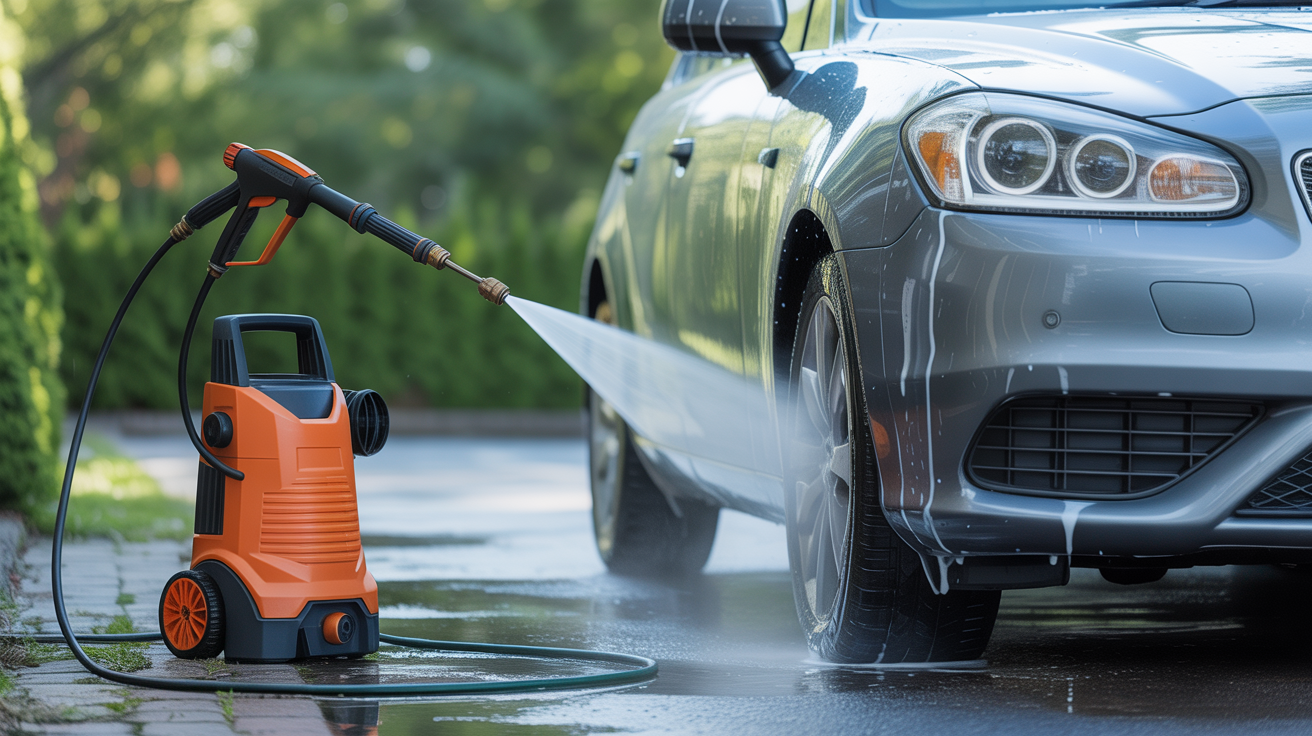
Most car owners already own a garden hose. Some have splurged on a pressure washer and wonder whether it was worth it. The honest answer is that both tools can produce a clean car, but they do it differently, and choosing the wrong one for the wrong situation causes real problems: stripped wax, forced water into door seams, or a wash that leaves so much loose grit that your microfiber towels do more scratching than cleaning.
Here is what you actually need to know before you pick up either one.
How pressure affects paint safety
Water pressure is measured in PSI (pounds per square inch). A typical residential garden hose delivers around 40 to 60 PSI at the nozzle, depending on your municipal supply and hose diameter. A consumer electric pressure washer sits between 1,200 and 2,000 PSI. Gas-powered units commonly run 2,500 PSI and above.
Paint, clear coat, and the trim around windows and doors can tolerate a lot, but they are not invincible. The danger is not pressure alone; it is pressure combined with a narrow nozzle angle and close proximity. A 0-degree (red) nozzle concentrates the full output into a pinpoint stream that will strip paint, lift edge trim, and force water through rubber seals at almost any pressure rating above 1,000 PSI.
Safe pressure washer use for car washing means:
- Staying at or below 1,500 PSI at the gun
- Using a 25-degree (green) or 40-degree (white) nozzle, never the 0 or 15-degree tips
- Keeping the nozzle at least 12 inches from the surface, 18 or more near panel edges and seams
- Avoiding sustained blasting at door jambs, convertible tops, and any area with chipped or peeling paint
With those constraints in mind, a pressure washer is genuinely useful. The extra force dislodges caked mud from wheel wells, road salt from undercarriages, and brake dust from spokes far faster than a hose ever will.
A garden hose with a quality adjustable nozzle is mild by comparison. Even the "jet" setting on most pistol-grip nozzles tops out around 80 PSI. That is enough for a rinse, enough to wet a soapy mitt, but not enough to blast loose heavy contamination before contact washing. You end up doing more work with the wash media, which increases marring risk on paint that hasn't been properly pre-rinsed.
Foam cannons vs foam guns: what actually connects to what
A foam cannon attaches to a pressure washer's quick-connect fitting and uses the high flow rate to generate thick, clingy foam. It is one of the most practical accessories in a contact wash routine because the foam dwells on the surface, loosens contamination, and provides lubrication before your mitt ever touches the car. Check out the rest of the car detailing kit breakdown for where foam cannons fit in a full setup.
A foam gun, by contrast, threads onto a standard garden hose and uses a venturi effect to draw soap into the water stream. It works, but the output is thinner and wetter, more sudsy water than actual foam. It still beats washing with a bucket alone on a dusty car, but it will not produce the same dwell time or coverage.
This distinction matters when you are building out a wash process. If you own a pressure washer and want to add a foam stage, you need a cannon sized to your unit's GPM (gallons per minute) output. Most electric units run 1.2 to 1.8 GPM, which is enough to power a foam cannon, but check the cannon's listed GPM range before buying.
Water consumption
This one surprises people. Pressure washers use less water than a running garden hose for the same task.
A standard garden hose flows 8 to 10 gallons per minute. Leave it running while you wash a sedan and you are looking at 80 to 100 gallons for a 10-minute session. A typical electric pressure washer runs 1.5 GPM. Even a 20-minute wash uses only 30 gallons.
If you live somewhere with watering restrictions, or you pay attention to utility costs, the pressure washer wins on consumption by a significant margin.
Cost comparison
| Factor | Pressure washer | Garden hose |
|---|---|---|
| Initial cost | $90 to $350 (electric); $300+ (gas) | $20 to $60 (hose + nozzle) |
| Foam application | Foam cannon ($30 to $80) | Foam gun ($15 to $40) |
| Water use per wash | ~30 gallons | ~90 gallons |
| Paint risk (proper use) | Low to moderate | Low |
| Heavy contamination removal | Excellent | Fair |
| Portability | Needs power outlet or fuel | Needs spigot only |
| Maintenance | Pump seals, winterizing | Minimal |
The garden hose wins on upfront cost and simplicity. The pressure washer makes up ground over time through water savings and reduced wash time, and it genuinely earns its keep for anyone who washes frequently or deals with off-road mud and winter road grime.
When a garden hose is the better call
Not every car needs a pressure washer. A lightly dusty daily driver that gets washed every two weeks in a shaded driveway does not require 1,500 PSI to come clean. A foam gun, two buckets, and quality microfiber towels will get the job done with less setup time and less risk of user error.
A garden hose also makes more sense when:
- The car has chipped paint around the hood edges or door sills (high pressure forces water into bare metal)
- You are washing a recently painted panel from a body shop repair
- You rent or move frequently and do not want to store or maintain a pressure washer
- You are doing a quick midweek rinse after rain, not a full detail
There is also the matter of skill. A pressure washer in the hands of someone unfamiliar with nozzle angles and standoff distance is a liability. The garden hose is forgiving in a way the pressure washer is not.
Putting it together in a wash sequence
A two-bucket hand wash works with either tool. The sequence is the same: pre-rinse to remove loose contamination, apply foam or soap, wash panels from top to bottom with a clean mitt, rinse, dry. The differences show up at the pre-rinse and rinse stages.
With a pressure washer, the pre-rinse actually does something, it strips mud and grit before your mitt contacts the car, cutting marring risk substantially. The final rinse with a 40-degree nozzle sheets water off panels cleanly. If you are also doing paint correction or any machine polishing work afterward, the cleaner pre-wash surface matters more than most people realize. Proper prep is one of the things covered in the dual-action polisher guide as well.
With a garden hose, you compensate by being more careful with your wash media, frequent rinses of the mitt, strict two-bucket discipline, and working in small sections so the soap does not dry on the panel.
Neither method produces a perfect, swirl-free result on its own. The pressure washer gives you a better starting point. The technique and media you use afterward determine the finish.
FAQ
What PSI is safe for washing a car? For car washing, keep it at or below 1,500 PSI at the nozzle, and use a wide-angle tip (25 or 40 degrees). Most consumer electric pressure washers fall in that range. Gas-powered washers often run higher and need more care, especially near trim and seals.
Can a pressure washer damage car paint? Yes, if used incorrectly. The main risks are holding the nozzle too close, using a narrow-angle tip, or targeting panel edges and chipped areas with sustained pressure. Used properly, correct nozzle, 12 to 18 inches of standoff, no 0-degree or 15-degree tips, damage is unlikely on intact paint.
Do I need a foam cannon if I already have a pressure washer? No, but it helps. You can wash effectively with just the pressure washer and a bucket. A foam cannon adds a pre-wash foam stage that loosens contamination before contact, which reduces the chance of scratching. It is a worthwhile addition if you wash the car more than once a month.
Is a foam gun on a garden hose worth buying? It is a modest upgrade over a bucket. The foam is thinner than what a cannon produces, but it still adds lubrication and dwell time compared to spraying water and wiping immediately. For occasional washes, it is a reasonable tool. For frequent washing or dirtier vehicles, a pressure washer and foam cannon are more effective.
Can I use any soap in a pressure washer foam cannon? Use a car-specific wash soap rated for foam cannons. Standard dish soap strips wax and can degrade rubber seals over time. The cannon's dilution ratio (typically 10:1 to 16:1) means the soap is heavily diluted in use, so product quality matters more than quantity.