Tools & Products
How to Choose a Dual-Action Polisher
What to look for in a DA polisher: orbit size, motor power, backing plate, and budget tiers explained without the fluff.
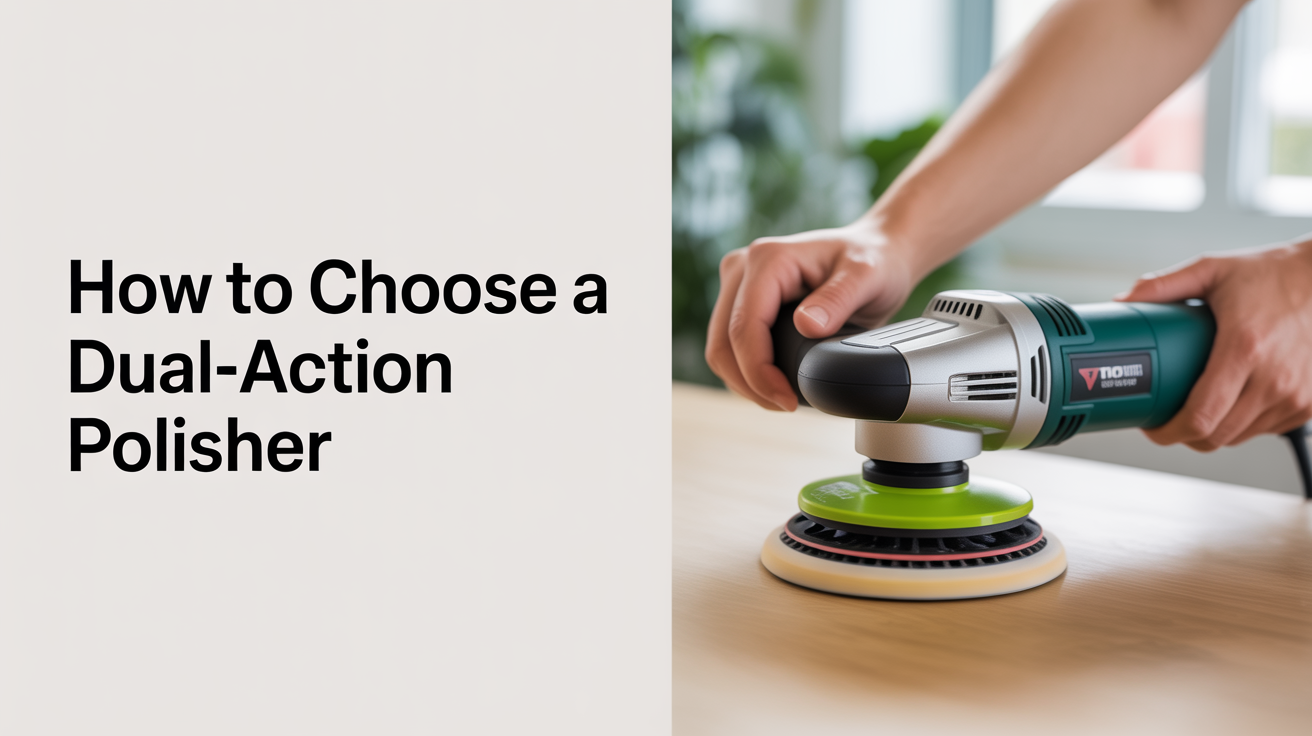
Buying the best dual action polisher for your situation is less about chasing specs and more about understanding what those specs actually mean on paint. A 21mm orbit on a soft pad feels very different from an 8mm orbit on the same paint, and picking the wrong one wastes money and time. This guide gives you the criteria to make a confident decision whether you're detailing your first car or adding a second machine to the rotation.
DA, forced-rotation, or rotary: which type do you actually need?
Most people shopping for a polisher land on a DA (dual-action or random-orbital) machine, and for good reason. A DA polisher moves the pad in two motions at once: it spins on its own axis and also traces a circular orbit around a second center point. When the pad meets resistance from paint, the spin can stall slightly, which keeps heat and cut in check. That self-limiting behavior is what makes DA machines the default recommendation for beginners and a daily workhorse for experienced detailers.
Forced-rotation polishers look similar but use a gear system to keep the pad spinning even under load. The result is more consistent cut with less technique required, though heat buildup is more aggressive than a standard DA. These machines sit between a DA and a rotary in terms of risk and power.
Rotary polishers spin in a single circular motion with no oscillation. They cut fast and correct defects that DAs struggle with, but they also burn through paint quickly if you lose focus. Rotaries make sense for paint correction on hard clears or when you need to level a heavy compound scratch. They're not beginner tools.
| Type | Difficulty | Best for |
|---|---|---|
| DA (random orbital) | Low | Beginners, paint maintenance, finishing |
| Forced rotation | Medium | Efficient correction without a rotary's risk |
| Rotary | High | Aggressive defect removal, experienced hands only |
For most people buying their first or second machine, a DA is the right call.
Understanding orbit size: 8mm, 15mm, and 21mm
The orbit is the radius of the elliptical path the pad traces. A larger orbit moves more paint surface per revolution, which translates to more cut and more heat.
An 8mm (or similar small) orbit is precise and gentle. It's useful for tight curves, door jambs, and anywhere you need control over a small area. The trade-off: it's slow on flat panels.
A 15mm orbit is where most general-purpose machines land. It balances correction ability with finishing quality. You can run a cutting compound for swirl removal, then switch to a softer pad and polish, without changing machines. If you're buying one DA polisher, this range covers the widest variety of work.
A 21mm orbit moves aggressively. Machines in this range (often called "big throw" or "XL" orbit) work fast on large flat surfaces but require more attention on curved panels and tight areas. They also tend to throw product around more visibly during use.
For a first DA, 15mm hits the right middle ground. Big-throw machines become valuable once you know what correction looks like at different orbit sizes.
Backing plate size
Most DA polishers accept either a 5-inch (125mm) or 6-inch (150mm) backing plate. A few larger machines accommodate 6.5-inch or even larger plates.
A 5-inch setup is more maneuverable and works on hoods, doors, pillars, and around mirrors without much adjustment. A 6-inch plate covers more area per pass and finishes a panel faster, but it requires a little more awareness on curved edges. Many detailers run 5-inch plates by default and only switch up when working large horizontal panels like hoods and roofs.
Check whether your machine takes M14 thread (common in European-style tools) or 5/8"-11 thread (common in North American tools). The thread pitch determines which aftermarket plates and pads are compatible.
Motor power and speed control
DA polishers are rated in amps (corded) or watts, with orbital strokes per minute (OPM or RPM) as the operating range. A machine in the 500-700W range has enough power to maintain pad speed under load without bogging down. Below that threshold, the motor slows noticeably when you apply pressure, which undermines both correction and finishing.
Variable speed is not optional. A 6-position dial or a continuous speed ring lets you match the machine to the task: slow speeds (1-2) for applying or spreading product, medium (3-4) for finishing polishes, high (5-6) for correction work with a cutting pad. Machines with only a fixed speed limit how useful they are across different stages of a detail.
Soft-start is a common feature that ramps the motor up gradually when you pull the trigger. It prevents the pad from flinging product at startup. Not critical, but genuinely convenient.
Ergonomics matter more than you'd expect
A machine you can hold comfortably through a full panel makes the whole process better. Consider:
- Grip design: Some DAs have a traditional drill-style grip; others have a flat, palm-style body. Test which feels natural in your hand.
- Weight: Heavier machines fatigue your arm on vertical panels like doors and fenders. Most good DAs fall between 1.5kg and 2.5kg.
- Cord length: 5 meters (about 16 feet) gives enough range to work around a car without dragging an extension cord across wet paint.
- Vibration: Look at reviews that mention vibration at high speed. A well-balanced machine is noticeably less tiring on long sessions.
If you're working on cars regularly, spending a little more for better ergonomics pays off over hundreds of hours.
Kit vs. bare tool
Many polishers are sold as kits with a case, backing plate, and a set of pads. Kits can be good value, but check what pads are included. A kit with three foam pads (cutting, polishing, finishing) and a backing plate gives you enough to start. Kits that include only one generic pad are less useful out of the box.
Buying bare tool and choosing your own pads separately gives you more control over what you're working with from day one. Either path works, as long as you end up with at least a cutting pad, a polishing pad, and a finishing pad before you start.
Which pads to buy alongside your DA
The polisher is only half the system. Pad type, compound, and machine speed work together.
- Cutting pads (usually firm foam or microfiber): Pair with a compound for removing swirl marks and light scratches.
- Polishing pads (medium density foam): Pair with a finishing polish to refine the paint after correction.
- Finishing pads (soft foam): Pair with a sealant, wax, or finishing polish for a clean final layer.
Start with foam pads. Microfiber cutting pads cut faster but have a steeper learning curve and need careful rinsing between uses.
For more on what to stock in a full detail kit, see car detailing kit: what you actually need. When you're done polishing, microfiber quality matters for the wipe-off stage, choosing microfiber towels for detailing covers what to look for. And before any machine polishing starts, the wash matters, pressure washer vs garden hose for washing explains when each makes sense.
Budget tiers
Entry level ($80-$130): Machines in this range are capable for maintenance work and light swirl removal. Motor power is typically lower, and build quality shows in the grip and switch feel. Acceptable for occasional use.
Mid range ($150-$230): This is where the best value sits. You get adequate power, proper variable speed, better balance, and compatibility with a wide range of pads. Most detailers doing regular work stay in this bracket indefinitely.
Professional range ($250+): Brushless motors, better vibration damping, longer service life, and usually better warranty support. Worth the investment if you're detailing multiple cars per week or want a machine that lasts years without service.
Buying checklist
Before you finalize a purchase, run through these:
- Orbit size: 15mm for general use, 8mm for detail work, 21mm for aggressive correction
- Motor power: 500W or more (corded), check watt rating for battery-powered options
- Variable speed: at least 3 speed settings, preferably a continuous dial
- Backing plate included, with known thread size (M14 or 5/8"-11)
- Weight under 2.5kg for comfortable extended use
- Pad compatibility confirmed before ordering pads separately
- Cord at least 4-5m if corded, or check battery runtime if cordless
FAQ
Is a DA polisher safe to use on clear coat? Yes. The random-orbital motion limits heat buildup in a way that a rotary polisher does not. That said, you can still damage paint with a DA if you use too much pressure, run a cutting pad dry, or work one spot for too long. Let the machine do the work and keep it moving.
What's the difference between OPM and RPM on a DA? OPM (orbits per minute) refers to how fast the backing plate completes its elliptical orbit, while RPM refers to pad rotation. On a random-orbital DA, the pad rotation is not fixed, it varies with pad resistance. OPM is the more useful number for comparing machines.
Can I use a DA polisher on a matte or satin finish? No. Matte and satin finishes have intentional surface texture that polishing compounds will flatten and gloss over. Those finishes require specific maintenance products and techniques, a DA polisher with compound will ruin them.
Do I need a separate DA for compounding and finishing, or can one machine do both? One machine handles both tasks by switching pads and adjusting speed. Many detailers prefer two machines to avoid cleaning pads mid-session, but it's a convenience choice, not a requirement.
How do I know if my paint needs correction or just a polish? Examine the paint in direct sunlight or under a detailing light at a low angle. Swirl marks and fine scratches show as circular or web-like patterns under that light. If you see them, compound with a cutting pad is the starting point. If the paint looks clear but lacks depth or gloss, a finishing polish on a soft pad is enough.