Tools & Products
Choosing Microfiber Towels for Detailing
A practical guide to GSM ratings, weave types, edgeless vs edged, and how to build a towel kit that won't scratch your paint.
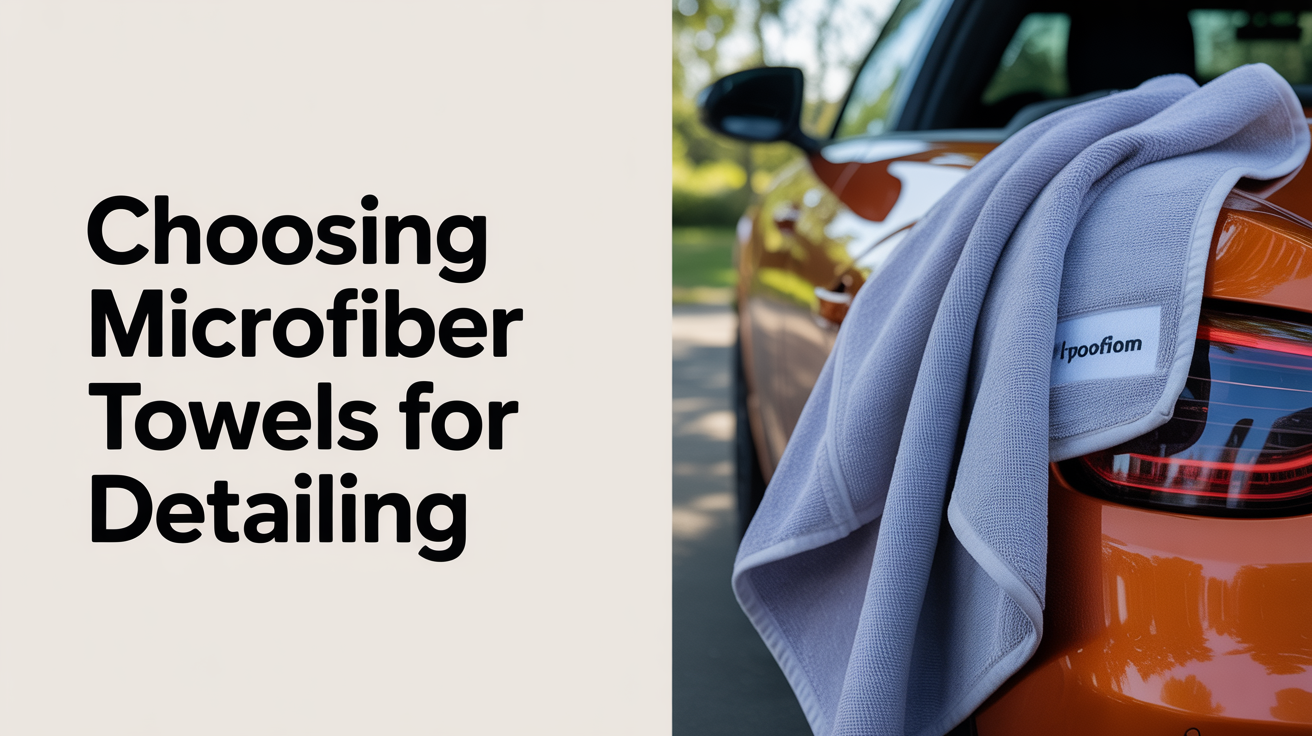
Walk into any auto parts store and the microfiber towel section looks deceptively simple. They're all soft, they're all cheap, and the packaging all says "scratch-free." But grab the wrong one for the wrong job and you'll leave swirl marks across a freshly polished hood, or drag wax residue because the pile was too short to hold anything. The best microfiber towels aren't the most expensive ones; they're the right ones for the task at hand.
This guide breaks down what actually matters when you're buying detailing towels: GSM weight, pile construction, blend ratio, edge treatment, and how to keep them from becoming scratch machines after the first wash.
What GSM means and why it matters
GSM stands for grams per square meter. It's the single most useful number on the packaging because it tells you how dense and thick the pile is. Higher GSM means more fiber per unit area, more softness, more absorption, and less risk of paint marring. Lower GSM means a thinner, harder towel that's better suited for tasks where absorbency matters less than precision.
A lightweight towel around 200-300 GSM dries fast, leaves no lint, and is easy to fold tightly. It's what you reach for when wiping off a spray wax or a quick detailer. A 400-500 GSM towel is the workhorse of most detailing kits: enough plush to safely buff paint without dragging grit, enough body to hold product. Above 600 GSM you're into ultra-plush drying towels and paint correction buffers. They're overkill for removing tire dressing but genuinely worth it for final paint wipe-downs on dark cars.
One caveat: GSM is only half the story. A 500 GSM towel made from a poor blend at sloppy construction can scratch worse than a well-made 300 GSM towel. The fiber blend matters just as much.
Fiber blend: polyester vs. polyamide
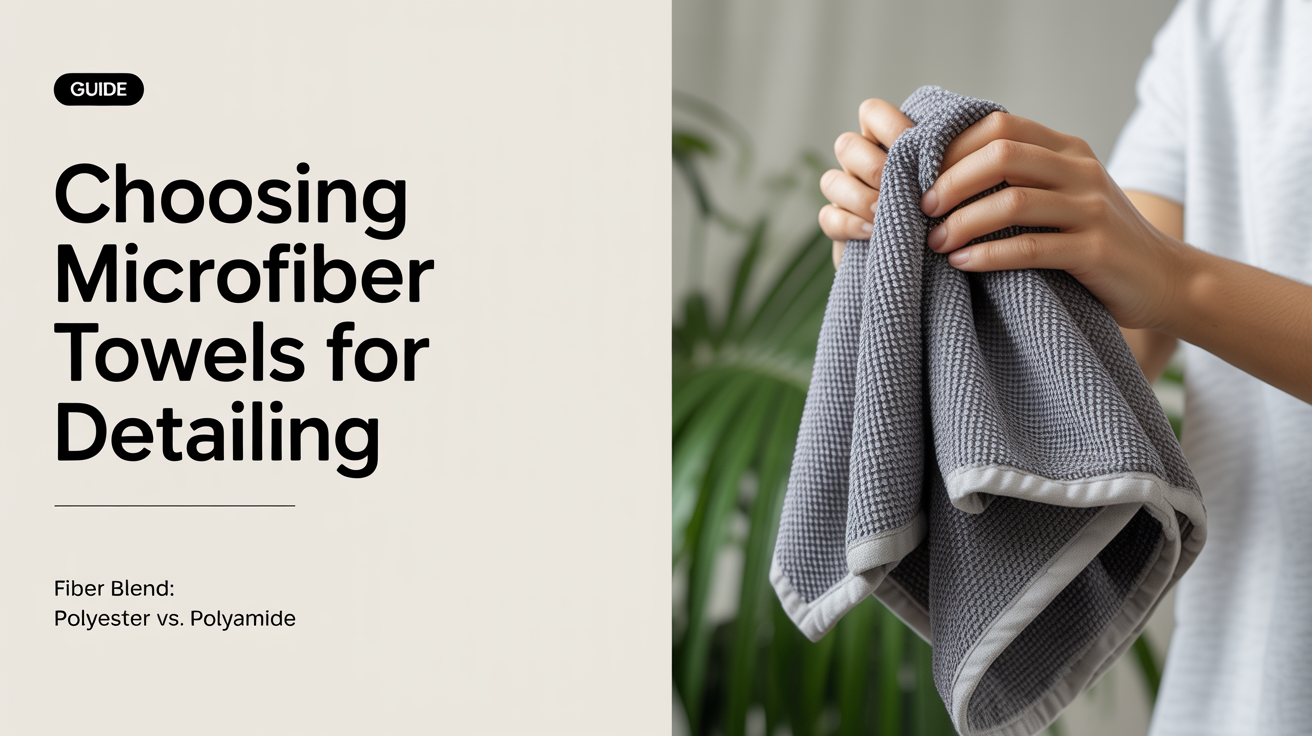
Most quality microfiber towels are a blend of polyester and polyamide (nylon). Polyester provides the structure and scrubbing action; polyamide is softer, more absorbent, and gives the towel its "grip" on surfaces. The two common ratios are 70/30 and 80/20 polyester/polyamide.
The 80/20 blend is cheaper to make and still works fine for most tasks. The 70/30 blend absorbs more liquid and feels noticeably softer against paint, which is why you'll find it in higher-end towels marketed for paint work. For wiping wheel wells or scrubbing rubber trim, the ratio is basically irrelevant. For anything touching clear coat, the 70/30 split is worth the small price difference.
Towel types, GSM ranges, and best uses
| Towel Type | GSM Range | Best Use |
|---|---|---|
| Utility / all-purpose | 200-300 | Spray wax, quick detailer, glass, interior wipedowns |
| Waffle weave | 300-400 | Drying panels, absorbing water from crevices |
| Plush buffing | 400-500 | Removing wax, polish, paint sealant |
| Ultra-plush drying | 500-700 | Final paint wipe-down, waterless wash |
| Twisted loop | 350-450 | Wheel faces, jambs, heavy product removal |
The waffle weave earns its place in any kit because the textured surface creates channels that pull water away from the panel faster than a flat pile. On a wet car coming off the rinse, a single large waffle weave towel covers more ground with fewer passes than a standard plush towel.
Twisted loop towels have a dual pile construction: one side features tightly twisted strands that reach into crevices; the other side is flatter for wiping open surfaces. They're not glamorous, but they're the right tool for lug nuts, speaker grilles, and trim edges where a big plush towel just gets in the way.
Edgeless vs edged towels
The stitched border on a standard microfiber towel is a known hazard. That woven edge is harder than the pile, and if it drags across paint under pressure, it leaves a mark. Edgeless towels solve this by finishing the perimeter with the same soft pile as the face, or by using a silk-like binding that stays soft regardless of pressure.
For any work directly on paint, particularly buffing polish residue or doing a final wipe after a coating application, edgeless is the right call. The risk of catching a corner and leaving a scratch isn't theoretical. On surfaces where paint contact isn't the concern, such as interior plastics, glass, or tires, the edge type is not worth paying a premium for.
Color-coding by task
Mixing towels across tasks is one of the fastest ways to contaminate clean surfaces with chemicals that don't belong there. Silicone from a tire dressing towel will ruin a fresh coat of ceramic coating. Polish residue ground into a "drying" towel will leave compound haze on the next panel you wipe dry.
A simple color system prevents this without much thought:
- Blue or gray: paint-safe buffing, wax removal, quick detailer
- Yellow or orange: glass and windows
- Green: interior surfaces (dash, leather, plastics)
- Red or black: tires, wheels, engine bay, jambs
The specific colors you assign don't matter. What matters is committing to a system and keeping contaminated towels physically separate from clean-panel towels in your kit. If you're building a kit from scratch, the car detailing kit guide covers how to organize the full setup.
How many towels you actually need
The short answer is more than you think. One of the most common rookie mistakes is running out of clean towels mid-job and reaching for a used one. A used towel carrying dried compound is an abrasive pad.
For a typical single-vehicle detail, a reasonable starting inventory looks like this:
- 10-12 plush buffing towels for wax/polish removal
- 4-6 waffle weave or ultra-plush for drying
- 4-6 all-purpose for interior and quick detailer
- 4 glass towels
- 4-6 utility towels for wheels and tires (kept permanently separate)
That's 26-34 towels, which sounds like a lot until you're three hours into a detail and reach for a fresh one. When you're washing without a pressure washer and working section by section, fresh towels per panel matter, as described in this comparison of washing methods.
Washing and care
Microfiber is damaged more often in the laundry than in use. A few specific things ruin towels fast:
- Fabric softener. It coats the fibers and kills absorbency. Never use it.
- Heat. High dryer heat melts the synthetic fibers. Use low heat or air dry.
- Washing with cotton. Cotton lint embeds itself in microfiber pile and turns the towel into sandpaper.
- Detergents with fragrance or dye additives. These leave residues that transfer to paint and glass. Use a plain, additive-free liquid detergent.
- Washing with contaminated shop towels or rags. Keep a dedicated laundry bag for microfiber only.
Wash towels in warm water on a gentle cycle. Shake them out before drying to open the pile. A dedicated microfiber wash like a simple liquid detergent without conditioners works fine; specialty "microfiber wash" products are largely marketing. What actually matters is what you leave out of the wash, not what you add.
If a towel picked up compound or ceramic coating residue, pre-soak it in warm water before the wash cycle. Hardened coating residue usually comes out if you address it immediately; let it cure and the towel is compromised for paint work permanently. Retire those to the wheel bucket.
Connecting towels to your broader tool kit
Microfiber selection pairs directly with the other tools in your detailing process. A dual-action polisher running a light cutting pad removes polish quickly, but if the follow-up towel is too coarse or contaminated, you undo the clarity you just built. That's covered in choosing a dual-action polisher, where towel compatibility with different paint correction stages is worth understanding before you buy either.
The same logic applies to washing. Running a pressure rinse before a hand wash dramatically reduces the load on your towels because the heavy contamination is off the surface before any fabric touches it.
FAQ
What GSM should I look for in a general-purpose detailing towel?
400-450 GSM covers most tasks well: absorbent enough for light drying, soft enough for paint, and durable enough to hold up to regular washing. If you only buy one type to start, this range is the right call.
Can I use the same microfiber towel on paint and windows?
Technically yes, but you'll get streaks on glass from any wax or polish residue the towel picked up. Dedicated glass towels (usually 200-300 GSM, lint-free) are worth keeping separate.
How do I know when a microfiber towel is worn out?
When the pile stops feeling soft and starts feeling flat or rough, or when it stops picking up moisture efficiently, it's time to retire it from paint work. Repurpose worn towels for tires and wheels rather than throwing them away.
Does the blend ratio matter for interior cleaning?
Less so than for paint. Interior surfaces tolerate a wider range of towels. An 80/20 blend works fine for wiping down dash panels, leather, or plastics. Save your 70/30 plush towels for exterior clear coat.
Why do some towels shed lint the first few uses?
Lower-quality microfiber towels sometimes have loose fibers from the manufacturing process. Wash new towels before their first use and this usually resolves itself within two or three wash cycles. If a towel sheds lint extensively after multiple washes, it's not suitable for paint work.