Paint Care & Polishing
How to Remove Water Spots From Car Paint
Learn how to remove water spots from car paint at home, from light mineral deposits to etched hard water spots, with the right products and steps.
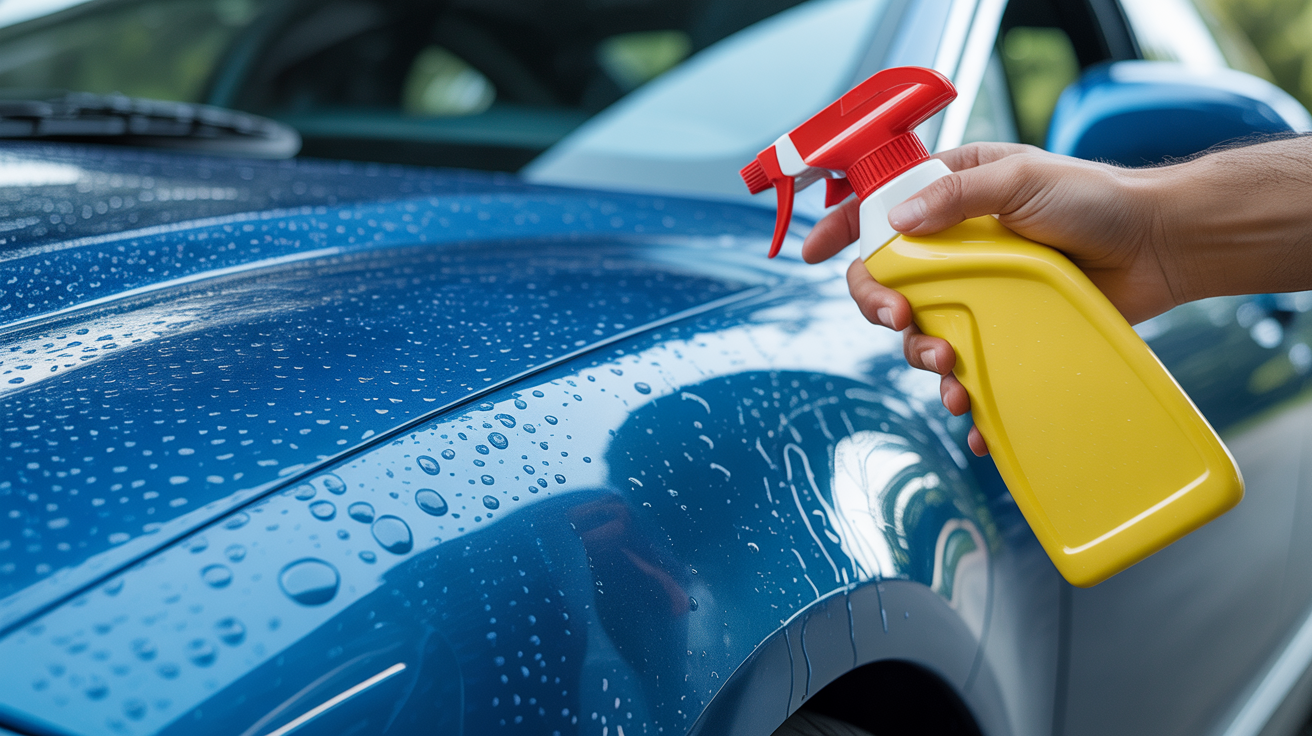
Water spots are fixable at home in most cases, and the method you need depends on how deeply the minerals have bonded with your clear coat. Fresh spots from a recent wash behave very differently from spots that baked on through a week of summer sun.
Why Water Spots Form
When water evaporates off painted metal, the dissolved minerals stay behind. Tap water in most cities contains calcium and magnesium carbonates. Irrigation sprinkler water is often worse because it picks up additional minerals from the soil before it ever hits your car.
The trouble starts when those minerals dry in direct sunlight. Heat accelerates the chemical bonding between the deposit and the clear coat surface. A spot that forms and dries in the shade on a 65°F (18°C) day may rinse off cleanly. The same spot baking on a hood at 90°F (32°C) for three days can chemically etch a crater into the lacquer that a pressure washer alone won't shift.
How to Read Spot Severity
Not every water spot needs the same fix. Before you reach for anything, inspect the spot in direct sunlight from a low angle.
Surface deposits (Level 1): White or hazy marks with no texture change you can feel when you carefully run a fingernail across them. The mineral is sitting on top of the clear coat, not in it. An acid-based remover or diluted white vinegar handles these well.
Light etching (Level 2): A faint ring or shallow crater is visible when the light rakes across the panel. The spot may feel very slightly raised or pitted. You need a clay bar or mild polish to level the surface.
Deep etching (Level 3): A sharp-edged pit you can feel with your fingertip, or a spot that has stained the paint a different color. These usually need wet-sanding or professional paint correction. Driveway chemistry won't fix them.
Most water spots you encounter are Level 1 or low-end Level 2.
Removing Surface Mineral Deposits
Wash the car first to get loose dirt off the panel. Working over dirty paint drags grit across the surface and the abrasion leaves its own marks.
The Vinegar Approach
Mix 1 part plain white vinegar with 3 parts distilled water in a spray bottle. Mist a small area of the panel, let it dwell 30 to 60 seconds, then wipe gently with a clean microfiber towel. Do not let the solution dry on the car.
Diluted white vinegar sits at around pH 3, which is acidic enough to dissolve calcium carbonate deposits without damaging clear coats on short contact times. Work in shade with the panel cool to the touch. Hot paint lets the solution concentrate as it evaporates, which is harder on the finish and less effective on the spots.
If the spots clear, rinse the entire panel thoroughly with water and dry it completely. Acid strips existing wax and sealant, so apply fresh protection to any area you treat this way.
Dedicated Water Spot Removers
If vinegar doesn't fully clear a stubborn area, a formulated water spot remover usually does the job. These products are blended to stay wet longer and work across a wider range of finishes than straight vinegar. Apply with a foam applicator, let it dwell for the time specified on the label (typically 1 to 3 minutes), wipe, and rinse.
Avoid letting any remover dry on the surface. If it starts to haze before you've finished a section, mist the area with water to reactivate it before wiping.
Removing Lightly Etched Spots
When the mineral deposit has bonded with or slightly scored the clear coat, you need mild mechanical action to restore an even surface.
Clay Bar Pass
A clay bar lifts bonded contamination, including mineral residue that has fused to the clear coat. Work one panel at a time. Spray clay lubricant generously across the section, flatten a piece of clay to roughly the size of your palm, and glide it across the panel in straight overlapping passes. Fold and re-knead the clay each time you pick up visible dirt on its surface. Never clay dry paint.
After claying, check the surface texture by placing a clean plastic sandwich bag over your fingertips and running them across the panel. This removes skin oils and lets you feel texture precisely. The surface should feel like glass. If it does and spots are still visible, they may have transferred to the clay already. If you still feel texture, clay that section again.
Light Polish
Clay removes contamination but won't fix a crater already formed in the lacquer. For etched spots, a light polish levels the surrounding clear coat to match the depth of the mark.
You can apply polish by hand with a foam applicator pad, though a dual-action polisher produces more even results and significantly cuts the time on larger panels. Apply a pea-sized amount to the pad, spread it across the section, then work in overlapping passes until the product turns clear. Wipe off with a clean microfiber and check the spot in direct sunlight.
For most water spot etching, a polish with fine to medium cut is the right call. Reaching straight for a compound removes more clear coat than necessary for shallow damage. If you're not sure which product to use, the breakdown in polishing vs compounding explains the practical difference between the two.
After polishing, protect the area with wax or sealant immediately. Fresh polish leaves no protection on the clear coat.
Keeping New Spots From Forming
The spots that matter least are the ones that never set. A few consistent habits reduce how often you're dealing with them.
Dry the car after every wash. Even a 15-minute air dry on a warm day in the sun leaves rings. A dedicated microfiber drying towel pulled across each panel keeps the surface dry before minerals can deposit.
Rinse off sprinkler hits the same day. Irrigation water is frequently more mineral-heavy than tap water. If it sits and bakes in afternoon sun, it etches faster than typical wash water.
Use distilled water for the final rinse. In hard-water areas, the last rinse with tap water puts fresh minerals right back on a clean surface. A bucket of distilled water for the final rinse, or a spot-free rinse system, eliminates most of the problem before it starts.
Keep fresh protection on the paint. Wax and sealant give mineral deposits a barrier to sit on rather than etching directly into the clear coat. Spots on protected paint are almost always Level 1, which makes them much faster to remove.
Frequently Asked Questions
Can I use undiluted white vinegar on car paint?
Straight white vinegar is around pH 2.4, which is more aggressive than the diluted mix and can be too hard on some finishes if it sits for more than a few seconds. The 1:3 dilution (one part vinegar to three parts distilled water) keeps acidity in a safer range while still dissolving calcium deposits. Never let either concentration dry on the surface.
Do water spots and swirl marks look the same?
They can look similar under certain lighting, especially on dark paint. The difference is that swirl marks are fine scratches in the clear coat that appear as circular or arc-shaped patterns. Water spots are mineral deposits that form rings where water evaporated. A practical test: try wiping the mark with diluted vinegar on a microfiber. If it disappears, it was a water spot. If it stays, it's likely a surface scratch.
How long before water spots cause permanent damage?
It depends on temperature and mineral content. In shade at mild temperatures, light spots can sometimes sit for several days without etching. In direct summer sun above 85°F (29°C), spots from high-mineral irrigation water have been known to etch within 24 to 48 hours. The safe rule is to deal with them the same day you notice them.
Will a quick detailer spray remove water spots?
A quick detailer can shift very fresh, light deposits on a car with good wax protection underneath. It doesn't carry the acidity to dissolve hardened mineral carbonates or the abrasive cut to address etching. If two passes with a QD and a microfiber don't clear a spot, move to a dedicated water spot remover or clay.
Does a ceramic coating prevent water spot etching?
A ceramic coating makes water spot removal easier because minerals bond less tenaciously to a coated surface. Many light spots on a coated car wipe off with a quick detailer that would require acid treatment on bare paint. That said, ceramic coatings don't make paint immune to etching. Hard water left to bake in sun on a coated car still causes mineral deposits and can still etch over time. The coating changes the difficulty, not the chemistry.