Wheels & Tires
How to Dress Tires for a Long-Lasting Finish
Learn how to apply tire dressing for a long-lasting finish. Covers matte vs glossy, water-based vs solvent types, step-by-step application, and how to stop s...
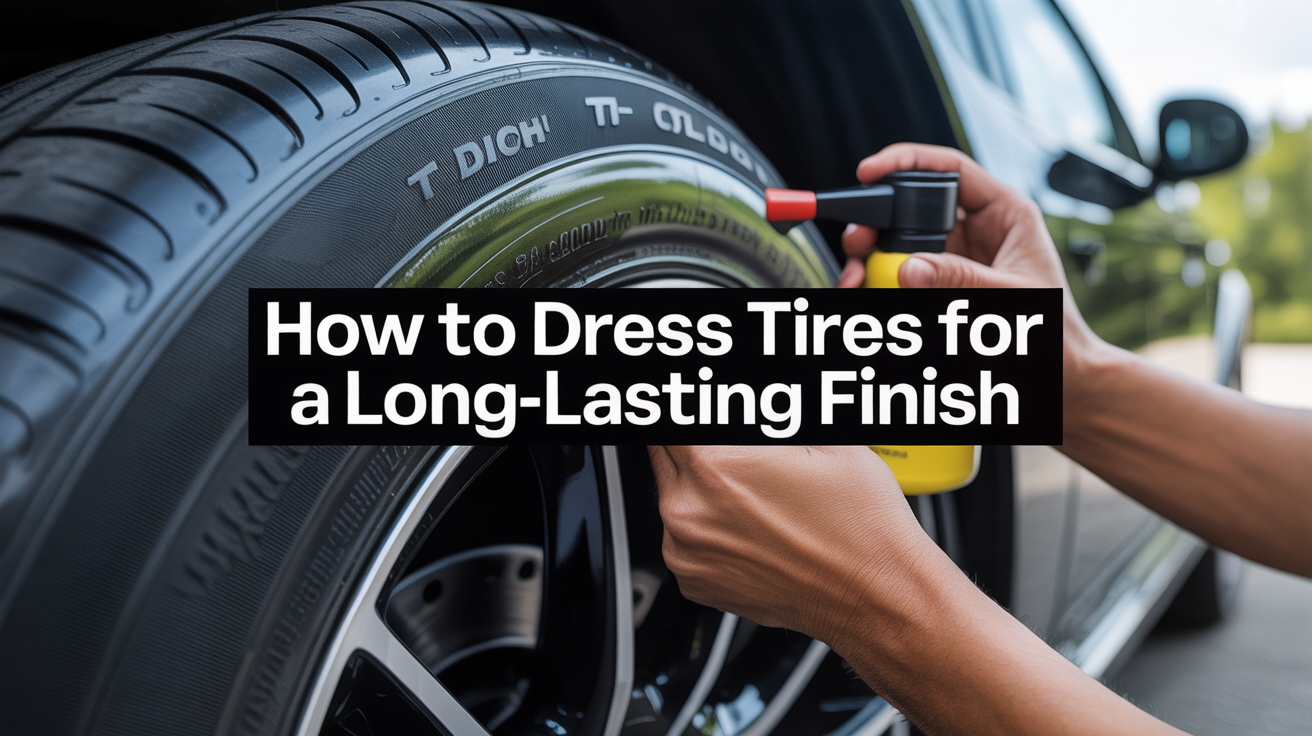
Tire dressing does more than make rubber look clean and dark. A good product adds a UV-protective layer that slows the natural browning and cracking that hits tire sidewalls over time. Applied correctly, it can stay looking fresh for two to four weeks with minimal effort between washes.
What Tire Dressing Actually Does
Most tires are made from a compound that naturally migrates brown antiozonant chemicals to the surface as the rubber ages and flexes. This is normal chemistry, not just road grime. Dressing doesn't stop that migration, but it creates a barrier that slows the browning process, blocks UV radiation, and fills the micro-texture of the rubber so the sidewall looks darker and more uniform.
One thing it does not do: restore tires that are already showing spiderweb cracking along the sidewall. Dressing on cracked rubber is cosmetic at that point. If you see real dry rot, the tires need a professional inspection before you worry about how they look.
Tire Dressing Types: Water-Based vs. Solvent-Based
Picking the right product matters more than most guides let on. The formula determines the finish, how long it lasts, and whether you end up with brown spots flung across your fenders.
Water-Based Dressings
Water-based formulas are the safer everyday choice. They tend to produce a matte or satin finish, they absorb into the rubber rather than sitting on top, and they're far less likely to sling off at highway speed. Expect 1 to 2 weeks of lasting results under normal conditions.
These products are also the better option if you need to move the car right after application. The lower sling risk means you're not watching the clock before you pull out of the driveway.
Solvent-Based Dressings
Solvent-based products give you the high-gloss, deep-wet look that shows up on cars at weekend shows. They generally last longer on the surface (often 3 to 4 weeks) but come with two practical downsides. First, sling is a real issue if you apply too much or drive at speed too soon after application. Slung dressing leaves fine brown dots across your front fenders and lower bumper, and they're tedious to clean off. Second, some older formulas with heavy petroleum distillates have been linked to rubber degradation with repeated use over years.
Most current solvent-based products are safer than their predecessors, but the sling risk is still worth managing through proper technique, not just trusting the label.
Matte vs. Glossy Tires: Which Finish to Choose
This comes down to what you actually like. A matte or satin finish looks closer to a fresh factory tire: clean, dark, and intentional without being reflective. A glossy finish catches light and depth the way a show car wants it to.
For regular use, most driveway detailers land in the satin range. It reads as "well maintained" rather than "coated in product." If you're showing the car or just like the high-gloss look, that's a valid choice too, just plan on thinner coats and a little extra dry time before driving.
Preparing the Tires Before Dressing
This step gets skipped constantly and it's the most direct reason tire dressing fails to last. Old dressing residue, brake dust, and road grime sit between the new product and the rubber, cutting adhesion and cutting how long results hold.
Before you open the dressing bottle:
- Rinse the tire thoroughly with a hose or pressure washer. This knocks off loose grit that would otherwise scratch the sidewall during scrubbing.
- Apply an all-purpose cleaner diluted to about 4:1 (water to product) to the sidewall and scrub with a stiff tire brush. Work all the way around the circumference, not just the visible face.
- Rinse again and let the tire dry completely. This part is non-negotiable. Dressing applied to damp rubber dilutes, streaks, and washes off far faster than it should.
If you're also cleaning the wheels in the same session, do the rims first and let the wheel cleaner drain before scrubbing the tires. Otherwise you're contaminating a freshly cleaned sidewall. The guide on how to clean car wheels and rims walks through that sequence in full.
Also, if you're dealing with heavy brake dust buildup on the sidewalls, how to remove brake dust from wheels covers the right process before any dressing goes on. Brake dust can bond to rubber and block adhesion the same way it does on wheel faces.
Applying Tire Dressing Step by Step
What You'll Need
- Tire dressing (water-based or solvent, depending on your finish preference)
- A foam tire applicator or a purpose-made sponge applicator
- A microfiber cloth for blotting excess
Skip the temptation to spray directly onto the tire from close range. It's hard to control coverage, soaks the brush or surrounding area, and makes sling dramatically more likely. Pour product onto the applicator instead.
The Application Process
Step 1. Confirm the tire is dry. Even if you washed the car 20 minutes ago, a tire that still feels cool to the touch on the inside of the tread has moisture in it. Give it another 10 to 15 minutes.
Step 2. Pour a small amount of dressing onto the foam applicator, roughly the volume of a golf ball, and spread it across the sidewall using overlapping passes. Work in sections around the tire rather than trying to do the full circumference in one stroke.
Step 3. Use moderate product. The reflex is to apply more for a deeper finish, but it doesn't work that way. Thin, even coats absorb and adhere better, and sling far less than a heavy coat loaded on in one pass.
Step 4. After applying, wait 3 to 5 minutes before moving the car or letting the wheels drip-dry. If you see dressing pooling in the lettering grooves or along the lower sidewall, blot with a microfiber cloth rather than wiping. Wiping pulls product around and streaks it; blotting lifts the excess cleanly.
Step 5. For a deeper finish, apply a second coat once the first has dried to a non-tacky state, usually 10 to 15 minutes. Two thin coats outperform one thick application every time in both looks and longevity.
Step 6. Move the car a few inches forward or back to expose the section of tire that was resting on the ground, and dress that strip too. The contact patch gets left bare every time otherwise, and it shows once the car is moving.
How Long Tire Dressing Lasts and How to Extend It
Realistic expectations by product type under normal driving conditions:
- Water-based satin formula: 1 to 2 weeks
- Solvent-based glossy formula: 2 to 4 weeks
- Gel or paste dressings: 3 to 5 weeks with correct prep
Rain and automatic car washes will pull those numbers down. The single biggest variable in how long dressing actually holds is what you did before applying it. A tire that was degreased, scrubbed with a brush, and fully dried will hold product noticeably longer than one that got a quick rinse and a coat while still damp.
Incorporating tire dressing into every wash routine (even just a light refresh coat) is easier than reapplying from scratch after weeks of neglect. A light recoat on clean rubber takes about 5 minutes for all four tires.
Frequently Asked Questions
Can I apply tire dressing right after washing the car?
Yes, but wait for the tires to dry first, at least 10 to 15 minutes after the final rinse. Dressing on wet rubber dilutes on contact, causes streaking, and washes off at the first rain. If you're running through a full wash and detail, apply tire dressing as one of the last steps.
Why does tire dressing sling onto my paint?
Sling almost always comes down to too much product or not enough dry time before driving. A thin, even coat that's had 20 to 30 minutes to absorb before you pull out will stay on the tire. A heavy coat applied right before leaving the driveway will end up as brown dots on your front fenders at 60 mph (100 km/h).
Is tire dressing safe for all tires?
Modern water-based dressings are generally safe for any passenger car rubber, including tires with white lettering or raised white sidewall text. Older solvent-based formulas with petroleum distillates can dry out rubber over years of repeated use. If you're using a solvent product, check the label for rubber compatibility. For most regular driving situations, water-based is the safer default.
What is the difference between tire shine and tire dressing?
The terms are used interchangeably on most store shelves. In practice, "tire shine" usually describes spray products aimed at quick, high-gloss application, while "tire dressing" is a broader label that includes gel, liquid, and paste formulas across the full finish range. Both work on the same principle and the distinction is mostly marketing.
How often should I reapply tire dressing?
Every 1 to 4 weeks, depending on the formula, how much you drive, and the weather in your area. A visual check gives you an honest answer: if the tire looks brown or dry rather than dark and uniform, it's time for another coat. For detail-focused washes, building dressing into the routine keeps you from ever playing catch-up.