Interior Detailing
How to Detail Your Car Interior
Learn how to detail your car interior from scratch: the right order, tools, and products for every surface, from carpets to glass.
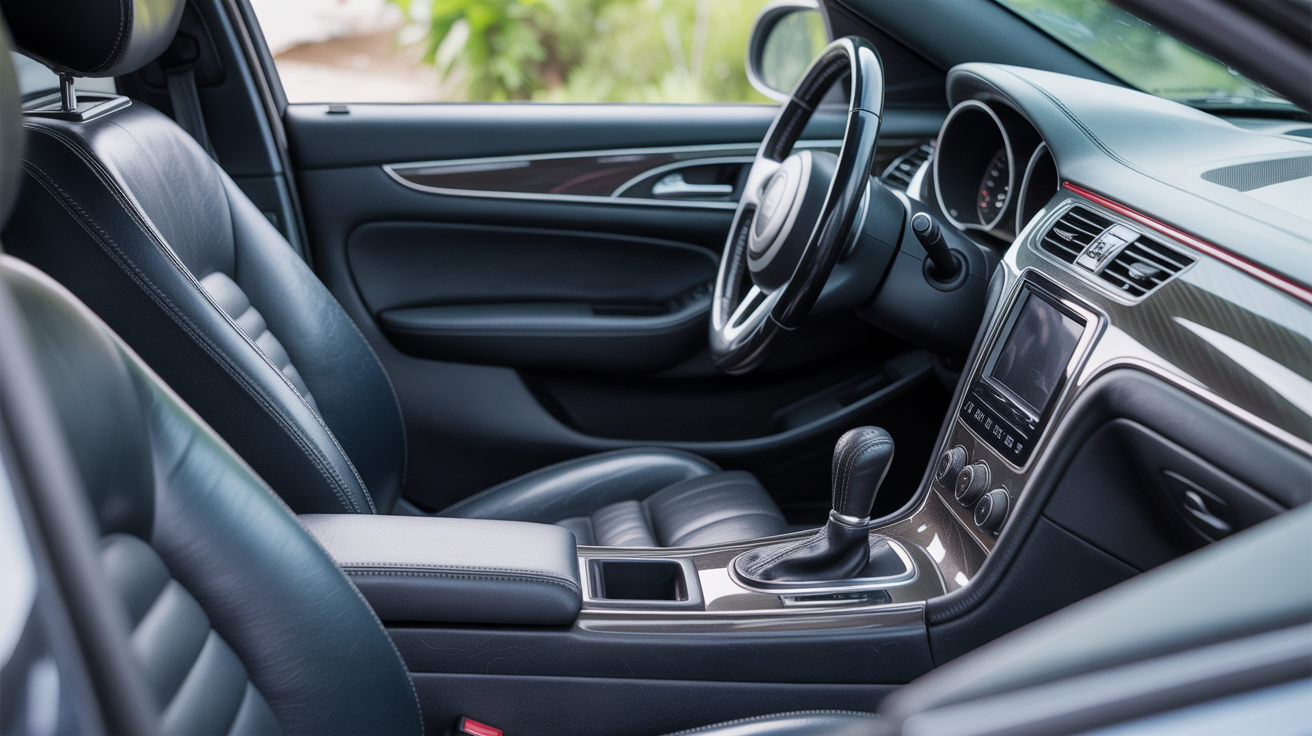
Most people underestimate how long a proper interior detail takes. A quick vacuum and a spritz of dashboard spray is not detailing, it's maintenance. A real interior detail takes two to four hours on an average sedan and leaves the cabin smelling clean, looking fresh, and free of the grime that builds up in every crevice you've stopped noticing.
This guide walks you through the full process: what to pull out first, what order to work in, which products suit which surfaces, and the details most tutorials skip.
At a Glance
- A full interior detail runs two to four hours on a sedan, longer on a three-row SUV or minivan.
- Work in this order: declutter, dry vacuum, seats, carpets and mats, hard surfaces, glass, reinstall. Each step protects the one that follows it.
- Spray products onto your towel or applicator, not directly onto the surface, especially near buttons, screens, and vents.
- Matte or satin interior detailer looks more factory-correct than gloss, and resists fingerprints better.
- Ventilate the cabin while product is drying and for a stretch afterward; interior cleaners and detailer sprays are volatile organic compound (VOC) sources, and the EPA recommends increasing airflow whenever you use them.
- Let the wheels wait. Glass and hard surfaces get contaminated by earlier steps, so they're always last, not first.
What you need before you start
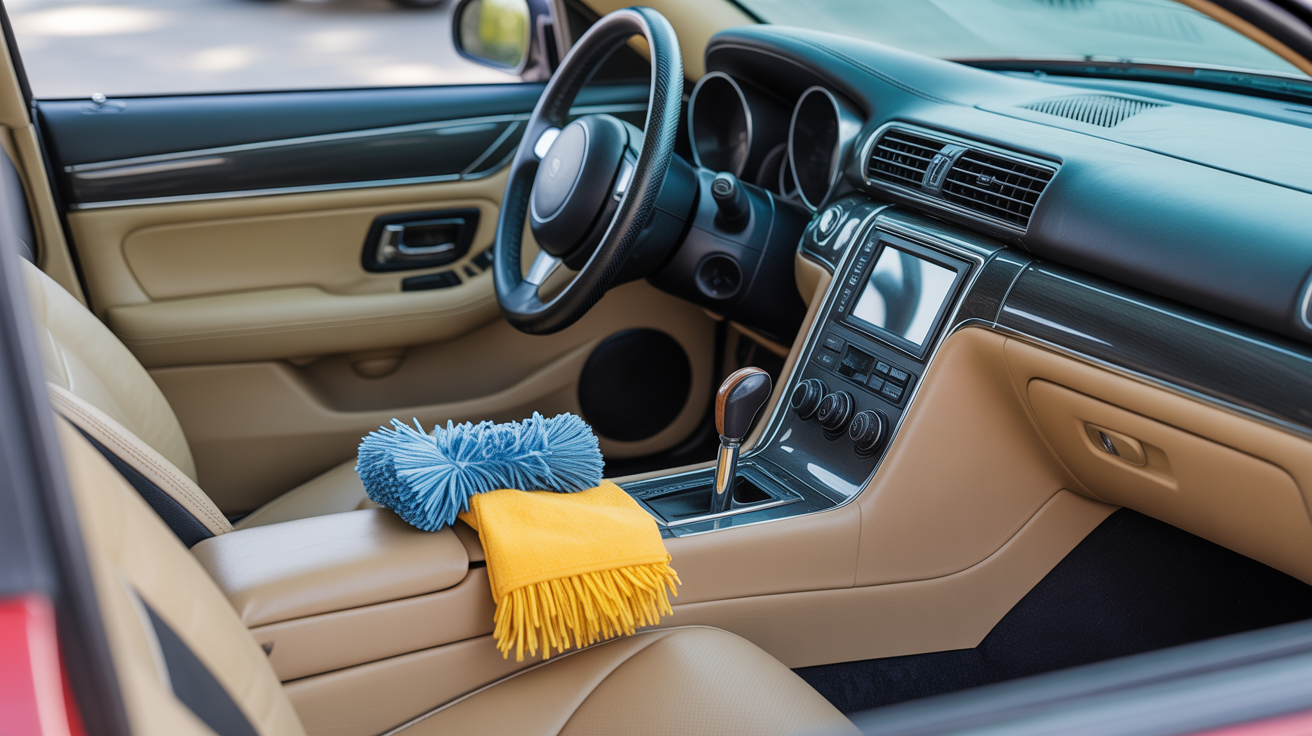
Gather everything before you open a car door. Stopping mid-clean to hunt for a brush costs time and lets product dry on a surface before you wipe it.
Tools:
- Shop vac or a dedicated car vacuum with crevice and brush attachments
- Microfiber towels (at least 6, separated by use: one for glass, one for plastics, one for leather or fabric)
- Soft-bristle detailing brushes in two sizes (a 1-inch for vents and a 2–3-inch for general trim)
- Interior steam cleaner (optional but excellent for seats and carpets)
- Foam applicator pads
Products by surface:
| Surface | Product type | Tool |
|---|---|---|
| Fabric seats / carpets | Upholstery foam cleaner or APC diluted 10:1 | Stiff nylon brush, shop vac |
| Leather seats | pH-neutral leather cleaner, then leather conditioner | Soft-bristle brush, microfiber |
| Hard plastics / trim | All-purpose cleaner (APC) diluted 5:1 | Detailing brush, microfiber |
| Dashboard / center console | Interior detailer spray (matte or satin finish) | Foam applicator |
| Glass | Automotive glass cleaner (ammonia-free) | Waffle-weave microfiber |
| Door jambs | APC at 5:1 | Stiff brush, damp towel |
A word on product finish: most interior detailer sprays come in matte, satin, and gloss. Gloss looks great on photos and feels slippery under your hands by noon the next day. Matte or satin finishes look more factory-correct and aren't as prone to fingerprints.
How long each step actually takes
Most people budget the whole job wrong because they picture vacuuming as the bulk of the work. It isn't. Seats and hard surfaces eat the clock. Use this as a planning reference for an average sedan with moderate soiling; a minivan or a heavily soiled work truck can run 50 percent longer.
| Step | Time (average sedan) | Time (heavily soiled) |
|---|---|---|
| Declutter and remove loose items | 5–10 min | 10–15 min |
| Dry vacuum entire interior | 15–20 min | 25–35 min |
| Clean seats (fabric or leather) | 30–45 min | 60–75 min |
| Carpets and floor mats | 20–30 min | 35–50 min |
| Hard surfaces (dash, vents, doors, console) | 30–40 min | 45–60 min |
| Glass | 10–15 min | 15–20 min |
| Reinstall and air out | 15–30 min | 30–45 min |
| Total | ~2–2.5 hrs | ~3.5–4.5 hrs |
If you're on a tighter schedule, seats and carpets are the two steps you should never compress. Rushing extraction leaves moisture behind, and that turns a two-hour job into a two-day odor problem.
Step 1: Declutter and remove loose items
Take out floor mats, seat organizers, charging cables, sunglasses, and everything else that lives in the cabin. Check every pocket, the glovebox, the center console, and under the seats. This step sounds trivial; it matters because loose items hide the dirt underneath them and get in the way when you're vacuuming.
Set the floor mats aside. You'll clean them separately and reinstall them last.
Step 2: Dry vacuum the entire interior
Before any liquid touches anything, vacuum thoroughly. Work top to bottom: headliner edges, then seat tops and backrests, seat cushions and sides, center console, door panels, and finally the carpet. Use the crevice tool between seats and the seat rail, and around the base of the center console where crumbs collect in quantity.
For floor mats (if fabric), vacuum both sides. The dirt that migrates to the underside ends up back on your carpet the moment you lay them down again.
Skip the brush attachment on fabric seats if there's any significant debris, you risk grinding grit into the fibers. Use suction only first, then switch to the brush to lift the nap. A shop vac rated around 5 to 6 peak horsepower moves noticeably more debris out of deep carpet pile than a typical handheld car vacuum, which matters more than most buyers expect on a car that hasn't been cleaned in months.
Step 3: Clean the seats
Seats come next because cleaning them generates a mist of product and any overspray falls onto the floor, which you haven't cleaned yet.
Fabric seats: Spray upholstery cleaner onto a section, work it in with a stiff nylon brush using short back-and-forth strokes, then extract with the shop vac. Don't saturate the fabric, you want the cleaner to lift the soil, not soak through to the foam. For anything that looks like a stain rather than general grime, check the guide on how to remove stains from car upholstery before reaching for a stronger product.
Leather seats: Leather needs a cleaner first and a conditioner second, skipping the cleaner and going straight to conditioner traps dirt under the protective coat. Spray a pH-neutral leather cleaner onto a soft brush, work it into the surface in small circles, then wipe clean with a damp microfiber. Once the leather is dry to the touch, apply conditioner with a foam pad and buff off any excess. The full technique is covered in detail at how to clean leather car seats.
For seats that have both fabric and leather (very common on modern cars), do the leather sections first and tape off the boundary if you're worried about overspray from the upholstery cleaner.
If you have cloth seats with embedded pet hair that a vacuum won't lift, a rubber glove dragged across the fabric creates enough static to pull it out before you apply any cleaner. This saves a lot of frustration, and it matters for more than looks: pet dander is a recognized asthma and allergy trigger, and the EPA recommends regular vacuuming of upholstered surfaces to keep it from accumulating.
More on the full approach for both seat types is at how to clean car seats: cloth and leather.
Step 4: Clean the carpets and floor mats
Spray APC or upholstery foam onto the carpet in sections, agitate with a stiff brush, then extract. Work from the front footwells backward to the rear. The driver's footwell typically needs the most attention, road salt and grit ground in by shoe soles accumulate faster there than anywhere else in the car.
Rubber floor mats: take them outside, spray with APC, scrub with a stiff brush, rinse with a garden hose, and set them in the sun to dry. They go back in only when the carpet underneath is also dry.
Fabric floor mats: same process as the carpet above. Don't reinstall wet mats onto dry carpet, they'll re-deposit the dirt they just released.
Step 5: Detail the hard surfaces
This is where a lot of people rush and it shows. Work top to bottom: overhead console and sunroof surround (if applicable), then the A/B/C pillars, visor edges, then the dashboard, center console, and finally the door panels.
Vents: Use a small detailing brush with a light mist of APC to knock dust loose, then follow with the vacuum immediately. Don't saturate the vent fins, product that wicks into the HVAC box causes persistent musty smells.
Dashboard and console: Spray your APC or interior detailer onto the microfiber, not directly onto the surface. Spraying directly onto electronics, gauge clusters, or infotainment screens risks getting liquid into seams and gaps. Wipe in straight passes rather than circles to avoid swirl marks on gloss surfaces.
Buttons and knobs: A cotton swab dampened with APC works for the edges of buttons and knobs. More effective still is a small detailing brush, which can work into the gap around a button head where cotton swabs can't reach.
Door panels: Most door panels have a combination of hard plastic and fabric or leather inserts. Clean the hard trim with APC and a brush, then address the soft insert the same way you handled the seats. Pay attention to the door pull, it collects hand oils faster than almost anywhere else in the car.
Once all surfaces are clean and dry, apply interior detailer to the plastics and dash with a foam pad. A thin, even coat is better than a heavy one. Buff any excess with a clean microfiber. The goal is protection and a clean appearance, not a greasy shine. Crack a window while you work through this step; APC, interior detailer, and glass cleaner all contain solvents that evaporate as they dry, and indoor VOC concentrations from cleaning products can run well above outdoor levels in an unventilated space, according to the EPA.
Step 6: Clean the glass last
Glass goes last because glass cleaner and interior overspray from other products can contaminate it during earlier steps. Do it at the end and it stays clean.
Use an ammonia-free automotive glass cleaner. Ammonia can damage window tint films and attack some rubber seals over time. Spray onto a waffle-weave microfiber (not the glass directly, this prevents overspray onto the freshly cleaned plastics) and wipe in vertical strokes on one pass, horizontal on the next. That crossing pattern tells you which side a streak is on if you see one.
The rear window is usually the hardest. The defroster lines run horizontally, so wipe parallel to them, not across. Wiping perpendicular to defroster lines can tear them if they're already partially delaminating.
Don't forget the top inch of the windshield that hides under the sun visor. It's easy to miss and catches direct sunlight in a way that makes it visible to the driver.
Step 7: Reinstall mats and air out
Once everything is dry, reinstall the floor mats with their retaining clips seated properly. A mat that slides forward and bunches under the brake pedal is a safety issue, not just untidy.
Leave the doors open for 10–15 minutes to let any residual moisture or product smell dissipate before you drive the car. If you used a steam cleaner on the seats or carpets, give it longer, 30 to 45 minutes, to let the interior breathe.
FAQ
How often should I detail my car interior? A full interior detail every three to four months is a reasonable baseline. High-use vehicles, daily drivers with kids or pets, benefit from doing it every six to eight weeks. The longer you wait between details, the more ground-in the dirt becomes and the harder it is to remove.
Can I use household cleaners inside my car? Some household cleaners work, but most aren't pH-balanced for automotive plastics or leather. Bleach-based sprays can discolor fabric and degrade leather rapidly. Dish soap diluted heavily in water is fine for a quick wipe-down of hard surfaces, but it doesn't condition leather and leaves residue on glass. Stick to products designed for automotive interiors when you can.
What's the best way to get rid of bad smells? Odors come from sources, not the air. Find and remove the source: wet carpet, food debris under seats, a spilled drink that soaked into foam. Once the source is gone, an enzymatic odor eliminator (not a masking fragrance spray) can neutralize what's left. Baking soda sprinkled on carpets overnight and vacuumed out in the morning handles mild cases. A two-hour ozone treatment handles serious, persistent odors, but treat it as a last resort done with the car unoccupied and well vented afterward; the EPA warns that ozone generators can produce concentrations well above safe indoor limits even when used as directed, and ozone should never be run while anyone is inside the vehicle.
Do I need a steam cleaner? No, but it makes the job easier on seats and carpets. Steam loosens organic soils without adding liquid volume, so the interior dries faster. For anyone doing this more than a few times a year, a consumer-grade automotive steam cleaner pays for itself in product savings and time.
Why does my dashboard look greasy after I clean it? Either too much product was applied or you used a gloss-finish interior detailer. Both produce that slick, oily look. Solution: wipe the surface down with a damp microfiber (no product) to remove the excess, let it dry, and apply a thin coat of matte or satin detailer. Less product, more buffing.
How much does a full DIY interior detail cost in products? Figure $40 to $80 for a stocked kit (APC, upholstery cleaner, leather cleaner and conditioner, interior detailer, glass cleaner) that lasts several details. A professional interior detail runs $100 to $250 depending on vehicle size and soiling, so a couple of DIY passes covers the cost of the supplies.