Protection & Coatings
How to Apply Car Wax by Hand
Learn how to wax a car by hand the right way: prep, application, and buffing tips for a deep, long-lasting shine with carnauba or synthetic wax.
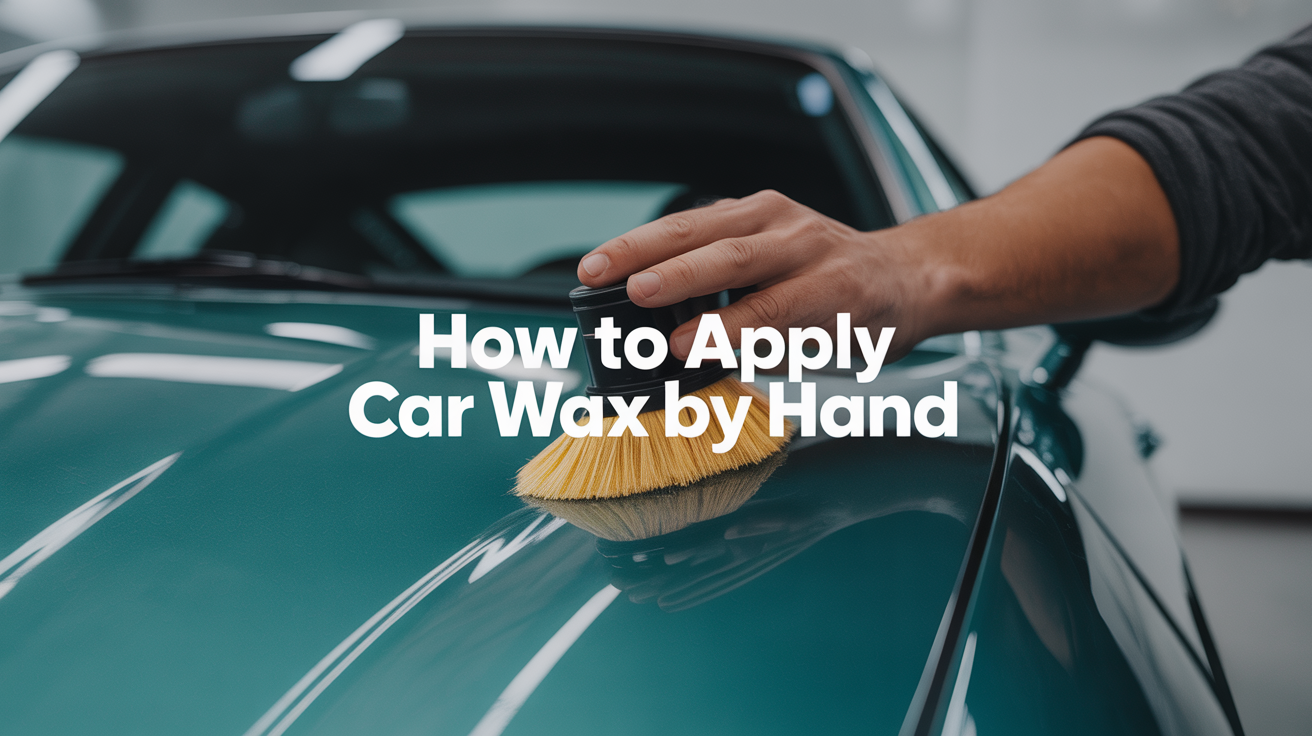
Hand-waxing is one of those tasks that looks straightforward on the can but goes sideways fast if you skip a step. You end up with streaks, dried-on residue that won't budge, or a "shine" that disappears the next time it rains. Done right, a good hand wax lays down a slick, water-beading layer that protects your paint for one to three months and makes the car easier to wash in the meantime.
This guide covers everything: choosing your wax, prepping the paint, applying it correctly, and removing it without leaving haze or swirl marks behind.
What you need before you start
You can't wax dirty paint. Wax sits on top of whatever is already on your clear coat, so if that's road grime, iron particles, or old product residue, you're sealing all of it in. Work through this checklist first:
- A freshly washed and dried car
- Clay bar or clay mitt (optional but recommended if the paint feels rough)
- Foam or microfiber applicator pad
- Two or three clean, soft microfiber towels
- Your chosen wax
- Shade, preferably a garage or carport
If you haven't used a clay bar recently and the paint feels gritty when you run your hand across it in a plastic-bag test, decontaminate now. Wax won't stick well to contaminated paint and you'll smear iron deposits into the finish.
Paste wax vs. liquid wax: which one to pick
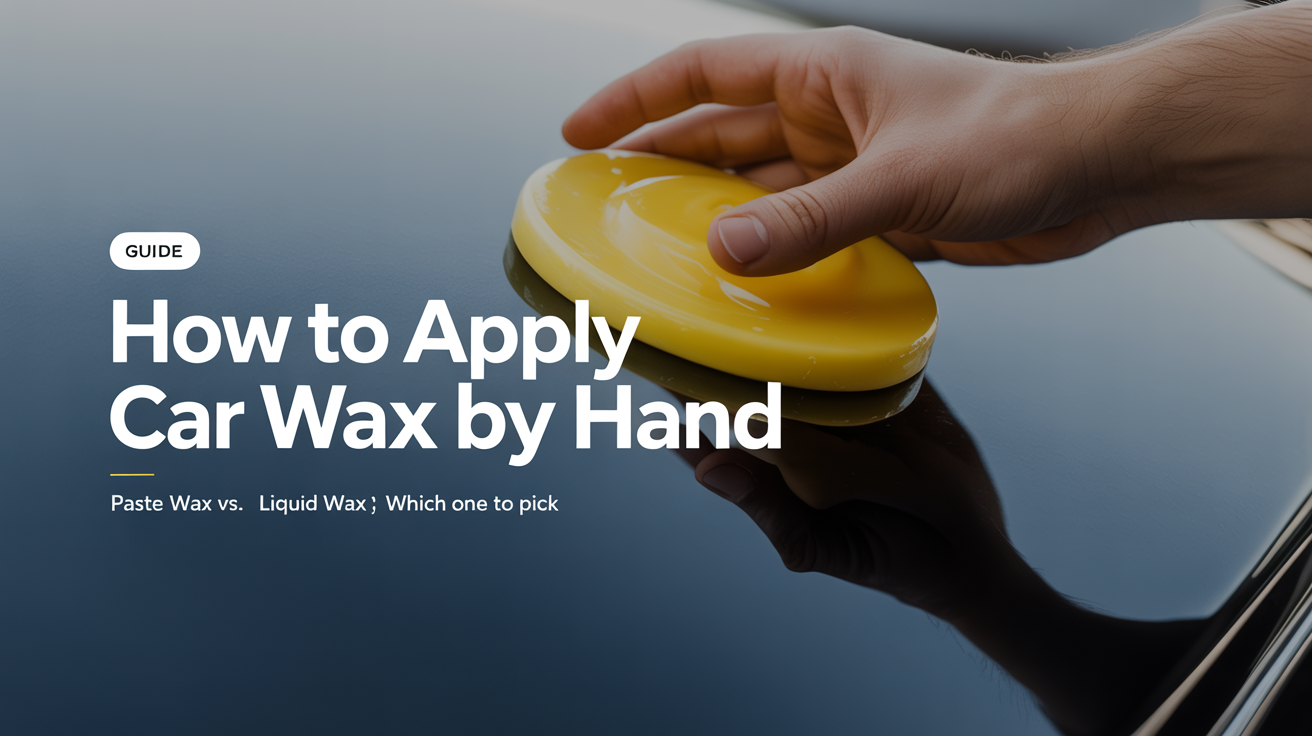
Both work. The difference is mostly in application feel and the type of protection you want.
Paste wax (typically carnauba-based) is denser and gives the applicator pad more to grip. It tends to apply more evenly by hand and produces a warm, deep gloss many detailers prefer on darker colors. Carnauba wax application is tactile: you feel the pad loading and spreading. The downside is that paste waxes are sometimes harder to remove, especially if you apply too thickly.
Liquid wax is easier to spread and dries faster. Synthetic liquid waxes often last a bit longer than natural carnauba, though they don't always match the depth of gloss. If you're new to hand waxing, a liquid formula forgives over-application better than most pastes.
Either way: thin coats are the rule. A thick coat doesn't protect better; it just wastes product and creates more removal work.
If you're curious how wax fits into the broader protective-product category alongside sealants and ceramic coatings, this comparison of wax vs. sealant vs. ceramic coating lays out the trade-offs clearly.
How to wax a car by hand: step-by-step
Work one panel at a time. On a hot day or in direct sun, wax flashes off almost immediately and bonds so tightly that removal leaves micro-scratches. Find shade, let the car cool down, and pace yourself.
-
Load the applicator pad. For paste wax, drag the pad across the surface of the tin two or three times. For liquid, apply a dime-to-quarter-sized drop directly onto the pad. You want even coverage across the foam, not a glob in one spot.
-
Work a single panel. Hood, roof, trunk lid, each door: one at a time. On large panels like the hood, mentally divide it in half and work each half separately so the wax doesn't dry in the middle while you're still applying on the outside edge.
-
Apply with light, overlapping circles or straight-line passes. Pressure should be light. The pad does the work, not your arm. Overlapping passes by about 50% ensures you don't leave bare strips. Some detailers prefer straight lines on flat panels and circular on curved sections.
-
Wait for the haze. Most waxes need two to five minutes to cure before removal. The product turns slightly cloudy or matte-looking. On cool paint in the shade, the haze develops slowly; in warmer conditions, it comes faster. Check the label on your specific product. The haze tells you the carrier solvents have evaporated and the wax solids are ready to be buffed off.
-
Remove with a clean microfiber. Fold the towel into quarters so you have multiple fresh surfaces available. Wipe with light, overlapping passes. Flip or refold the towel frequently. A towel loaded with wax residue will smear and streak rather than remove cleanly.
-
Check for high spots. Tilt the panel toward the light. Any hazy or streaky patches mean residue remains. Buff again with a fresh microfiber section. On black or dark paint, high spots are obvious; on silver or white, they're easy to miss until you're parked under fluorescent lights.
-
Move to the next panel and repeat. Don't let wax sit on the car for an hour while you take a break; removal gets much harder as it fully cures.
Do's and don'ts of applying car wax
Do:
- Apply wax in the shade on cool paint
- Use thin, even coats
- Flip your microfiber towel frequently during removal
- Let the haze develop fully before wiping
- Wax every four to eight weeks depending on your climate and how often the car is washed
Don't:
- Apply wax over water spots, iron deposits, or old product buildup
- Use circular motions with heavy pressure (induces swirls)
- Leave wax on plastic trim if you can help it; it leaves white residue that's a pain to remove
- Apply a second coat immediately; wait until the first coat is fully removed and cured
- Wax in direct sun or on a hot hood
Getting wax off plastic trim
It happens to everyone. Dried carnauba wax on black plastic trim turns chalky white. Before it cures, it wipes off with a damp cloth. After it dries, you'll need a trim-specific cleaner or a small amount of isopropyl alcohol on a detailing swab. The cleanest approach is to tape off trim pieces before you wax nearby panels, but that adds time most people don't want to spend.
Some wax formulas marketed as "safe for trim" are polymer-based and leave trim looking clean rather than streaky, worth considering if your car has a lot of unpainted exterior plastic.
How often should you wax?
A few variables drive this: climate, how often you wash the car, and whether you park outdoors. A carnauba wax in a hot, sunny climate may only last four to six weeks before the water-beading drops off. A synthetic wax or a product with sealant blended in can push two to four months.
The simplest way to tell is the water test. Spray water on the hood after washing. Tight, round beads rolling off quickly mean you still have protection. Flat sheets of water with no beading mean it's time to wax again.
If you want longer-lasting protection with less frequent maintenance, a spray sealant can be layered over a wax base or used between waxing cycles. This guide to applying a spray sealant covers how to work it into your routine.
For even longer durability and a harder protective layer, ceramic coatings are worth understanding, though they require more prep work and a different application process entirely.
FAQ
Can I wax a car that's never been waxed before? Yes. New cars from the dealership often have a layer of protection applied, but it wears off. Wash and clay the paint first, then wax normally. The first coat on neglected paint sometimes looks uneven; a second coat applied after the first has cured fully evens things out.
Should I apply two coats of wax? One coat is usually enough. If you want a second coat for extra protection or depth, apply it after the first has fully cured, typically 30 to 60 minutes later. The second coat bonds to the first and doesn't require a long haze time.
Does the brand or price of wax matter that much? Up to a point. Cheap waxes work but may have lower carnauba content and shorter durability. Mid-range waxes from brands like Meguiar's, Chemical Guys, or Collinite offer solid protection at a fair price. Very expensive "show car" waxes often have higher carnauba content and a deeper gloss, but the practical protection difference on a daily driver is modest.
Can I wax matte or satin paint? No. Traditional waxes are designed for glossy clear coats. On matte or satin finishes, wax fills in the microscopic texture that creates the flat look and leaves glossy patches. Use products specifically formulated for matte paint.
What if my wax dried on and won't come off easily? A few drops of detail spray or quick detailer on a microfiber helps rehydrate dried wax and makes it wipe off without scratching. Avoid heavy rubbing. If a section is really stuck, work it in small areas with light pressure and the detail spray before buffing.