Protection & Coatings
How to Apply a Spray Sealant
Learn how to apply a spray sealant the right way — prep, panel-by-panel technique, the two-towel method, and how long protection actually lasts.
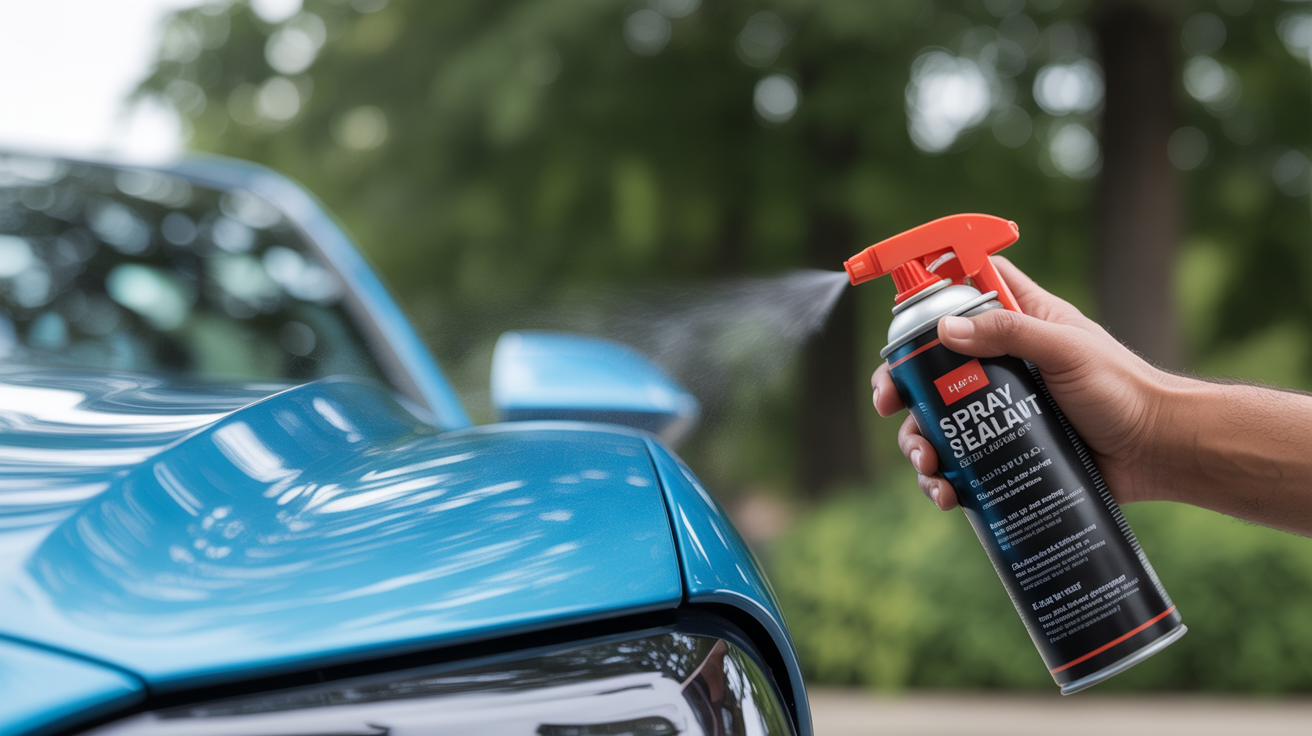
Spray sealants sit in a sweet spot. They go on in minutes, require no buffer, and leave a slick, water-beading finish that holds up for weeks or months depending on the formula. They work equally well as a standalone coat on a clean daily driver or as a topper over a cured ceramic coating to refresh hydrophobics without breaking out the heavy artillery.
This guide covers what spray sealants actually are, when to reach for them, and how to apply one without streaks or wasted product.
What a spray sealant is (and how it differs from ceramic spray)
A spray sealant is a polymer-based protection product you spray directly onto paint, glass, or trim and wipe off. Traditional sealants bond to clear coat through cross-linked polymer chains. Newer "ceramic spray" products, sometimes called spray-on protection or graphene spray, add SiO2 or graphene particles to the formula, which helps them last longer and shed water more aggressively.
The practical difference for application is minor. Ceramic sprays can flash faster in heat and may need slightly quicker buffing. Otherwise the panel-by-panel method described here applies to both.
If you want the full rundown on where these products land versus carnauba wax and hard coats, the wax vs sealant vs ceramic coating comparison breaks it down clearly. For most weekend detailers, a quality spray sealant hits 80% of the protection you'd get from a professional ceramic coat, for 5% of the effort.
When to use a spray sealant
As a standalone layer. Any freshly washed and dried car is a candidate. After a decontamination wash, clay bar, or light polish, apply the sealant to lock in the work you just did. This is the most common use case.
As a topper over a coating. Many ceramic-coated cars benefit from a spray sealant every 2-3 months. The hard coat underneath stays intact; the spray top-up refreshes water behavior and fills any micro-marring from routine washes. Make sure the underlying coating is fully cured before adding a topper, usually 7 days minimum for most consumer-grade ceramics.
After a quick wash. Some spray sealants are designed for use on a wet car right out of the wash. These "spray-and-rinse" or "wet application" formulas are labeled as such. Don't assume your sealant works wet unless the bottle explicitly says so. Most require a dry surface.
What you need
- Your chosen spray sealant or ceramic spray
- Two clean microfiber towels per panel (one to spread, one to buff)
- A freshly washed and dried car
- Shade, or at minimum cool paint, hot panels flash product before you can work it
You do not need applicator pads, a machine polisher, or any leveling agents. That's the point.
Step-by-step: how to apply a spray sealant
Follow these steps on each panel before moving to the next. Do not spray the whole car at once.
-
Park in shade. Direct sun heats the paint and causes the sealant to flash unevenly. Early morning or late afternoon works if shade isn't available.
-
Confirm the surface is clean and dry. Even a light coat of road grime will trap contamination under the sealant. If the car was washed more than an hour ago and sat outside, wipe it down with a clean microfiber before starting.
-
Shake the bottle. Spray sealants separate in storage. Give it 10-15 good shakes.
-
Spray 3-4 mists onto the panel. Hold the bottle 6-8 inches from the surface. You want light, even coverage, not soaking. On a door panel, 3 sprays is plenty. On a hood or roof, 5-6.
-
Spread with your first towel. Use straight, overlapping passes, not circles. Work the product evenly across the whole panel. Don't scrub; the towel is moving product, not buffing yet.
-
Wait the flash time. Check the product instructions. Most spray sealants need 30 seconds to 2 minutes to begin bonding. Ceramic sprays in warm weather can flash in 20 seconds. You'll see the surface start to look hazy in spots.
-
Buff with your second towel. Use light pressure in straight passes. The haze lifts easily. If it's dragging or leaving streaks, the product flashed too long, next panel, work faster or use less product.
-
Inspect before moving on. Tilt your view to catch the light at a low angle. Any remaining haze or high spots show up clearly. A final light pass with the buffing towel clears them.
-
Repeat panel by panel. Hood, roof, trunk, each door, bumpers. Do glass last if you want coverage there, many spray sealants work on glass and help with rain beading.
-
Let the car sit 30 minutes before driving. The product continues to cure slightly after buffing. An hour is better. Avoid rain or car washes for 12-24 hours.
Do and don't list
Do:
- Work one panel at a time
- Use two separate towels (one spreads, one buffs)
- Flip or switch your towel when it feels product-saturated
- Store leftover sealant at room temperature, cap tight
Don't:
- Apply in direct sun or to hot paint
- Spray onto plastic trim unless the label says trim-safe (some formulas leave white residue on matte black plastics)
- Assume "more product = more protection", thin, even coats cure better than thick ones
- Use the same towel you just buffed one panel with to spread the next (you'll redeposit haze)
Using spray sealant as a topper over wax or ceramic
If you applied wax by hand recently and want to extend the protection, a spray sealant applied over the cured wax adds a polymer layer on top. Read the how to apply car wax by hand guide first if you haven't waxed before, the prep steps overlap.
Over a hard ceramic coating, spray sealants work as a "sacrificial" layer. The chemistry doesn't conflict. The coating keeps doing its job; the spray topper is what the environment actually interacts with day to day. When the topper degrades, you reapply the spray and leave the coating untouched.
If you're weighing whether a professional ceramic coat makes more sense for your situation, the ceramic coating explainer covers durability, cost, and what installers actually do differently.
How long does spray sealant protection last?
Honest answer: it depends on the formula, how often you wash the car, and your climate. A basic polymer spray sealant on a garage-kept car washed weekly will last 4-6 weeks. The same product on a daily driver parked outside in a humid or salted environment might need reapplication every 3-4 weeks.
Ceramic spray formulas with SiO2 concentrations above 10% routinely last 3-6 months with proper maintenance washes. Some brands claim longer, treat those numbers as ideal-condition ceilings, not typical results.
The water bead test is your most reliable indicator. When water stops sheeting and beading and starts clinging in flat patches instead, it's time to reapply. You don't need to decontaminate or clay the car each time unless it's been more than a few months or the paint feels rough to the touch.
FAQ
Can I apply spray sealant to a wet car? Only if the product explicitly says "wet application" or "spray-and-rinse" on the label. Most spray sealants require a dry surface to cure properly. Using a standard sealant on wet paint dilutes the formula and leaves an uneven layer.
Do I need to clay bar before applying a spray sealant? Not every time. If your paint feels smooth (run a bagged hand across it), you can skip clay and apply directly after washing. If the paint feels rough or gritty after washing, a clay bar removes the bonded contamination that would otherwise sit under your sealant. Clay before any polish; polish before the sealant.
How many coats should I apply? One full coat done properly outperforms two rushed coats. If you want a second layer, let the first cure for at least an hour, then repeat the same process. Two thin coats can improve depth and durability slightly, but the gains diminish after that.
Will spray sealant fill scratches or swirl marks? No. Sealants protect the surface you have; they don't correct it. Light swirl marks may be less visible under the gloss a sealant adds, but they're still there. For actual correction, polish first, then seal. The protection from the sealant is meaningless if it's locking contamination or oxidation into place.
Can I apply spray sealant to headlights, glass, or wheels? Glass and headlights, yes, with most formulas. The application is the same. Wheels are more situational, brake dust and heat cycles break down spray sealants quickly on wheel faces, so you'd need to reapply every few weeks. A dedicated wheel sealant or coating holds up better there.