Paint Care & Polishing
Hand Polishing vs Machine Polishing
Hand vs machine polishing compared: which actually removes swirl marks, what each costs, and when a DA polisher beats doing it by hand.
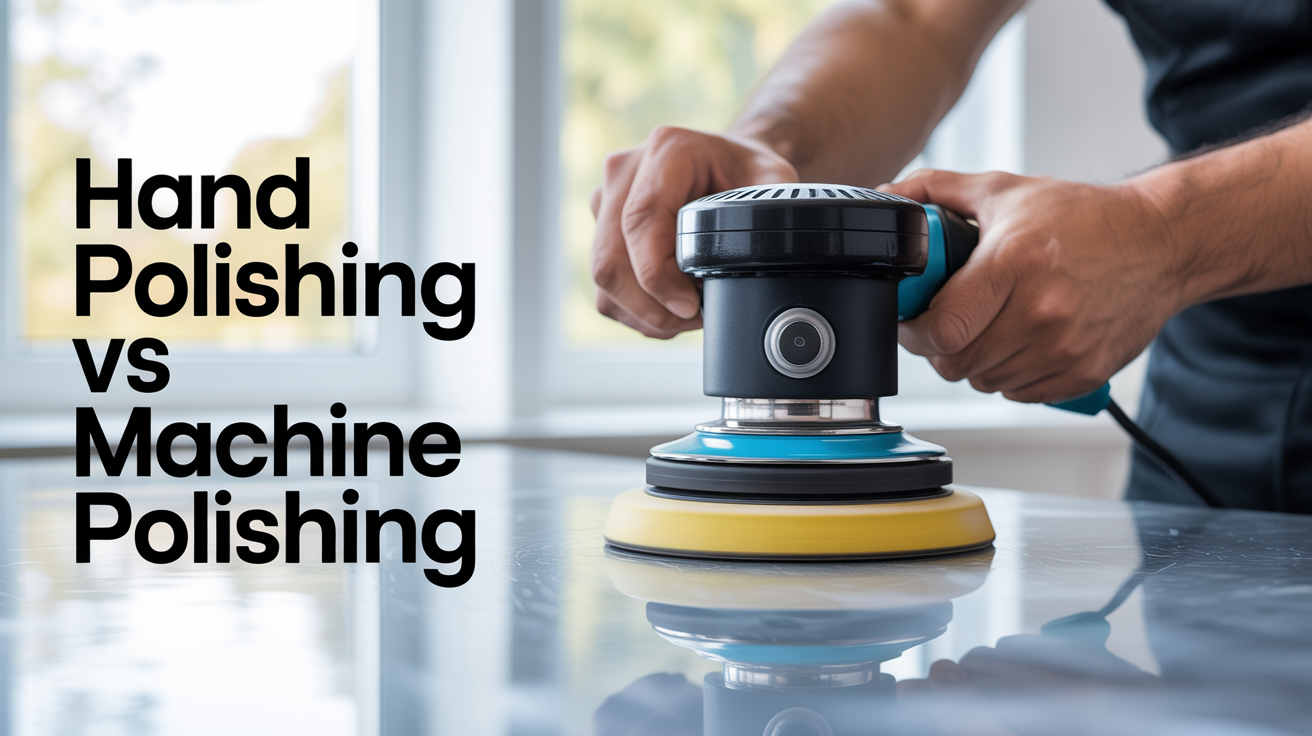
Hand polishing can refresh gloss and hide light haziness, but it cannot remove swirl marks or scratches the way a machine can. If correction is your goal, a machine polisher wins. If you want a quick shine boost on paint that's already in decent shape, polishing by hand is a perfectly reasonable option.
At a Glance
- Hand polishing improves gloss by cleaning the surface and temporarily filling fine scratches with fillers; it does not abrade the clear coat enough to genuinely remove marks.
- A DA polisher generates far more consistent friction and pressure than a human arm, which is what lets it actually level swirl marks rather than mask them.
- Fillers from a hand polish typically wash out after 3 to 8 washes, at which point the underlying scratches reappear exactly as before.
- Factory clear coat runs roughly 1.5 to 2.0 mils (35 to 50 microns) thick, and manufacturers generally recommend removing no more than about 0.3 mils (8 microns) in a correction pass, so there's real headroom but not unlimited room.
- Startup cost for hand polishing is $30 to $60; a basic DA polisher kit runs $130 to $310 but pays for itself quickly if you detail more than once or twice a year.
- Most home detailers end up using both: a DA once or twice a year for real correction, hand polish or a quick detailer in between for maintenance.
What Each Method Actually Does to Paint
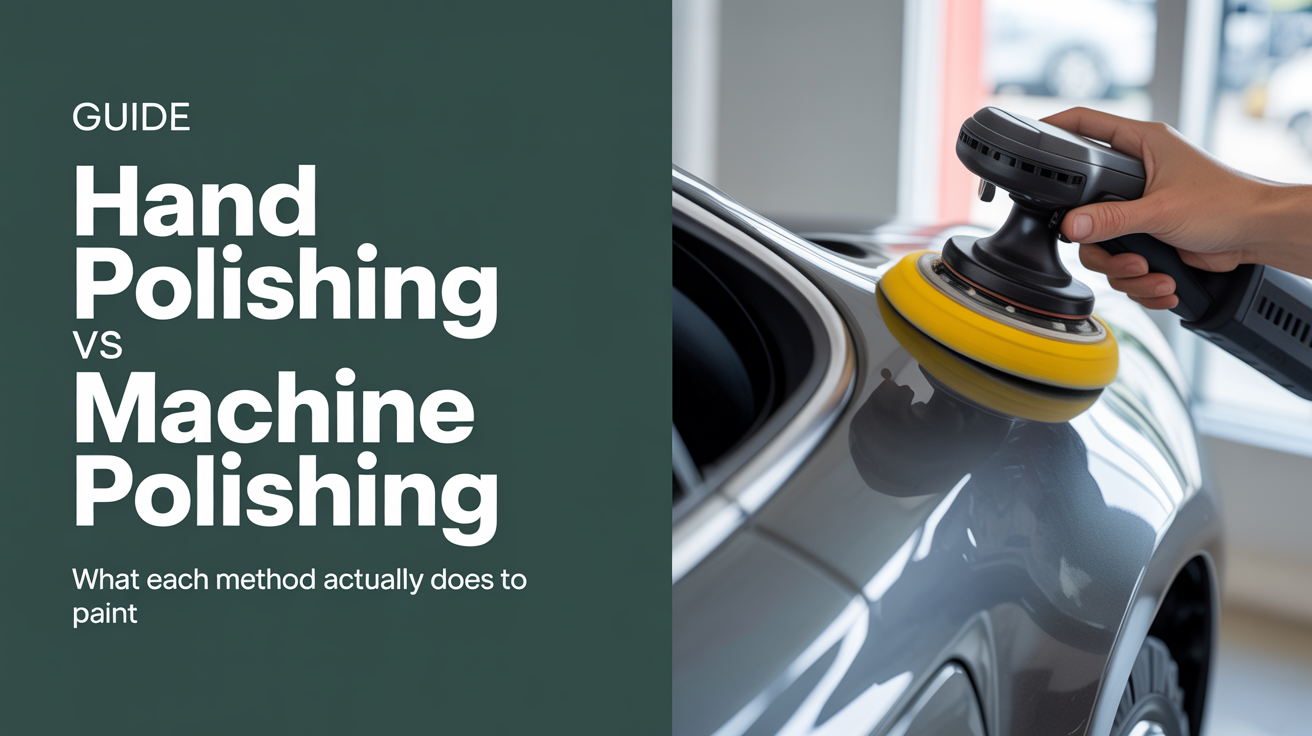
Polish works by using micro-abrasives to shave down the top layer of the clear coat, leveling scratches and swirl marks so they stop scattering light. How deep that leveling goes depends almost entirely on the amount of consistent pressure and friction the applicator generates.
Hand Polishing
When you polish by hand using a foam applicator pad or microfiber cloth, you're generating maybe 5 to 10 lbs (2.3 to 4.5 kg) of pressure over a small area, moving at whatever pace your arm can sustain. That's enough to spread product evenly and work in lubricants that add short-term gloss, but it's rarely enough to cut through more than the shallowest surface contamination.
The paint looks better after hand polishing mostly because you've removed surface grime and oxidation that was dulling the finish, the oils or fillers in many hand polishes temporarily fill fine scratches, and light reflection improves when the surface is clean and even at a micro level.
That improvement is real, but it's temporary. Once the fillers wash out (usually after 3 to 8 washes), the underlying scratches reappear.
Machine Polishing
A machine polisher, whether a dual-action (DA) or rotary, generates far more consistent pressure and surface speed than a human arm. A DA running at 5,000 to 6,000 OPM (orbits per minute) on a 5-inch (127 mm) pad covers the paint at a pace and friction level that actually abrades the clear coat, removing the scratch or swirl rather than temporarily filling it.
This is a mechanical difference, not just a question of effort. You could polish by hand for an hour on a single panel and a DA polisher would still outperform you in 5 to 10 minutes, because the machine maintains constant, even friction across the entire pad face throughout the pass.
How much clear coat is actually available to work with
Every correction pass removes a small, permanent amount of clear coat, which makes clear coat thickness the real budget you're spending against, whether you polish by hand or machine. According to a paint thickness gauge manufacturer's guide for detailers, factory clear coat typically runs 1.5 to 2.0 mils (35 to 50 microns) thick, and most manufacturers recommend limiting total removal to about 0.3 mils (8 microns) to avoid compromising UV protection for the base coat underneath. Total factory paint thickness, base coat plus clear coat plus primer, generally lands around 100 microns (0.1 mm) across the whole system.
In practice, a single moderate correction pass with a DA removes roughly 2 to 4 microns, which means you have material for several correction jobs over the life of the paint if you're not aggressive about it every time. Hand polishing, by contrast, removes such a negligible amount of clear coat that it barely registers on a paint depth gauge; that's part of why it's safe to do more often, and also part of why it can't correct anything meaningful.
Comparing Results: What Each Method Can Fix
| Problem | Hand Polish | Machine Polish |
|---|---|---|
| Light haze or dullness | Yes | Yes |
| Surface contamination marks | Partially | Yes |
| Light swirl marks | Fillers only (temporary) | Yes, genuine removal |
| Moderate swirl marks | No | Yes, with correct cut level |
| Deep scratches through clear coat | No | No (needs respray) |
| Water spot etching | No | Yes, moderate spots |
| Bird drop etching | No | Yes, mild cases |
The table makes it clear that hand polishing is not a paint correction method. It's a cosmetic refresh. Machine polishing with an abrasive compound or cutting polish is how you actually remove swirl marks from car paint rather than just hiding them for a few weeks.
Cost and What You Need to Get Started
Hand Polishing Costs
Starting out with hand polishing is inexpensive:
- A quality hand polish: $15 to $30
- Foam or microfiber applicator pads: $5 to $10
- Microfiber towels for buffing off residue: $10 to $20
Total startup cost: around $30 to $60. You can do it in a driveway with no power required.
Machine Polishing Costs
The jump to machine polishing carries a higher upfront investment:
- A decent DA polisher (6 mm throw): $80 to $200
- Backing plate and pads (3 to 4 pads minimum): $30 to $60
- Polishes at different cut levels: $20 to $50
Total startup: $130 to $310, but that kit lasts for years and works across multiple vehicles. On a per-car basis, the math usually favors the machine fairly quickly if you detail more than once or twice a year.
Skill Level and Learning Curve
Hand Polishing Is Almost Foolproof
The technique is simple: apply a pea-sized amount of product to your pad, spread it thinly across a 2-by-2-foot (60 x 60 cm) section, work it in with medium pressure using overlapping circular or back-and-forth strokes, and buff off the residue with a clean microfiber towel.
The main risks are using too much product (wastes polish and leaves residue), polishing in direct sunlight so the product dries too fast, and accidentally scratching the paint during removal with a contaminated cloth. None of these mistakes are catastrophic. Hand polishing is a good starting point for anyone who hasn't done this before.
Machine Polishing Takes a Session to Learn
A DA polisher is far more forgiving than a rotary, but it does have a learning curve. You need to understand a few things before you start:
Speed settings. Most DAs have 3 to 6 speed settings. Lower speeds (1 to 2) work for spreading product and working over delicate areas. Mid-range speeds (3 to 4) handle standard paint correction. Higher speeds (5 to 6) are for heavier cutting situations.
Pad pressure. Too light and the pad glazes without cutting. Too heavy and you risk burning through thin clear coats, especially near edges and body lines where the paint is thinner.
Pace across the panel. Moving the machine too slowly concentrates heat in one spot. A steady, overlapping pass at roughly 1 to 2 inches per second (2.5 to 5 cm/s) is a good pace on most panels.
Priming the pad. A dry pad can create friction spikes and fling product across the car. Prime new foam pads with a few drops of polish before the first pass.
A DA is genuinely hard to damage paint with, compared to a rotary. If you stay mindful of body lines and edges, the learning curve is manageable in one or two practice sessions. The full technique is covered in our guide on how to use a dual-action polisher.
A rotary polisher is a different animal and worth mentioning even if this guide focuses on the DA. A rotary spins in a single direction at speeds up to 3,000 RPM with no random orbit to self-correct an unsteady hand, which means it can generate enough localized heat to burn through clear coat in seconds if it stays in one spot too long. Professional detailers use rotaries because they cut faster and finish a job in less time, but that speed advantage comes paired with a much steeper learning curve and a real risk of doing damage that a DA rarely produces. For a first machine, a DA is the far more forgiving choice, and most home detailers never need to graduate to a rotary at all.
It also helps to know what a finished correction pass should look like before you start, so you can tell whether you're actually done or just tired. Wipe the panel down with isopropyl alcohol or a dedicated panel wipe to remove polish oils, then inspect it under direct sunlight or a swirl-finder LED at a low angle. If the marks you were chasing are gone and the surface shows an even, glossy reflection with no hazing from the compound, you're finished. If you still see swirls but they're fainter, you likely need another pass with the same pad and product, or a slightly higher cut level, rather than assuming the method has failed.
When to Use Each Method
These two approaches serve different situations, and knowing which fits yours saves time and product.
Use hand polishing when:
- You're maintaining paint that's already in good condition
- You want to add gloss before an event without a full correction session
- You're dealing with a leased car where cutting the clear coat would be wasteful
- You have no access to power
- You're refreshing a small trim piece or isolated area
Use machine polishing when:
- You can see swirl marks, scratches, or water spots in direct sunlight
- You're doing a full detail before applying a ceramic coating or paint sealant
- You want results that last more than a few washes
- You're starting from oxidized or seriously neglected paint
One question that often comes up at this stage is whether you need to polish at all, or whether compounding alone is enough. That depends on paint condition and how you're finishing the job. Understanding the difference between polishing and compounding will help you choose the right products before you start.
A Note on Product Labeling
Some products are labeled as hand polishes; others say they can be used by hand or machine. In practice:
- Most hand polishes have less abrasive content and more fillers. They're formulated for the lower friction levels a human arm produces.
- Machine polishes are calibrated to work at higher pad speeds and consistent pressure. Using a machine polish by hand typically gives poor results because you can't generate enough friction to activate the abrasives properly.
- All-in-one products (AIOs) sit in between. They contain mild abrasives, fillers, and a light sealant, and perform reasonably in both applications.
If a product says "machine application recommended," that's not filler text. The abrasive chemistry is tuned for machine speeds, and you won't get the same correction results by hand regardless of how hard you work.
Frequently Asked Questions
Can I remove swirl marks by polishing hard enough by hand?
Not reliably. Swirl marks are actual scratches in the clear coat, and removing them requires abrading material away down to below the scratch depth. Hand application cannot generate the friction and consistency needed to do that across a whole panel. You'll see some improvement from fillers, but the marks return after a few washes. A DA polisher with a light cutting polish will genuinely remove them.
Is machine polishing safe for newer cars with thinner clear coats?
A DA polisher is safe on modern factory clear coats when you pair the right pad with the right polish and stay careful near edges. Factory clear coats are typically 35 to 50 microns (1.5 to 2.0 mils) thick. A standard correction pass removes roughly 2 to 4 microns, leaving plenty of material for multiple jobs over the car's life, provided you're not repeating heavy correction passes every few months. On older repainted panels, which can be thinner or inconsistent, checking with a paint depth gauge before you start is worth the 10 minutes it takes.
How long does hand polishing improvement actually last?
With a filler-based hand polish (which most are), the gloss boost and scratch concealment typically survive 3 to 8 washes. After that, the paint looks much as it did before. Sealing the paint afterward with a wax or sealant extends the results a bit, but the underlying scratches are still there waiting.
Do I need both methods, or just pick one?
Most home detailers settle into using a DA polisher once or twice a year for real correction and a light hand polish or quick detailer in between for maintenance. The machine does the heavy work; the hand product keeps the finish tidy until the next full session. You don't have to commit to one approach permanently.
What depth of scratch can a DA polisher actually remove?
A dual-action polisher with a cutting compound can typically handle scratches up to about 1,500 to 2,000 grit in coarseness. Marks finer than 2,000 grit usually respond to a finishing polish alone. Scratches coarser than 1,000 grit, where you can feel a catch with your fingernail, have likely broken through the clear coat entirely and need wet sanding or a respray rather than polishing.
How do I know how much clear coat I have left to work with?
Short of an electronic paint depth gauge, which is the only truly reliable method, you're relying on indirect signs: a car that's never been polished or repainted almost certainly has its full factory clear coat available, while a used car with an unknown history or visible signs of prior bodywork (overspray, slightly mismatched panel gloss) is a reason to go gentler or invest in a gauge before doing repeated correction passes. If you polish the same panel more than two or three times over a few years, it's worth checking thickness rather than assuming there's always more to give.