Tools & Products
Essential Car Detailing Supplies for Beginners
A practical detailing products list for beginners: the car detailing supplies for beginners that actually matter, before you waste money on gear you won't use.
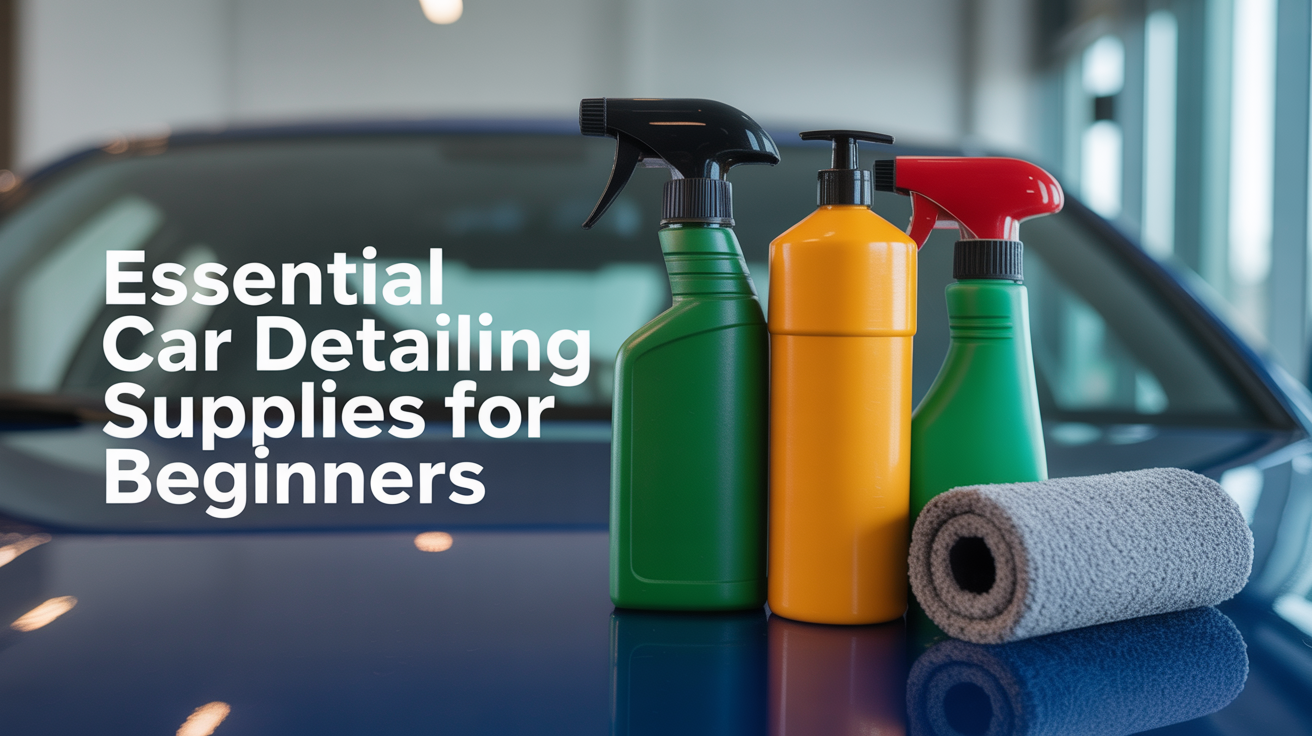
Getting into car detailing doesn't require a truck full of products. A focused set of beginner detailing supplies covers roughly 90% of what you'll actually use on a Saturday morning in the driveway. Start here, get comfortable with the basics, and add from there.
Why the Supply List Matters More Than Technique
A lot of beginners assume that skill is the main barrier to a good detail. In reality, wrong products cause most of the damage. Dish soap on painted surfaces strips wax. A polyester bath towel on a freshly washed hood leaves fine scratches you'll be able to see for months. The right detailing products list means you're not working against yourself from the very first wash.
This guide covers what to actually buy, why each item earns its spot, and a few things that sound necessary but aren't.
The Core Wash Kit
The exterior wash is the foundation. Get this part right and every other step becomes easier.
Two Buckets (Not One)
A single bucket just cycles dirt back onto your paint. Pick up two 5-gallon (19 L) buckets and a Grit Guard insert for each. One bucket holds your soapy wash water; the other holds plain rinse water so you can rinse your mitt between panels before reloading it with soap. This is the two-bucket method, and it's the single habit that separates a scratch-free wash from one that hazes your paint over time.
pH-Neutral Car Wash Soap
Dish soap, all-purpose cleaners, and anything marketed as "cuts through grease" will strip whatever protection is on your paint. A pH-neutral car shampoo lubricates the surface so your mitt glides rather than drags. Most formulas call for 1–2 oz (30–60 mL) per 5-gallon bucket, meaning a 32 oz bottle lasts through a lot of washes.
A Chenille Wash Mitt
A flat sponge holds grit right against your clear coat. A chenille microfiber wash mitt has long, soft fingers that trap dirt away from the paint surface. Get two if budget allows: one for the upper body panels and one for the dirtier lower sections and wheels. Keep them washed and separate.
Microfiber Drying Towels
Regular terrycloth towels drag across paint. A waffle-weave or plush microfiber drying towel absorbs water quickly and glides with almost no friction. Look for towels at least 16x24 in (40x61 cm) with a GSM (grams per square meter) rating of 400–600. Two or three towels handle a full-size sedan comfortably.
Choosing the right microfiber towel walks through what GSM ratings and fiber types actually mean for paint safety.
Interior Cleaning Supplies
Interior detailing doesn't need a separate product for every surface. A handful of versatile items covers almost everything.
All-Purpose Cleaner, Diluted Down
A concentrated all-purpose cleaner (APC) is the workhorse of interior detailing. Diluted at 10:1 with water, it handles plastic trim, door pockets, center consoles, and rubber floor mats. Diluted further to 20:1 or 30:1, it's gentle enough for fabric seats. Buy a spray bottle, label it with the dilution ratio, and you're set for months from a single bottle of concentrate.
Ammonia-Free Interior Glass Cleaner
Automotive glass cleaner works on interior windshields and windows, but make sure the formula is ammonia-free. Ammonia degrades window tint film over time, causing it to turn purple and peel. Most automotive-specific interior glass cleaners skip ammonia by default, but it's worth checking the label before you buy.
A Dedicated Interior Microfiber Set
Keep your interior towels completely separate from your exterior paint towels. Cross-contamination from polish residue or iron fallout onto a dashboard or headliner is a hassle to clean up. Color-coding helps: many detailers use one color for glass, another for plastic trim, and a separate set entirely for exterior use.
A Soft-Bristle Detail Brush
A soft-bristle brush, even a clean paintbrush or a repurposed stiff makeup brush, reaches into A/C vents, around gauge clusters, and along stitched seams on seats. Fine dust packs into vents and a microfiber towel alone won't get it out. Agitate with the brush, then vacuum. Takes 2 minutes and makes a noticeable difference.
Wheel and Tire Supplies
Wheels take a beating from brake dust, road grime, and iron particles baked on by heat. They need dedicated tools and a slightly different approach than paint.
A Wheel Brush and a Lug Nut Brush
A long-handled wheel brush with soft bristles reaches into the barrel of most alloy wheels. A narrower lug nut brush (or an old toothbrush) cleans around lug holes where grime packs in tightly. Never use wheel brushes on painted surfaces afterward. Treat your wheel brushes as a separate, contaminated set.
Iron Remover
Brake dust bonds to wheel surfaces chemically over time and regular soap barely touches it. An iron remover sprays on, turns purple as it reacts with ferrous particles, and then rinses away with the contamination. One use typically makes a visible difference on wheels that have never been decontaminated. See how iron remover compares to acid wheel cleaners if your wheels have heavy buildup that hasn't responded to regular cleaning.
Water-Based Tire Dressing
A water-based tire dressing leaves a clean, natural finish on rubber and doesn't fling onto paint panels the way some solvent-based gel dressings can. Apply with a foam applicator pad to control the coverage and keep it off the tread.
Paint Protection
You don't need a machine polisher or a professional-grade coating kit as a beginner. A simple protective layer keeps the paint you already have in better shape.
Spray Wax or Quick Detailer
A spray wax takes about 5 minutes to apply panel by panel after a wash. It won't last as long as a paste wax or a sealant, but it adds water beading and a light layer of lubrication that slows contamination buildup between washes. Reapply every 4–6 weeks depending on your climate.
Clay Bar or Clay Mitt
Run a clean hand across a dry paint panel. If it feels rough or gritty, the paint has embedded contamination that wax alone won't fix. A clay bar (or the faster, longer-lasting clay mitt) physically pulls those particles out when used with a clay lubricant spray. Always work with fresh lubricant and never drop the clay bar on the ground and keep using it.
A Practical Beginner Shopping List
Here's a straightforward summary of what to buy first:
| Item | Purpose |
|---|---|
| 2x 5-gallon buckets + Grit Guards | Two-bucket wash method |
| pH-neutral car wash soap | Safe for paint and existing protection |
| Chenille microfiber wash mitt x2 | Lifts dirt away from the clear coat |
| Waffle-weave drying towels x3 | Fast drying with minimal friction |
| APC concentrate + spray bottle | Versatile interior cleaner at the right dilution |
| Ammonia-free interior glass cleaner | Safe for tint, streak-free on glass |
| Interior microfiber towels x4–6 | Separate from exterior towels |
| Wheel brush + lug nut brush | Reaches barrel and lug holes |
| Iron remover | Lifts bonded brake dust |
| Water-based tire dressing + foam applicator | Clean rubber finish that doesn't fling |
| Spray wax or quick detailer | Light protection after every wash |
| Clay bar or clay mitt + lubricant spray | Decontaminates paint before protection |
| Soft-bristle detail brush x2 | Vents, seams, trim gaps |
A full kit at this level typically costs $80–$150 depending on brand choices. Buying APC in a larger concentrate bottle and splitting it into smaller labeled spray bottles is one of the easiest ways to cut cost without sacrificing anything.
The full car detailing kit guide goes deeper on where to prioritize if your budget is tighter and you need to phase purchases over a few weeks.
Frequently Asked Questions
Do I need a pressure washer to start detailing?
No. A garden hose with decent pressure handles the initial rinse and wash-off just fine. A pressure washer speeds up the pre-rinse and opens up the option of a foam cannon, but neither is a prerequisite. Start with the hose and upgrade later if you find yourself detailing regularly.
Can I use dish soap to wash my car?
Dish soap strips wax, sealant, and other protective layers from paint. It also tends to dry out rubber seals over time. For a one-time decontamination wash before applying a new coating, some detailers use it intentionally because that stripping effect is actually the goal. For routine washes, stick to a pH-neutral car shampoo.
How many microfiber towels do I actually need to start?
A reasonable starting count is 6–8 exterior towels and 4–6 interior towels. Microfiber works best when it's clean, so having extras means you can swap to a fresh towel mid-job rather than reusing a dirty one. Wash your towels after every detail session, separately from household laundry, without fabric softener.
Is cheap microfiber safe on paint?
Bulk packs of very cheap microfiber towels (often under $1 each) frequently have shorter, less dense fibers and can introduce fine scratches into paint. Budget microfiber is fine for interior plastic surfaces, spill cleanup, or product removal from glass. For any towel that touches painted panels, look for a GSM of 300 or higher with no hard-stitched edges.
What can I skip buying for now?
A dual-action polisher, foam cannon, spray bottle warmer, ceramic coating, and most engine bay cleaners can all wait. Those tools and products have their place, but none of them are needed to produce a clean, protected car as a beginner. Master the wash and dry first, then add complexity from there.