Protection & Coatings
Do Paint Protection Films Work
Paint protection film (PPF) really does protect your car's paint from chips, scratches, and stains. Here's what it covers, what it doesn't, and whether it's...
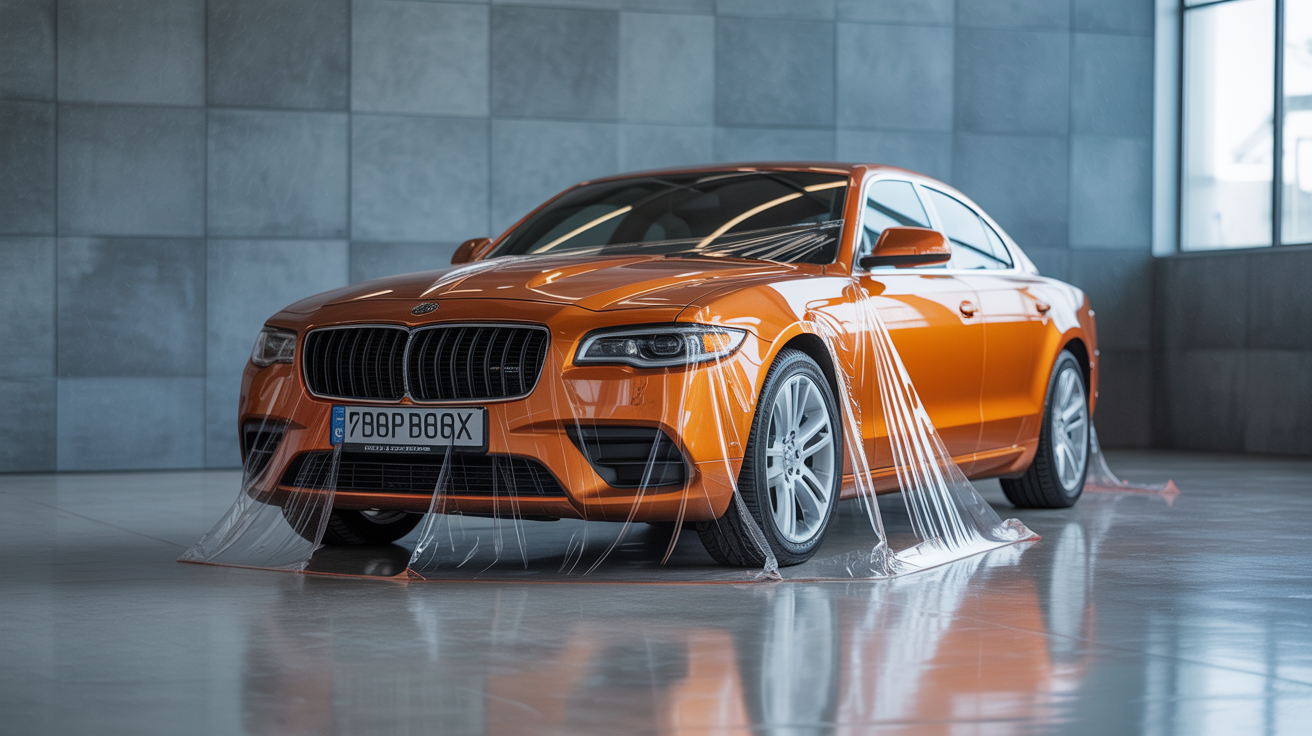
Paint protection film works. A properly installed PPF will absorb stone chips, deflect road debris, resist light scratches, and even self-heal minor surface marks. The honest caveat is that it is not invincible, it requires real money to install correctly, and it is not the right choice for every car or every budget.
Here is what you actually need to know before deciding whether PPF belongs on your vehicle.
What Paint Protection Film Is
PPF goes by a few names: clear bra, clear film, paint film protection. All of them refer to a thick, optically clear thermoplastic urethane (TPU) film applied directly over your paint. Modern versions typically run 6 to 8 mil (0.15 to 0.20 mm) thick, compared to the 1 to 2 mil of a vinyl wrap. That extra thickness is what allows it to absorb impacts that would ordinarily chip or scratch down to the primer.
The material was originally developed for military helicopter rotor blades and aircraft leading edges, then adapted for automotive use. Early versions from the 1990s and early 2000s yellowed badly and were difficult to remove cleanly. Current films are dramatically better: UV stabilizers keep them clear for years, and the adhesive is engineered to release without damaging factory paint when the film is eventually removed.
Self-Healing Explained
A lot of PPF products on the market today include a self-healing topcoat. When the surface picks up a light scratch or swirl, low-level heat (either sunlight, warm water, or a heat gun set to around 140°F / 60°C) causes the topcoat to flow back and smooth out. This is real, not marketing noise, but it has limits. The healing works on superficial surface abrasions. A cut or gouge that goes through the topcoat will not close itself.
What PPF Protects Against (and What It Doesn't)
Understanding the protection boundaries saves you from being disappointed later.
Things PPF handles well:
- Rock chips and road debris. This is the primary job. At highway speeds, gravel and sand hit the front end constantly. PPF on the hood, bumper, and fenders absorbs those impacts before they reach the paint.
- Bug splatter and bird droppings. Both are chemically aggressive. PPF creates a barrier so the acids and enzymes do not contact the paint directly. You still need to clean them off promptly (within a day or two), but the paint underneath stays protected.
- Light contact scratches. Brush-by scratches from branches, shopping cart edges, or loose clothing tend to hit the film surface rather than the paint, and the self-healing topcoat deals with mild ones.
- Car wash abrasion. Automated brush washes leave micro-marring over time. Film absorbs that friction.
Things PPF does not protect against:
- Deep keying or intentional gouging. The film will be damaged along with the underlying area.
- Hail damage. Hail impacts can dent the metal beneath the film, and no film stops that.
- Door dings and panel depressions. The film does not prevent dents from shopping carts or car doors.
- Heat-related paint damage (like engine bay areas). PPF is not typically applied under the hood.
- UV fading on the paint underneath. PPF blocks UV, so the covered paint is actually preserved better than uncovered areas. But the seam lines between covered and uncovered panels can show a two-tone difference over many years if the rest of the car fades.
PPF vs Other Paint Protection Options
PPF is not the only way to protect your paint. The right choice depends on budget, how long you plan to keep the car, and how much driving you do on roads that generate chips.
| Protection Type | What It Does | Typical Cost | Durability |
|---|---|---|---|
| Carnauba wax | Adds gloss, light water repellency | Low (DIY) | 4-8 weeks |
| Paint sealant | Synthetic protection, longer lasting than wax | Low-moderate (DIY) | 3-6 months |
| Ceramic coating | Hard glass-like layer, strong chemical resistance | Moderate-high | 2-5 years |
| PPF (partial) | Impact protection on high-risk areas | High | 7-10 years |
| PPF (full) | Impact protection on all painted surfaces | Very high | 7-10 years |
Ceramic coatings and PPF serve different purposes. A ceramic coating makes the paint surface harder to contaminate and easier to clean, but it will not absorb a rock chip. PPF stops the chip but offers less chemical resistance on its own. Many owners combine both: PPF for impact protection, ceramic coating applied over the film for easier maintenance. See wax vs sealant vs ceramic coating for a closer look at how those three products compare, or what is a ceramic coating and is it worth it if you are weighing the coating route first.
Partial vs Full Coverage
A full-vehicle PPF wrap covers every painted panel. Partial coverage is far more common because it targets the zones that actually take damage.
Typical partial coverage zones:
- Front hood (at minimum the leading 24 inches / 60 cm, sometimes full)
- Front bumper
- Front fenders
- Side mirrors
- Door leading edges (the forward 4 to 6 inches / 10 to 15 cm that catch debris thrown by the front wheels)
- Rocker panels and lower doors on trucks and SUVs
Most road damage comes from the front. If budget is limited, a front-end kit gives you the protection where it matters most. A full wrap makes sense for high-end vehicles, track cars, or anyone who wants comprehensive coverage without worrying about which zone got missed.
Pre-Cut Kits vs Custom Cuts
Films can be purchased as pre-cut kits (computer-plotted patterns specific to your make, model, and year) or cut by hand on the car by a skilled installer. Pre-cut kits are faster to install and cost less in labor, but edge coverage on complex body lines is sometimes less precise than a hand-cut job. For a daily driver, pre-cut kits do the job well. For a concours-level installation on an expensive vehicle, a shop that cuts by hand typically produces cleaner results around mirrors, door handles, and curved body creases.
What to Expect from Installation
PPF installation is not a DIY job for most people. The film requires careful panel prep, a slip solution for positioning, squeegee work to eliminate bubbles and trapped water, and heat to set edges cleanly. A poorly installed film will lift at the edges, trap dirt underneath, develop bubbles over time, and peel away sooner than it should.
Professional partial-coverage jobs typically take 4 to 8 hours. Full-vehicle wraps can take 2 to 4 days at a quality shop. The film cures for 24 to 48 hours before you should wash the car, with full adhesion reached within 7 days.
Paint prep matters a lot. Any defects, swirls, or contamination under the film get locked in for the life of the film. A good installer will clay the surface and correct paint issues before applying film. If yours skips this step, that is a warning sign.
Caring for Your Car After PPF
Maintenance with PPF installed is straightforward, but a few things are worth knowing.
Wash the car as normal. Two-bucket method or a foam cannon works fine. Avoid hard bristle brushes on the film surface. For the first two to four weeks after installation, hand washing only while the adhesive finishes curing.
Keep pressure washer nozzles at least 6 inches (15 cm) away from film edges. Blasting an edge directly at close range will lift it over time.
You can wax or apply a sealant over PPF. Some films accept ceramic coating on top, which adds chemical resistance and easier cleaning. Check the film manufacturer's guidance before applying anything with high solvent content. How to apply car wax by hand covers the process if you go that route.
Frequently Asked Questions
How long does paint protection film last?
Most quality PPF products carry manufacturer warranties of 7 to 10 years. Actual longevity depends on climate, maintenance, and installation quality. Film in harsh sun and extreme heat (Arizona, Southern California) may yellow slightly sooner than film in milder climates. Regular washing and keeping the film free of embedded contaminants helps it last toward the top of that range.
Can PPF be removed without damaging paint?
Yes, provided the film was installed on paint that was in good condition and the film has not aged past the point where the adhesive becomes brittle or fuses to the clear coat. A professional using a heat gun to soften the adhesive can typically remove film cleanly. Very old film (well past its warranty period) is riskier. This is one reason to replace aging film on schedule rather than waiting for it to fail.
Is PPF the same as a vinyl wrap?
No. A vinyl wrap is much thinner (typically 2 to 4 mil), changes the appearance of the car (solid colors, satin, matte, metallic finishes), and offers very limited impact protection. PPF is thick, optically clear, and specifically engineered to absorb physical impacts. Some newer products blend the two (colored PPF), but standard PPF and standard vinyl wrap serve different purposes.
Does PPF yellow over time?
Older formulations yellowed noticeably, often within 3 to 5 years. Modern films with UV inhibitors built into the material resist yellowing much better. Some discoloration can still develop after 7 to 10 years in high-UV environments, which is why installers generally recommend replacing aging film rather than leaving it to deteriorate.
Is PPF worth it for a used car?
It depends on the car's value and how long you plan to keep it. PPF on a recently purchased used car makes sense if the paint is in good shape and you intend to own it for several more years. On a high-value car you want to preserve, it is a reasonable call. On a beater you plan to trade within a year or two, the cost rarely pencils out.