Tools & Products
Detailing Brushes and What Each One Does
A practical guide to detailing brushes: which ones to use for wheels, interiors, and tight crevices, and how to pick the right bristle for each job.
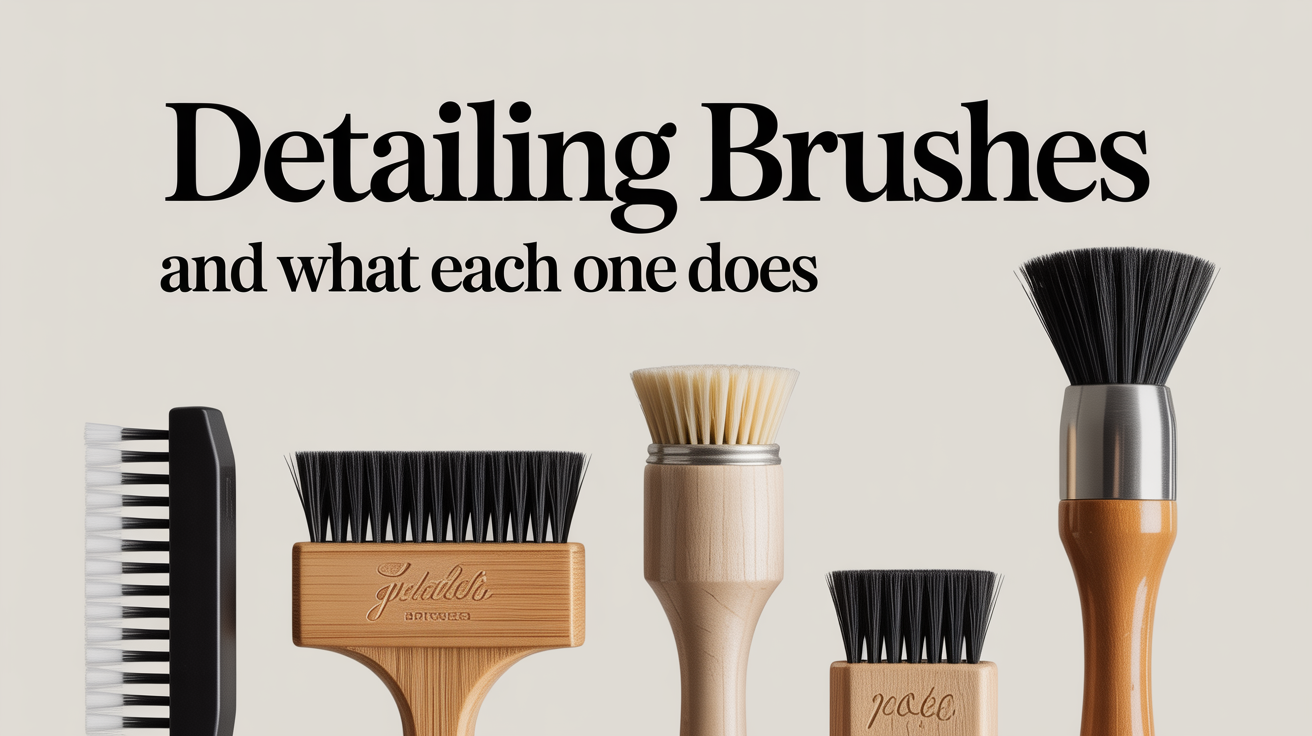
Most people discover the value of a good brush collection the hard way: trying to clean a brake-dust-caked lug nut with a folded microfiber, or pushing grime deeper into a vent grille because a cloth couldn't reach the fins. Detailing brushes fix both problems. They get into places no towel can, and they let you apply controlled agitation without scratching the surface you're working on.
The catch is that not every brush works everywhere. The bristle stiffness that handles a caked wheel barrel would be a disaster on a leather seat seam. Here's a breakdown of what the main types of car detail brushes do and where they belong in your kit.
Bristle Material and Stiffness: The Foundation
Before looking at individual brush types, it helps to understand why bristle choice matters. Most detailing brushes fall into three broad categories.
Boar's Hair (Natural Bristle)
Boar's hair bristles are soft, slightly flexible, and good at holding product. They're the standard choice for painted surfaces, delicate trim, and interior work where you don't want anything abrasive. The tips are naturally tapered, which helps them pick up fine dust rather than push it around. They wear over time and are not ideal for aggressive scrubbing on heavily soiled surfaces.
Synthetic (Nylon or Polyester)
Synthetic bristles cover a wide range of uses. Soft nylon works well for interiors and engine bays. Stiffer nylon or polyester blends are common in wheel and tire brushes, where you need real scrubbing power to cut through brake dust and road film. Some brushes layer soft outer bristles over a stiffer inner core, which gives you agitation where you need it without the outer bristles scratching the rim face.
Stiffness gets rated loosely as soft, medium, and stiff. For anything touching paint or interior fabric, stay soft. For wheel barrels and lug nuts, medium to stiff is appropriate. For tire sidewalls and fender wells, stiff is normal and expected.
Wheel and Tire Brushes
Wheel brushes take on more abuse than any other brush in your kit. Brake dust, road grime, and heat cycles leave deposits that need real agitation, and most wheel designs have areas that only a brush can reach properly.
Long-Handle Barrel Brush
A barrel brush with a handle 10 to 18 inches (25 to 46 cm) long is the workhorse for cleaning inside the wheel barrel, behind the spokes. The bristle head is cylindrical, typically 2 to 3 inches (5 to 8 cm) across, and stiff enough to scrub. Load it with wheel cleaner, push it into the barrel, and rotate while pulling out. It catches the inside of the rim face, the back of the spokes, and the barrel wall in one motion. A good barrel brush is worth buying before almost any other specialty brush.
Spoke or Face Brush
A flat, medium-stiffness brush for cleaning the face of the wheel and between spokes. Most detailers use a standard hand-size brush here, around 4 to 5 inches (10 to 13 cm) wide. It doesn't need to be as stiff as the barrel brush because you're working on the visible rim face rather than packed-in barrel grime. Avoid anything with metal ferrules near alloy wheels.
Lug Nut Brush
A small, stiff-bristle brush with roughly a 1-inch (2.5 cm) head. Lug nuts collect an impressive amount of brake dust in their hex pockets. A regular brush just smears it; a small stiff brush flicks it out. Some detailers use a nylon parts-cleaning brush here; the handle length and bristle stiffness are about right.
Tire Scrub Brush
For the sidewall, you want a stiff, flat-head brush close to a household utility brush but purpose-built. Tire rubber doesn't scratch, so stiffness isn't a concern. The goal is removing brown tire bloom and old dressing buildup. A decent tire scrub brush has a head 3 to 4 inches (8 to 10 cm) wide and bristles cut short enough to push without flexing out of the way under pressure.
The right water pressure during your pre-rinse affects how much scrubbing these brushes need to do. See the guide on pressure washer vs. garden hose for washing for how to pick the right setup.
Interior Brushes
Interior brushes are where bristle softness matters most. You're working around vinyl dashboards, fabric stitching, leather grain, and delicate trim that doesn't respond well to aggressive scrubbing.
Vent Brush
Air vents are one of the harder areas to clean because the fins sit close together and the surface behind them accumulates dust over months. A vent brush is long and narrow, typically 0.5 to 1 inch (1.2 to 2.5 cm) wide, with soft bristles and a flexible head so you can angle it into each fin slot. Some people use a foam paintbrush here, which works reasonably well and costs almost nothing. A dedicated vent brush does the job faster and holds up longer.
Crevice Brush
A crevice brush is narrower still, sometimes pencil-width, with soft bristles. It cleans door jamb channels, seat track rails, the gap between the center console and the seat, and the perimeter edge of trim panels. These areas collect dust, hair, and crumbs that a vacuum nozzle can loosen but rarely fully removes. Medium-length handles, around 7 to 8 inches (18 to 20 cm), give you enough reach without the brush becoming unwieldy inside the cabin.
Soft-Bristle Interior Brush
A larger brush, 2 to 3 inches (5 to 8 cm) wide, with boar's hair or very soft nylon, is useful for dusting the dashboard, door panels, and upper trim surfaces before wiping them down. Going straight at dust with a microfiber often moves it rather than captures it. A soft brush dislodges it into the brush head before you wipe, leaving a cleaner result in fewer passes.
Pair your interior brushes with quality towels for the final wipe-down. The guide on choosing microfiber towels for detailing covers what GSM and pile depth mean for different interior surfaces.
Specialty and Exterior Brushes
Engine Bay Brushes
Engine bays have plastic covers, rubber hoses, aluminum brackets, and wiring. You need something with enough stiffness to scrub grime off a valve cover but soft enough not to abrade plastic clips or rubber grommets. Medium-stiffness synthetic brushes with handles around 12 inches (30 cm) let you reach across the bay without your hands contacting hot surfaces. Keep engine bay brushes completely separate from your paint and interior brushes; they pick up grease that's hard to fully rinse out.
Jamb Brush
A medium-size flat brush, around 1.5 to 2 inches (4 to 5 cm) wide, specifically for cleaning door jambs, trunk jambs, and the hood channel. These areas collect road spray and rust sediment, especially on older vehicles. The jamb brush reaches into the pressed channel along the door edge without forcing a full-size brush into an awkward angle.
Keeping Your Brushes Organized and Clean
Buy a few brush holders or a simple organizer bucket. Brushes pick up whatever product and soil they've touched, so a wheel brush near paint or interior surfaces can transfer brake dust and old cleaner. Color-code by use: red handles for wheels and tires, blue for exterior painted surfaces, black for interiors. It sounds like extra effort until you accidentally scratch a door panel with a brush that spent its last job inside a greasy wheel barrel.
After each session, rinse brushes thoroughly and stand them bristle-side up or hang them so water drains toward the handle end rather than pooling against the bristle base. Water sitting against the base weakens the adhesive holding bristles in place. Boar's hair brushes benefit from occasional conditioning with a small amount of hair conditioner, the same way you'd treat a natural-bristle paintbrush.
If you're building a kit from scratch, check what you actually need to start detailing before adding more brushes than your current process can support.
Frequently Asked Questions
Can I use a household paintbrush as a detailing brush?
For some tasks, yes. Natural bristle paintbrushes work reasonably well as soft interior brushes or for applying dressings to tight areas. They're often cheaper than purpose-built detailing brushes for those roles. Where they fall short is anything requiring a specific shape (like a long-handle barrel brush), or anything that needs defined bristle stiffness for a specific surface. General-purpose paintbrushes also shed bristles more readily, which becomes a problem if one ends up in your polish or wax.
How many detailing brushes do I actually need?
A functional kit for most home detailers covers five brushes: a long-handle barrel brush, a spoke/face brush, a lug nut brush, a soft interior brush, and a vent or crevice brush. Everything else is task-specific. If you detail engine bays regularly or clean door jambs every session, add those. If you do basic exterior and interior maintenance, five covers most of what you'll encounter.
Do detailing brushes scratch paint?
Yes, if you use the wrong one. A stiff nylon brush designed for wheel barrels will abrade a painted surface visibly. Soft boar's hair or fine-tip nylon brushes used with a lubricant (like a detail spray or rinseless wash solution) on paint are generally safe. The rule is straightforward: if a brush is meant for high-friction jobs like wheels or tires, it stays away from painted body panels and interior fabric.
When should I replace a detailing brush?
When bristles splay out and no longer hold their shape, or when shedding becomes noticeable. A quality brush used properly lasts 1 to 3 years for most home detailers. Avoid letting them soak in cleaning solution for extended periods; that degrades the bristle adhesive faster than regular use does.
Can I use the same brush for different cleaning products?
You can rinse a brush and reuse it for a different product, but bristles hold onto residue longer than they look clean. The practical approach is dedicated brushes per product type: one for wheel cleaner, one for interior all-purpose cleaner, one for engine degreaser. Cross-contaminating products is how you end up with a streaky dashboard or an unexpected reaction on a delicate surface.