Interior Detailing
How to Clean the Inside of Your Windshield
Learn how to clean inside your windshield without streaks. Covers the right cleaner, towel technique, angles, and why that foggy film builds up so fast.
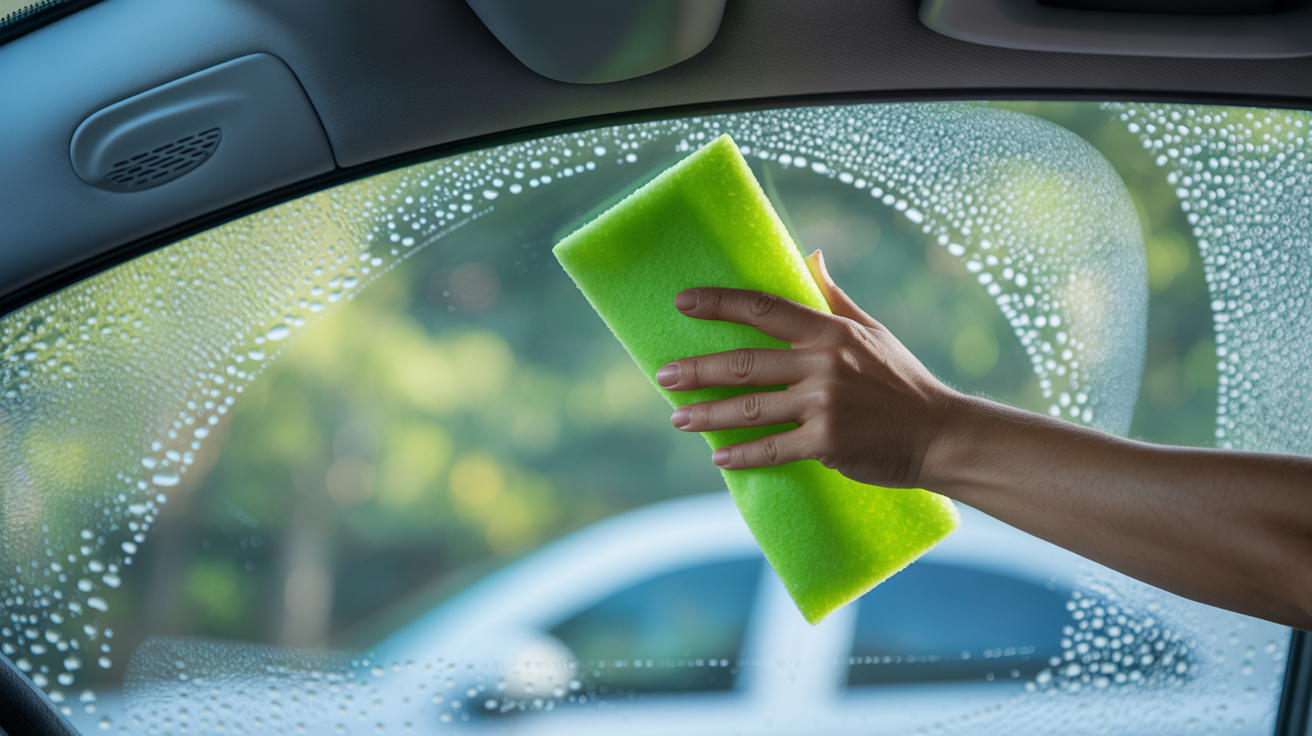
Getting a streak-free interior windshield is one of those tasks that sounds simple but trips up most people. The curved glass, tight dashboard, and awkward angle combine to make it feel harder than it should be. Use the right cleaner, the right towels, and the right sequence, and you can get it clear on the first try without fighting it.
Why the Inside of Your Windshield Gets So Dirty
The outside of the glass picks up road grime and rain. The inside is a different problem. The main culprit is off-gassing from the plastics, vinyl, and rubber inside the cabin. Brand-new cars are especially prone to this. That greasy, faintly sweet film that builds up inside the glass in the first year or two is plasticizer vapor migrating out of the dashboard and door panels. It coats the glass in a thin, semi-transparent layer that barely shows until the sun hits it at a low angle and suddenly visibility drops.
Other contributors include:
- Breath and body moisture, which leaves a faint haze over time
- Cigarette or vape smoke, which deposits tar and oils faster than almost anything else
- Fingerprints from anyone who has touched the glass
- Dust that settles and then smears when wiped with a dry cloth
Understanding the source matters because it tells you what kind of cleaner will cut through it. The off-gassing film is oily, so you need a surfactant or mild solvent. Water alone won't do much.
What You'll Need
You don't need a big list. Four items cover most jobs:
Automotive glass cleaner: Use a product made for car interiors. Some household glass cleaners contain ammonia, which can damage tinted window film and degrade rubber seals over time. Alcohol-based automotive glass cleaners are a safer bet. If you prefer a simple option, 70% isopropyl alcohol diluted roughly 1:1 with distilled water works well and costs almost nothing.
Two clean microfiber towels: One for the cleaning pass, one for the final buff. Glass-specific towels are worth having because towels used on body panels can carry wax or polish residue that smears the glass instead of cleaning it. Fold each towel into quarters so you have eight fresh surfaces before needing a fresh towel.
A microfiber mitt or smaller folded towel: For reaching the lower corners where the windshield meets the dash. A glove-style mitt wraps around your hand and gets into that awkward pinch point better than a flat towel.
Shade and a bit of patience: No product fixes a rushed technique or a glass surface that is too hot.
The Cleaning Process, Step by Step
Prep before you spray anything
Park in the shade or indoors. Direct sun heats the glass and makes any cleaner flash dry before you can spread it, which is the single biggest cause of streaking. If you're stuck working outside, early morning or late afternoon is when the glass is coolest.
Remove anything from the dashboard that might get wet. Fold down the sun visor so it stays out of the way.
Do a dry wipe first if there's loose dust
If the glass has a layer of settled dust (common after a road trip or a dry spell), do a quick dry pass with a clean microfiber before introducing any liquid. Spraying cleaner onto dusty glass turns that dust into a muddy paste that smears across the surface and takes several extra passes to clear.
Apply cleaner to the towel, not the glass
Spray your glass cleaner directly onto the microfiber towel until it's damp but not dripping. Four or five sprays is usually enough. Applying directly to the glass lets product land on the dash and seals, and it evaporates too fast on warmer days before you can spread it properly.
Work in straight overlapping passes
Move across the glass in horizontal or vertical passes rather than circles. Circular scrubbing tends to spread contamination around instead of lifting it. Use moderate pressure. For the lower corners where you can barely fit your arm, fold the towel small, press it flat against the glass, and wipe toward the center.
The angle is genuinely tough on windshields because they rake back steeply. Kneeling on the driver's seat and reaching toward the passenger side often works better than leaning in from outside. A long-handled glass applicator (a foam pad on an extendable pole) can reach across without you contorting, though a towel by hand still gives you better feel for pressure.
Buff dry with the second towel immediately
Right after the cleaning pass, go over the glass with your second dry microfiber towel. Use light pressure and the same directional passes. This is the step that separates a streak-free finish from a streaky one. The cleaner suspends the oils and lifts them off the surface. The dry buff removes the cleaner itself before it can settle back down.
Check the result from an angle with a light source behind you. Haze shows up far more clearly from a low angle than head-on.
A second pass clears stubborn haze
If you still see streaking or a film, a second round of damp-towel followed by dry-buff usually clears it. Persistent haze on high-mileage cars or in heavy smokers' vehicles may need a dedicated automotive glass polish before regular maintenance cleaning keeps it clear going forward.
Dealing with a Foggy Windshield That Won't Stay Clear
If the inside of your windshield fogs up consistently every time you get in the car, cleaning alone won't fix it. The root cause is usually high cabin humidity. A few things to check:
Cabin air filter: A clogged filter reduces airflow and lets moisture build up inside the cabin. Most filters need replacing every 15,000 to 20,000 miles (roughly 25,000 to 32,000 km). The filter usually sits behind the glove box and swaps out in under 15 minutes.
Wet carpets or floor mats: A slow coolant leak from the heater core, or a blocked AC condensate drain, can soak the carpet. The moisture evaporates into the cabin air and then condenses on the cold glass. Check for a sweet smell (coolant) or damp spots under the dash on the passenger side.
Recirculated air mode: Running recirculated air traps moisture inside the cabin because no fresh air cycles through. Switching to fresh-air mode lets humidity escape. The defroster setting uses the AC compressor to dry the incoming air, which is why it clears fog faster than heat alone.
A clean windshield won't fog as quickly as a dirty one because the oily film on the glass gives water vapor more surface area to cling to. Regular cleaning is part of the prevention, not just the fix.
Keeping It Clean Longer
A few habits extend the time between full cleaning sessions.
Use a windshield sunshade when parked. Beyond keeping the car cooler, it slows outgassing from the dashboard plastics, so less vapor reaches the glass in the first place.
Add a quick glass pass at the end of each interior clean. If you're already wiping down the dash and door panels (see our guide on how to detail your car interior for the full routine), two extra minutes on the glass resets the film before it builds up.
Avoid touching the glass with your hands. The skin oils from fingertips bond to the surface and take a dedicated product to remove.
If you smoke in the car, expect to clean the inside glass every four to six weeks. Tar and nicotine deposit quickly and cling hard.
Frequently Asked Questions
Can I use household glass cleaner on the inside of my windshield?
Avoid ammonia-based household sprays if your windows have any tint film. Ammonia breaks down the adhesive over time and can discolor or bubble the tint. On untinted glass the risk is lower, but automotive formulas or diluted isopropyl alcohol are simpler safer choices with no downside.
Why do I keep getting streaks no matter what I use?
Streaks almost always come from one of three things: dirty towels carrying wax or polish residue from previous use, applying too much product, or cleaning in direct sun where the cleaner dries before you can buff it off. Start with a fresh glass-only microfiber towel, use less cleaner than you think you need, and work in the shade.
How often should I clean the inside of my windshield?
Every four to eight weeks is a reasonable interval for most cars in normal use. If you notice hazing under low-angle sun before that, clean it sooner. Cars with newer dashboards outgas more actively, so they may need more frequent attention during the first couple of years.
My windshield has a rainbow sheen in certain light. What causes that?
A rainbow or iridescent look usually means a film of wax, silicone, or polish has transferred onto the glass. It often comes from overspray during an exterior wax job, or from a tire dressing or interior dressing product that migrated to the glass. Standard glass cleaner often can't fully remove silicone or wax. A glass-specific polish or a degreaser-based cleaner will cut through it where regular glass spray can't.
Does a clean windshield actually help with night driving?
Yes, meaningfully. The greasy film scatters headlights and streetlights into a broad bloom that makes oncoming glare harder to manage. A clean interior windshield reduces that scatter noticeably. It is one of the simplest visibility improvements you can make before an evening drive.